Sudan Bids Farewell to a Year of Military Confrontation, Welcomes Another with Hope for an End to the War

Report — Sudan Events
As Sudan bids farewell to a year in which war continued to ravage the country—deepening the people’s suffering through grief, displacement, and severe hardship after fighting spread from the capital and central regions to the west—cautious optimism remains that the new year may bring a glimmer of hope for security and peace, despite a bleak military and political landscape.
The year 2025 witnessed profound shifts in the map of control on the ground. The conflict moved from fluid clashes and changing hands to a phase of regional entrenchment, producing a new administrative and geographic reality.
Military dynamics have effectively produced two blocs in the east and west of the country. The Sudanese Armed Forces (SAF) now control the northern, central, and eastern states, as well as the capital, while the Rapid Support Forces (RSF) are deployed across the Darfur region and parts of the three Kordofan states.
As the war approaches the end of its third year, accusations of direct external intervention have intensified, prompting international and regional actors and research centers to describe the conflict as a proxy war. Advanced weapons and large numbers of foreign mercenaries have reportedly entered the country, with the conflict increasingly threatening regional stability and the security of the Red Sea and the Horn of Africa.
From Defense to Offense
Over six months—since shifting from a defensive posture to the offensive—the army achieved a notable military turnaround by retaking Wad Madani, the capital of Al-Jazira State in central Sudan, in January 2025, more than a year after RSF forces entered the city.
After RSF units had spread across more than two-thirds of Khartoum State—seizing military and sovereign sites, most notably the Presidential Palace, as well as government buildings such as the Council of Ministers and most ministry headquarters—the army expelled them within three months, with the last armed elements leaving in May 2025.
Between January and May, the army emerged victorious from battles in the capital and in Al-Jazira and Sennar states, benefiting from RSF setbacks and declining morale among its fighters.
The army also advanced rapidly, regaining control of key areas, including the cities of Umm Rawaba and Al-Rahad, reopening the national highway linking El Obeid, the capital of North Kordofan, with White Nile State. It then pushed on to Kazgail, Al-Hammadi, and Al-Dibaybat in South Kordofan, moving to lift the siege on Al-Daleng, the state’s second-largest city.
With momentum building in Kordofan, operations shifted toward Umm Sumaymah, Al-Khuwai, and Al-Nuhud in West Kordofan and south of El Obeid. Expectations grew of an advance toward Darfur to break the RSF siege of El Fasher.
However, army operations stalled in Kordofan for nearly three months, according to military expert Abu Bakr Abdel Rahim, who attributed the pause to several factors, including miscalculations by the command-and-control room while preparing new forces and regrouping units from the capital, Al-Jazira, and Sennar; shortages of weapons, equipment, and combat vehicles while tactical operations awaited resupply; and reliance on external mediation efforts to halt the war, which slowed military momentum after Khartoum’s liberation.
Abdel Rahim told Al Jazeera Net that the army could have pushed deep into western and southern Kordofan and reached El Fasher had it capitalized on the RSF collapse in Al-Jazira and its retreat from Khartoum. Instead, he said, the RSF was allowed to regroup, rearm with advanced weapons, and later achieve significant breakthroughs in Darfur and Kordofan.
Gains and Losses
The most significant military development in the final quarter of the year was the RSF’s capture of El Fasher, the capital of North Darfur, on October 26 after a siege lasting nearly two years. The move consolidated RSF control over most of the region, except for three northern localities still held by the army and joint forces, along with other areas controlled by the Sudan Liberation Movement led by Abdel Wahid al-Nur.
Yet the RSF leadership paid a heavy political and moral price for its gains in El Fasher, facing widespread international condemnation and accusations of ethnic cleansing following a massacre that killed more than 2,000 civilians in two days—rising to 15,000 according to estimates by the regional government.
The capture of El Fasher emboldened the RSF to advance and seize Babanusa in West Kordofan in early December, followed by the army’s withdrawal from the Heglig oil fields. This effectively removed the state from SAF control, making it the first in the Kordofan region to fall fully under RSF control.
The shift reshaped the balance of power in Kordofan and opened the door to escalation in the strategic region linking the capital and central states with Darfur. RSF forces began moving large reinforcements southward, where shelling and joint attacks with the Sudan People’s Liberation Movement–North (SPLM-N) led by Abdelaziz al-Hilu targeted the besieged cities of Al-Daleng and Kadugli, the capital of South Kordofan.
RSF units remain deployed in Bara, Umm Qirfa, Jabra al-Sheikh, and Umm Sayala in eastern North Kordofan, seeking to reimpose a siege on El Obeid—now a forward command hub for the army—and to cut the national highway linking it to Port Sudan, mirroring the El Fasher strategy.
Meanwhile, the army appears to be preparing a winter offensive. Sovereign Council member and Assistant Commander-in-Chief Yasser al-Atta announced preparations for the largest military force yet to liberate Kordofan and Darfur, asserting that the army possesses advanced weapons capable of shifting the course of the battles.
In a televised address on December 16, al-Atta said that “the destruction of the enemy is now in our hands,” predicting major developments in the coming days and calling on Sudanese to prepare for celebrations—an apparent reference to anticipated battlefield victories.
The Year of Drones
Military operations over recent months have highlighted the RSF’s extensive use of advanced drones, giving it a qualitative edge. The force has also acquired jamming systems and air defenses that neutralized SAF aircraft over Darfur and downed military transport planes above El Fasher and Babanusa.
Military and strategic expert Colonel Hatem Karim al-Fallahi told Al Jazeera that during the first year of the war in 2023, the Sudanese army carried out 280 drone strikes on RSF positions, compared with just 10 by the RSF. The situation shifted in 2024–2025, as RSF—boosted by external support—conducted strikes at long range, reaching as far as the Red Sea coast, underscoring a marked evolution in its capabilities.
Al-Fallahi noted that satellite imagery showing various Chinese-made drones suggests the RSF may have obtained them via countries engaged with China in arms procurement, despite strict end-use conditions governing such deals. He also cited reports indicating the RSF acquired modified drones from Serbia, in addition to support from Russia’s Wagner Group from 2023 until mid-2024.
The Sudanese Military Capabilities Platform, which is close to the army, reported that during the latest assault on El Fasher the RSF used drones guided via fiber-optic cables—fine “fiber” lines extending up to 20 kilometers—to destroy forward defenses, instead of relying on conventional guidance methods.
The platform also confirmed the transfer of irregular fighters and combat expertise from the Ukrainian theater to Sudan—known as “combat experience transfer”—involving the movement of tactics, operational know-how, and system use from one active war zone to another by individuals and groups who had fought in Ukraine.
According to the platform, the rapid transfer of technology has led to faster RSF capability development without the slow evolutionary stages typical of regular armies; distortions in the balance of battle in some fronts due to the import of “hot battlefield” experience into a less intense environment; the transformation of Sudan into a testing ground for combat technologies and transnational fighter networks, threatening regional and international security; and an expanded RSF ability to carry out precision strikes and complex operations previously requiring extensive training, time, and industrial capacity not available locally.
By contrast, the Sudanese army also acquired new drones this year, enabling it to strike RSF supply lines in the tri-border area linking Sudan, Libya, and Egypt, forcing the RSF to reroute its logistics through Chad.
Possible Scenarios
Security expert Ibrahim Abdel Qader said both sides have exhausted their ability to achieve a decisive military victory. He expects the army to launch a campaign in Kordofan within weeks to improve its negotiating position, coinciding with intensified international and regional efforts to halt the war.
He told Al Jazeera Net that indicators point to greater reliance on drones to achieve air superiority and block advances along multiple axes, effectively paralyzing the opposing side. He added that the start of the new year is likely to see a shift in the nature of the war—toward attrition and attacks on supply lines, or territorial expansion in cities to secure political and geographic influence.
Political Momentum
Politically, efforts to end the war have regained momentum after more than a year of stagnation following the suspension of the Jeddah talks in late 2023.
On September 12, the Quad—comprising the United States, Saudi Arabia, Egypt, and the United Arab Emirates—proposed a plan calling for a three-month humanitarian truce leading to a permanent ceasefire, followed by an inclusive and transparent nine-month transitional process to realize Sudanese aspirations for an independent civilian government.
On November 6, the RSF announced its acceptance of the truce, while the Sudanese government responded with its own vision submitted to the United Nations in February, outlining its peace demands.
At the request of Saudi Crown Prince Mohammed bin Salman, U.S. President Donald Trump addressed the Sudan issue at the U.S.–Saudi Investment Forum hosted in Washington in November, saying the Crown Prince had urged him to intervene forcefully to resolve the crisis.
Sovereign Council Chairman Abdel Fattah al-Burhan visited Riyadh and then Cairo in mid-December, discussing new proposals to end the war with the Saudi Crown Prince and exploring settlement options with Egyptian President Abdel Fattah el-Sisi.
Observers expect the first months of the new year to bring positive developments toward silencing the guns and establishing a truce that could open the door to ending the war and completing security, military, and political arrangements to usher the country into a new phase.
The “Government of Hope”
The post of prime minister has been vacant since Abdalla Hamdok’s resignation in early 2022. During this period, military and civilian members of the Sovereign Council jointly oversaw ministries, with most undersecretaries tasked with running ministerial portfolios, while five ministers representing armed movements remained in office.
Prior to appointing a prime minister, the interim legislative authority—comprising the Sovereign Council and the Council of Ministers—approved amendments to the Constitutional Document in February, granting the interim Sovereign Council chairman, Abdel Fattah al-Burhan, the power to appoint and dismiss the prime minister.
On May 31, Kamil Idris was sworn in as the new prime minister before al-Burhan, following a decree issued on May 19 appointing him to the post.
Months into Idris’s tenure, criticism of the new government—dubbed the “Government of Hope”—has intensified across media platforms and social networks, reflecting a widening gap between citizens’ expectations and the government’s ability to improve conditions amid an ongoing war.
Humanitarian Situation
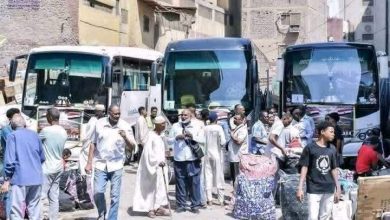
According to the latest UN data, at least 21.2 million people face high levels of acute food insecurity; 9.5 million are internally displaced; more than 4.035 million have fled the country; and around 10 million children have been deprived of education after schools were destroyed, occupied, or rendered unsafe.
The International Organization for Migration reported a 19% decline in the number of internally displaced people compared with the previous peak, across 12 of Sudan’s 18 states. The number of returnees rose by 16% compared with October, with approximately 2.4 million people returning from internal displacement—about 21% of the highest recorded number of IDPs in Sudan.
Source: Al Jazeera