Cabinet Approves Budget: Wage Improvements and Job Creation Included in the 2026 Budget
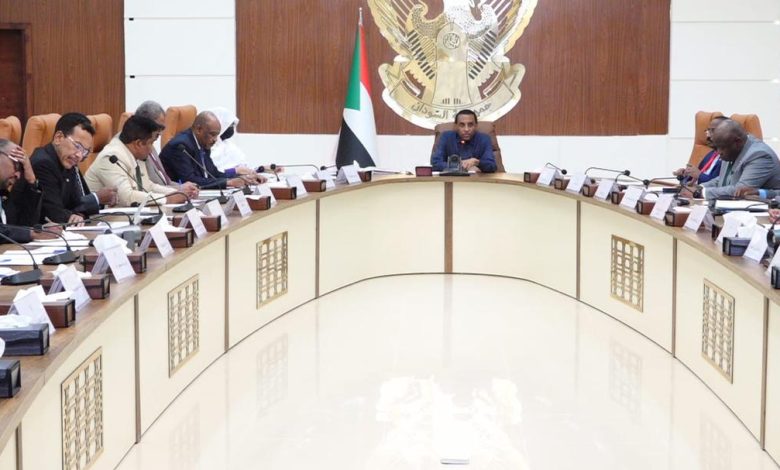
The Council of Ministers, in its session on Tuesday chaired by Prime Minister Dr. Kamel Idris, approved the emergency budget draft for the 2026 fiscal year, submitted by Finance Minister Dr. Jibril Ibrahim. The prime minister described the budget as a “historic miracle,” congratulating the Ministry of Finance for fiscal discipline, sound resource management, and increased revenues despite exceptional circumstances.
He noted that the first “miracle” lies in the budget’s projection of approximately 9% growth in gross domestic product, while the second is reducing the average inflation rate in 2026 to 65%.
For his part, Dr. Jibril Ibrahim outlined the key positive features of the budget, including improvements to wages, salaries, and pensions; the creation of new jobs at entry levels of public service; and the absence of any additional tax burdens. He stressed that revenue expansion would be achieved horizontally—by broadening the revenue base—without imposing new taxes on citizens.
The minister also highlighted the expansion of healthcare coverage to include more families under both basic and supplementary health insurance packages, the localization of medical treatment within the country, and the continued fulfillment of government obligations toward health insurance and pensions.
Describing the budget as non-traditional, the minister said it focuses on mobilizing domestic resources and directing them primarily toward the requirements of the “Battle of Dignity,” as well as prioritizing spending on basic services in war-affected states, including water, electricity, health, and education, while continuing efforts to prepare conditions for the return of displaced citizens.
He revealed key macroeconomic indicators underpinning the budget and projections of relative economic stability, based on a number of structural economic reforms that began implementation in 2025. The budget targets GDP growth of around 9% and a reduction in average inflation to 65% in 2026, compared to 101.9% in 2025.
The minister explained that the budget prioritizes public finance reform by organizing spending priorities and public expenditure at both federal and state levels, meeting the needs of the armed forces and security institutions, and covering essential requirements of ministries and government units to ensure continuity of state operations. It also focuses on preparing the environment for return and rehabilitating federal ministry headquarters in the national capital.
Additionally, the budget expands social protection coverage, reviews laws governing pensions and the Social Security Investment Authority, and commits to transferring states’ shares in accordance with the resource-sharing law and actual revenue collection, without incurring additional spending. It also prioritizes improving conditions for Sudanese internally displaced persons and refugees in neighboring countries, covering the costs of humanitarian assistance, directing development spending toward vital sectors, financing general, technical, and vocational education, rehabilitating and rebuilding the industrial sector, re-localizing industries in the states, and supporting small and medium-sized enterprises.
The minister noted that performance under the 2025 budget exceeded expectations despite ongoing war-related challenges, with public revenues achieving 147% of targeted performance, while essential spending continued. He highlighted achievements in public finance reform, digitization, and improved financial management through the nationwide implementation of the electronic collection and payment system (Eisaley), as well as the preparation of a draft Public Finance Law reviewed by Sudanese experts.
Spending in 2025 also covered essential services such as electricity, health, education, water, sanitation, environmental health, security enforcement, and the assertion of state authority. The government further financed the summer and winter agricultural seasons by procuring seeds, fertilizers, pesticides, conducting nationwide pest control, and providing fuel. Support was extended to the Gezira Scheme through fertilizers, fuel, and operational costs, alongside preparations for the return to Khartoum and the rehabilitation of Khartoum International Airport.