The Battle of Narratives in Yemen
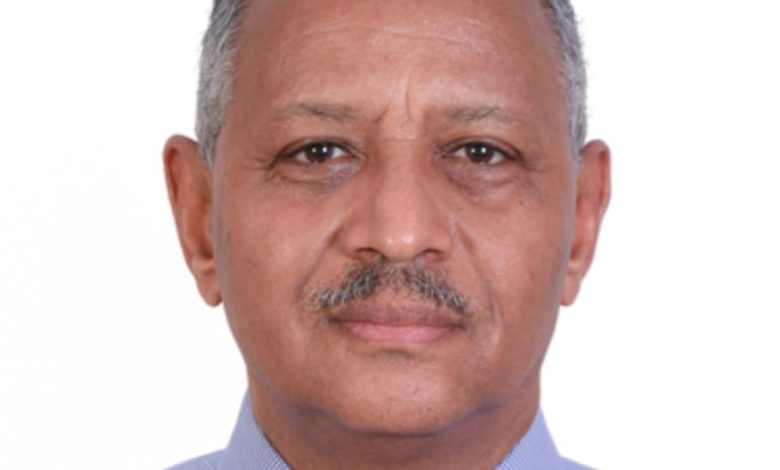
Al-Obeid Ahmed Murawih
What is the true nature of what is unfolding in Yemen—events that culminated in what happened last Tuesday?
Is it an internal conflict between two “sides” that together form the Yemeni Presidential Leadership Council: one led by Dr Rashad Al-Alimi, the Chair of the Council and the internationally recognised representative of legitimacy, and the other led by Aidarous Al-Zubaidi, representing the Southern Transitional Council—such that what is taking place between them is merely a “power struggle”? Or is the reality more complex than that?
The Emirati narrative, in response to accusations levelled against it, claims that the UAE has nothing to do with what is happening, that it withdrew its troops from Yemen in 2019, retaining only a limited force for “counter-terrorism”, and that there is therefore no justification for dragging its name into an internal conflict.
By contrast, the narrative put forward by coalition forces, led by Saudi Arabia, states that two ships sailed from the Emirati port of Fujairah and unloaded their cargo at the Yemeni port of Mukalla; that the cargo consisted of armoured vehicles, pick-up trucks, and weapons; and that this equipment was intended to support the forces of the Southern Transitional Council, which expanded into the governorates of Hadramawt and Al-Mahrah without coordination with coalition forces and contrary to the will of Yemen’s legitimate authority—specifically the President of the Presidential Council, who is the Supreme Commander of the Yemeni Armed Forces.
Anyone who followed media coverage the day before yesterday can readily conclude, with minimal effort, that the Emirati narrative was the weaker of the two—not only because of the contradictions that emerged between the UAE Ministries of Foreign Affairs and Defence regarding the withdrawal of Emirati forces from Yemen, but also because of the inconsistency between the claims of Emirati-backed Southern Transitional Council spokesmen—who profess adherence to legitimacy, the constitution, and relevant Security Council resolutions—and the Council’s continued attempts to expand and impose military control over eastern Yemeni governorates bordering both the Sultanate of Oman and the Kingdom of Saudi Arabia.
When the UAE announced in 2019 that it had withdrawn its forces from Yemen, retaining only a small contingent for training purposes, it had in fact already arranged the position of its allies—foremost among them the Southern Transitional Council, which it had nurtured since its inception in 2017—along with other forces and “militias” that were born outside the womb of legitimacy. The UAE, based on its own calculations, did not invest in the Yemeni Armed Forces—the army of the legitimate state for whose restoration the Arab Coalition and Operation Decisive Storm were launched. Instead, it chose specific functional groups through which it could pursue its objectives: controlling ports and areas of wealth, including oil and gas. These groups have continued to receive training, funding, and arms from the UAE to this day.
What the UAE was doing in Yemen was not unknown to Saudi authorities, but Riyadh may have chosen not to object so long as it did not pose a direct threat to Saudi interests and national security. Saudi leadership may also have assumed that Emirati ambitions would stop at certain limits and would not intersect with Saudi vital security interests. Events, however, have proven that the UAE’s ambitions know no bounds—that it seeks to impose its influence in the Gulf of Oman, the Gulf of Aden, Bab al-Mandab, and the Red Sea, by empowering its functional instruments: the Southern Transitional Council in Yemen and the Rapid Support Forces militia in Sudan, enabling them to dominate their respective countries.
The similarities between Sudan’s Rapid Support Forces and Yemen’s Southern Transitional Council—and their relationship with the UAE—are so numerous as to verge on being identical. Even setting aside the UAE’s long-term planning since the early 2000s, aimed at carving out an independent regional role directly linked to the United States, Emirati engagement with both the RSF and the Southern Transitional Council can be traced back to the launch of the Arab Coalition and Operation Decisive Storm in 2015. At that time, the UAE found in the RSF a ready-made force it could simply mount—going so far as to plan the invasion of Qatar using selected RSF elements. In Yemen, its agenda was even clearer: it wasted no time in “supporting legitimacy”, instead moving directly to schemes to control southern Yemen, with its ports, oil wealth, and strategic location. It embraced separatist narratives, oversaw the establishment of the Southern Transitional Council in 2017 along with other functional groups, and devoted all necessary resources to enable it to dominate southern Yemen—marginalising the Yemeni army and, in many locations, fighting it outright.
Those who followed Saudi media coverage last Tuesday—featuring experts and analysts explaining the circumstances that prompted coalition forces led by Saudi Arabia to carry out a precise and limited strike on equipment and movements unloaded by two ships after being loaded at the Emirati port of Fujairah—could not fail to recall the sequence of events preceding the outbreak of war in Sudan on 15 April 2023. What the Southern Transitional Council did mirrors exactly what the Rapid Support Forces had done: the RSF’s mass mobilisation of troops, weapons, and equipment without authorisation from the General Command of the Armed Forces; its movement towards Merowe Air Base without the permission of state and military leadership. This behaviour aligns perfectly with that of the Southern Transitional Council forces, which advanced and expanded into Hadramawt and Al-Mahrah without the head of state’s authorisation, without the permission—or even notification—of Arab Coalition forces. Analysts will readily observe that the common denominator in both scenes is the United Arab Emirates.
The truth, now clearer than the midday sun, is that the actor investing in militias in the region—particularly in Sudan and Yemen, and perhaps in Gaza as well—is the UAE. It has pursued this course persistently for more than a decade, in coordination and alignment with Israeli policies in the region—policies whose aim is no longer concealed: to encircle Arab states of weight and influence, to burden others with internal crises, and to fragment the nation-state by empowering functional groups with weapons and equipment, inciting rebellion, and exhausting state power.
Perhaps the most significant outcome of the blow delivered by Saudi-led coalition forces to the UAE at the port of Mukalla the day before yesterday is that it exposed the Emirati narrative built around combating terrorism and extremism. It revealed that the loading of two ships with military hardware from Fujairah to Mukalla, to support the Southern Transitional Council, was merely routine behaviour—identical to what the UAE has practised in Sudan for three years by sea, air, and land, supplying all manner of advanced weapons and combat equipment to enable the Rapid Support Forces to carry out their assigned role. More than that, it recruited mercenaries from Africa and Latin America to fight in RSF ranks and to operate the drone systems used to kill Sudanese civilians and destroy their infrastructure.
In light of this, the international community—especially those claiming to seek an end to the war in Sudan, if they are sincere—has no option but to direct its pressure at the real actor behind both the Rapid Support Forces and the Southern Transitional Council: the United Arab Emirates. It must compel it to halt all forms of support to these functional entities—or else it will deserve another blow, harsher and more painful still.



