Falsifying History for Political Gain: The Case of South Sudan’s Secession

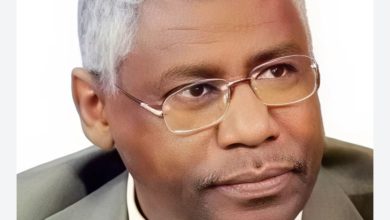
By Moatasim Al-Aqra‘
One of the most pervasive falsehoods in contemporary Sudanese political discourse is the claim that the “Ikhwan” (Islamists/“Kizan”) were the ones who engineered the secession of South Sudan. The historical record shows that the Southern question is far older and far deeper than any single ruling regime. What follows is a concise overview of the historical trajectory:
Roots of the conflict:
The First Sudanese Civil War began with Sudan’s independence in 1956, though its seeds had been sown decades earlier. At that early stage, the Muslim Brotherhood was a marginal group with no meaningful influence on national politics.
War under all regimes:
The civil war continued almost uninterrupted under successive governments:
During the First Democracy (1956–1958).
Under General Ibrahim Abboud’s military rule (1958–1964).
During the Second Democracy (1964–1969).
Under Jaafar Nimeiri’s regime (1969–1985), when it paused temporarily following the Addis Ababa Agreement (1972), only to resume forcefully in 1983.
During the Third Democracy (1985–1989).
The Islamist period:
When the National Islamic Front (the Ikhwan) seized power through the 1989 coup, the Southern crisis had already reached its peak and the war was raging. The new regime fought the war in the South just as all previous governments had done. It is true that it added a heavy “jihadist” dimension and intensified religious rhetoric, but religious zeal and ethnic polarization had existed—among both northern and southern actors—in varying forms throughout the conflict’s history. Global Christian organizations were also providing substantial support to Southern movements. In this sense, the Islamists fought the war as every military and democratic government before them had done, albeit with a more pronounced ideological framing.
Negotiation and the Naivasha Agreement:
Later, the Islamist government pursued a negotiated settlement, culminating in the Comprehensive Peace Agreement (Naivasha Agreement) of 2005. The agreement granted South Sudan wide autonomy and guaranteed the right to self-determination. It was an exceptionally generous deal, exceeding the political and economic aspirations of many Southern leaders in terms of federal and regional power-sharing. Indeed, Naivasha offered the South a package more generous than what much of the Southern elite had envisioned, and arguably at the expense of other Sudanese regions.
For this reason, the leadership of the Sudan People’s Liberation Movement (SPLM) was not initially enthusiastic about outright secession. John Garang—who favored unity—was subsequently assassinated, a development widely seen as facilitating separation. Afterward, intense external pressure was exerted on his successors to move decisively toward secession, which ultimately occurred.
External pressure and the referendum:
Following the agreement, a complex set of factors came into play, including Garang’s assassination and overwhelming external pressure on the new Southern leadership to push for independence. In the end, South Sudan formally seceded in 2011 after Southerners voted for independence. This was, ultimately, their choice.
A long-standing structural problem:
All of the above demonstrates that the Southern question persisted throughout Sudan’s modern history. Yet segments of the Sudanese elite continue to engage in politicized falsehoods by claiming that the Ikhwan alone “separated the South” and stopping there. This is one of the most egregious distortions propagated by sections of the secular elite.
Are the Ikhwan innocent?
Absolutely not. Islamists, like others, contributed to the deepening of the crisis. However, their share of responsibility for secession is comparable to that of all major political parties, as well as Southern elites whose decisions were shaped by hostile external actors.
Some argue that the Ikhwan bear a qualitatively greater responsibility because of the polarizing nature of their religious program. This is a reasonable point. Yet the politicization of Islam was not exclusive to them. Parties such as the Umma and the Democratic Unionist Party long advocated for an Islamic constitution and adopted explicitly Islamic political programs—the “Islamic Republic” in the case of the Unionists, and the “Islamic Awakening” for the Umma. Even the Republican movement is, at its core, a religious group that claims exclusive possession of truth and regards others as misguided—even fellow Muslims, let alone adherents of indigenous beliefs.
Shared responsibility:
The more accurate conclusion is that all Sudanese elites—northern and southern—played roles in the separation of the South. External actors also played a decisive role in a secession project planned at least since the 1950s—more than four decades before the Islamists came to power.
The Southern question was a structural problem embedded in the modern Sudanese state. It burned under every military and democratic regime alike, reflecting the collective failures of all northern and southern political elites.
A misleading narrative:
Claiming that the Ikhwan alone are responsible for secession is a simplistic and misleading distortion of history, often deployed for short-sighted political gain at the expense of educating younger generations about a complex historical process.
This does not absolve the Islamist regime of responsibility. It significantly exacerbated the crisis through polarizing and repressive policies and rigid religious discourse. But responsibility is historical and collective:
Northern elites—including major parties such as the Umma and the Democratic Unionist Party—repeatedly promoted religious-state projects and Islamic constitutions, marginalizing Southern cultural identity.
Southern elites made their own choices, heavily influenced by external alliances.
External regional and international actors played a decisive role in shaping the conflict and steering it toward secession, as part of a plan dating back to at least the 1950s—nearly half a century before the Islamists’ rise to power.
Conclusion:
Assigning sole blame to one political faction—the Ikhwan—for South Sudan’s secession is a deceptive narrative. The reality is that successive Sudanese elites, north and south, together with external actors, collectively produced this outcome through accumulated failures—not through a single decision made in one decade. Recognizing this shared responsibility is the only way to draw meaningful lessons, rather than recycling cheap political myths.
A notable exception:
The only plausible partisan exception in the case of Southern secession is the Sudanese Communist Party. It did not engage in religious or ethnic polarization and was never an instrument of colonial projects aimed at dismantling targeted states. Throughout the crisis—especially in its early decades—the party argued that the Southern problem was fundamentally one of unequal capitalist development implanted by colonialism and that national governments were responsible for correcting it. It supported all legitimate rights of the people of South Sudan while simultaneously recognizing that, despite the justice of those demands, the Southern issue was being exploited as an entry point for a neo-colonial project. Its position was marked by intellectual rigor: it defended Southern rights without turning itself—out of ignorance or opportunism—into a servant of colonial agendas. May history restore that principled party from its long marginalization.