Security Council Takes Stock of 2025, Reviews Key Global Crises
Sudan Events – Agencies
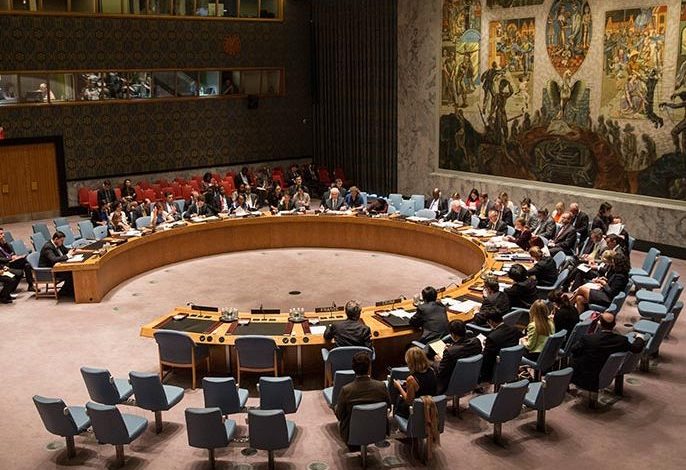
The official website summarizing the activities of the UN Security Council has released a comprehensive review of the Council’s work over the past year, along with outlooks for the year ahead. The review concludes that in 2025, deep divisions within the Security Council continued to constrain its ability to address some of the world’s most serious security crises. At the same time, the Council witnessed shifts in its internal dynamics as the positions of the new US administration became clearer.
According to the review, major resolutions were adopted in 2025 on Gaza and Haiti, although their implementation continues to face significant challenges. The Council also adopted a resolution on Ukraine that had little tangible impact on the rapidly deteriorating situation there. Similar difficulties were encountered in making progress on other protracted crises, notably in Sudan and Myanmar.
A number of unexpected crises — ranging from tensions between Cambodia and Thailand, and between India and Pakistan, to the coup in Guinea-Bissau and tensions between the United States and Venezuela — also commanded considerable attention. Syria, however, stood out as one of the issues on which the Council demonstrated a high degree of unity in 2025, with the country now facing an opportunity to build a better future after years of civil war.
Looking Ahead to 2026
In 2026, the Security Council will be required to address several critical issues, including the future of peacekeeping operations, implementation of resolutions related to Gaza and Haiti, and the impact of the UN’s liquidity crisis on its work. The Council will also need to make a highly consequential recommendation to the General Assembly on the appointment of the next UN Secretary-General. These and other matters closely linked to international peace and security point to a year full of both challenges and opportunities.
Deep Divisions Within the Council
The adoption of 44 resolutions in 2025 marked a continuation of a downward trend for the fifth consecutive year, compared with 46 resolutions in 2024, 50 in 2023, 54 in 2022, and 57 in 2021. This figure is the lowest since 1991, when 42 resolutions were adopted. Moreover, only 61.4% of resolutions adopted in 2025 received unanimous support from all 15 Council members, down from 65.2% in 2024 and reflecting historically low levels of consensus in the post–Cold War era. By comparison, between 2014 and 2023, 83.9% of resolutions (494 out of 589) were adopted unanimously.
In 2025, the Council adopted eight presidential statements, one more than in 2024 and two more than in 2023. These statements — which require consensus among all 15 members — addressed issues including political developments in Lebanon and the cessation of hostilities between Israel and Lebanon; counterterrorism, particularly in Africa; the 2025 review of the UN peacebuilding architecture; violence against civilians in Latakia and Tartous, Syria, and in Sweida; conflict prevention and the peaceful settlement of disputes; the importance of the purposes and principles of the UN Charter; and the 30th anniversary of the General Framework Agreement for Peace in Bosnia and Herzegovina.
Despite a slight increase in recent years, the eight presidential statements adopted in 2025 remain far below the historical annual average. Between 2011 and 2020, for example, the Council adopted 220 presidential statements — an average of 22 per year. The six statements adopted in 2023 were the lowest number since the Council began using its current format for presidential statements in 1994.
Council members also issued 34 press statements in 2025. While press statements are not formal Council documents, they reflect the collective will of members and, like presidential statements, require consensus. Their number has declined sharply in recent years.
This overall reduction in resolutions, presidential statements, and press statements reflects the Council’s difficulty in reaching agreement. Output was particularly limited on some of the most violent conflicts. Only one resolution was adopted on the war in Ukraine in 2025 — Resolution 2774 of 24 February, a brief text calling for a swift end to the conflict between Ukraine and Russia. Similarly, only one formal resolution was adopted on the war in Gaza, Resolution 2803 of 17 November, which endorsed a “comprehensive plan to end the conflict in Gaza.”
Both resolutions were adopted without consensus: the five European Council members — Denmark, France, Greece, Slovenia, and the United Kingdom — abstained on Resolution 2774, while China and Russia abstained on Resolution 2803.
Sudan and Myanmar
Despite agreeing on six press statements on Sudan in 2025 — a notable development — the Council failed to adopt any formal resolution in response to the deteriorating security and humanitarian situation in Darfur and other parts of the country. The only formal outcome on Sudan that year was the renewal of the Panel of Experts assisting the sanctions committee established under Resolution 1591.
Similarly, efforts over several months in 2025 to adopt a resolution or presidential statement on Myanmar’s civil war stalled, largely due to opposition from China and Russia. Council members were only able to issue a single press statement in response to the crisis during the year.
Use of the Veto
In addition to two vetoes related to the war in Gaza, the veto was used twice more in 2025, both against amendments to draft resolutions on Ukraine. This marked a decline from 2024, when the veto was used eight times on seven draft resolutions — the highest annual total since 1986.
The vetoes in 2025 highlighted notable trends in Council dynamics. The United States vetoed two draft resolutions on Gaza, both authored by the ten elected members of the Council. This reflected a growing sense of collective identity among the elected members, who have increasingly coordinated efforts to break deadlocks on contentious issues. Although their June and September initiatives on Gaza were unsuccessful, they followed a working method developed in 2024, when the ten elected members drafted Resolution 2728 calling for an immediate ceasefire in Gaza during Ramadan. Despite the US veto, both draft resolutions received the support of the other 14 Council members.
In February, Russia vetoed two amendments to Resolution 2774, drafted by the United States, which called for a swift end to the conflict between Russia and Ukraine. European Council members — Denmark, France, Greece, Slovenia, and the United Kingdom — expressed disappointment that the text made no reference to Ukraine’s sovereignty and territorial integrity.
The Role of the United States
The new US administration introduced significant changes in Washington’s approach to the Security Council. On several thematic issues, the United States adopted positions closer to those of China and Russia than to its traditional allies among the permanent members, France and the United Kingdom. The US opposed Council action on climate change and peace and security, as well as aspects of the women, peace and security agenda, often succeeding in removing references to “climate change” and “gender” from Council outcomes. In many cases, it also pushed for the inclusion of the phrase “as appropriate” in references to international humanitarian law.
The Future of Peacekeeping
The UN’s liquidity crisis prompted sweeping austerity measures in 2025, affecting much of the organization’s work, including peacekeeping operations mandated and overseen by the Security Council. A key factor behind constrained resources has been substantial arrears in assessed contributions.
Particularly notable are the arrears owed by three permanent members — the United States, China, and Russia — whose assessed shares of the peacekeeping budget stand at 26.1584%, 23.7851%, and 2.4898%, respectively. As of 15 November, US arrears totaled $2.37 billion, China’s $697 million, and Russia’s $193 million. Emergency measures were introduced, including a 15% reduction in peacekeeping expenditures and the repatriation of 25% of military personnel, as announced by Secretary-General António Guterres in an October 10 letter to UN staff.
Other Thematic Initiatives
Several other important thematic initiatives shaped the Council’s work in 2025. On 22 July, the Council unanimously adopted Resolution 2788 on strengthening mechanisms for the peaceful settlement of disputes, reaffirming its commitment to the tools provided in the UN Charter and requesting a report from the Secretary-General on implementation by July 2026.
On 26 November, the Security Council and the General Assembly adopted substantively identical resolutions on the 2025 peacebuilding architecture review. Security Council Resolution 2805, adopted unanimously, affirmed that the updated peacebuilding framework aims to strengthen the implementation and impact of UN peacebuilding activities on the ground, and reaffirmed the organization’s commitment to conflict prevention, peacebuilding, and sustaining peace through integrated development, human rights, peace, and security efforts.
The Year Ahead
Several major crises will continue to confront the Council in 2026. The world is experiencing more conflicts than at any time since the end of World War II, raising serious questions about how a divided Council can muster the political will needed to curb violence and support political solutions in Myanmar, South Sudan, Sudan, Yemen, and West Africa, alongside other agenda items. Unforeseen crises are also likely to emerge, as occurred in 2025 with India and Pakistan, and Thailand and Cambodia.
In 2026, complex challenges are expected around implementation of Resolutions 2793 and 2803 on Haiti and Gaza, respectively — a matter of critical importance. A key question will be the Council’s ability to exercise effective oversight of their implementation.
The Council’s role on Ukraine in 2026 will depend on whether a peace agreement is reached. If so, it could play a role in monitoring implementation; if not, Council action is likely to remain constrained due to the involvement of a permanent member — Russia.
Council members are expected to maintain unity in 2026 on supporting Syria’s political transition, with a Council mission scheduled to visit the country in December. One issue under close scrutiny will be the risk of sectarian violence, which was a major concern in 2025.
Another pressing issue will be the Council’s engagement with peacekeeping operations amid UN austerity measures and the US administration’s critical stance toward UN peacekeeping. Recommendations from the Secretariat’s peacekeeping review, expected early this year, may inform Council deliberations on the future of peacekeeping.
In 2026, the Council will also have to consider how to address nuclear non-proliferation issues related to implementation of Resolution 2231 (20 July 2015), which endorsed the Joint Comprehensive Plan of Action on Iran’s nuclear program.
The Secretary-General and Global Challenges
Council members are also expected to devote significant time and effort in 2026 to engaging with candidates and conducting informal polls to select a new Secretary-General, particularly in the second half of the year. The Council’s recommendation to the General Assembly on the next Secretary-General will be among its most consequential decisions.
As challenges to international peace and security mount, criticism of the UN system — including the Security Council — continues to grow, some justified and some less so. In this context, multilateral institutions must work with member states to address political, security, and economic crises that transcend borders and disproportionately affect the most vulnerable. At such moments, the world needs a more effective Security Council. The Security Council report signals its intention to continue monitoring the efforts of Council members as they confront the challenge of maintaining international peace and security in an increasingly turbulent world.