After the Kabou Market Incident: Russia Expands Along the Sahel Coast
Report – Sudan Events
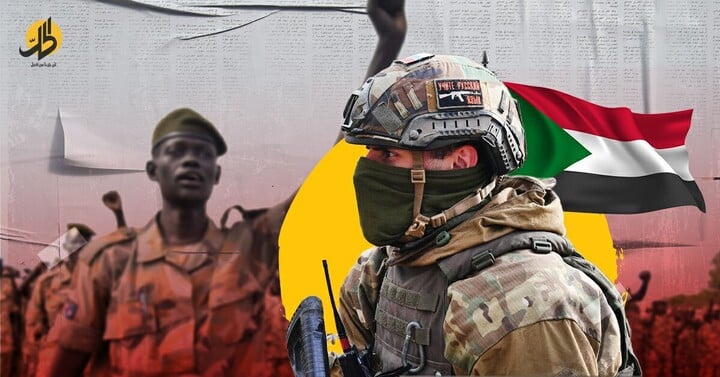
A brief report about Russian forces penetrating Sudanese territory, killing 12 Sudanese civilians and wounding five others, has opened a wave of questions about Russia’s presence in Sudan. Who are these Russians? Are they Wagner forces, the so-called Russian Legion, or simply unnamed mercenaries like those scattered around gold mines in the region? Where did they come from, what drove them to kill civilians, and where exactly did the incident take place? What are its broader implications?
While attention has largely focused on the flow of weapons and supplies from southern Libya and South Sudan, foreign forces are now reportedly entering Sudan directly—opening fire, killing civilians, expelling local populations, establishing military positions, transporting equipment deep into the country, and taking control of areas in far western Sudan along the border with the Central African Republic (CAR). Are these official Russian forces under Moscow’s command, or merely mercenaries?
Answering this question takes us back to the starting point: Russia’s long-standing ambition, since 2017, to establish a military base in a strategically central location in Africa—one that would enable access to the continent’s resource-rich regions. This was evident when Moscow reached an agreement with former Sudanese president Omar al-Bashir to establish the “Flamingo” naval base on the Red Sea. That plan collapsed following the popular uprising that ousted Bashir.
Russia then shifted its focus to the Central African Republic, which had just shed French military influence—an influence that had long angered authorities in Bangui due to France’s reluctance to decisively confront armed groups threatening the political system near the French base. Russia, by contrast, engaged these groups militarily upon arrival, defeating them and ending their presence. This was viewed by the CAR government as a political victory, leading it to grant Russia a military base in 2024 that now reportedly hosts around 10,000 fighters, along with armored vehicles and aircraft.
Russia was also granted a base along the CAR–Sudan border, an area known for armed opposition activity. Russian forces now officially guard the political system and the state itself—rather than the national army. Even the president’s personal guards are reportedly Russian, with the base overseeing their appointment and supervision.
Analysts believe Moscow seeks to exploit any space vacated by French forces. Mondafrique previously reported that presidential adviser Fidel Ngouandjika said his country was prepared to grant Russia additional military bases for training CAR soldiers, adding: “We believe Russia should remain with us.”
African affairs expert Charles Assijebo says Moscow enjoys strong ties with Bangui built on Wagner fighters’ role in helping the government eliminate militia control. “Russia has expanded its sphere of influence toward Mali, Burkina Faso, and even Sudan and Libya,” he said. He added that securing a base in Bangui offered Russia a new opportunity after failing to establish a base at Port Sudan due to instability in Sudan. “The Bangui base is strategically well-located, close to Russia’s expanding influence in central Africa and the Sahel region.”
This raises a critical question: is the Russian presence now effectively legitimized through a major base in Bangui and another near the Sudanese border, close to the Um Dafuq area? Are these Wagner forces? The answer is both yes and no. They are former Wagner fighters who, after the death of Wagner’s leader, were absorbed into Russia’s Ministry of Defense and rebranded as the “African Corps.” They are currently deployed in the Central African Republic, Niger, Burkina Faso, Equatorial Guinea, and Libya.
But why did they enter Sudanese territory and seize control of areas there? Local sources say militia forces and their civilian administration struck an agreement with the authorities of Birao Prefecture in the CAR, bordering Sudan, to open a commercial crossing at a border area known as Karkar, where they established offices. Russian forces later arrived, shut down the crossing, expelled all Sudanese elements, and forced them to retreat to Um Dafuq without explanation. Even the authorities in Birao reportedly do not know why the Russians closed the trading point.
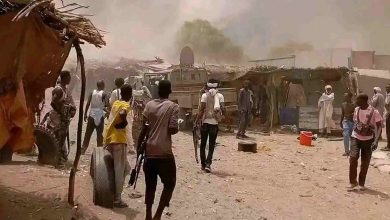
This came after Russian forces killed Sudanese civilians at a weekly border market known as Kabou. According to eyewitnesses, a group of Sudanese herders entered the market carrying weapons. Russian forces demanded they surrender their arms; when they refused, the Russians opened fire, killing 12 people on the spot and wounding five others.
Witnesses say gatherings of Sudanese nomads have since become targets of Russian patrols operating along the Sudan–CAR border. These forces control roads, restrict movement according to their own rules, and prevent passage without authorization. Local authorities, witnesses added, have no power to object to road and market closures, as Russia is now responsible for border security and preventing fighters from Sudan’s war from crossing into Central African territory.