Sudan, on Its 70th Anniversary, Needs a Measure of Fairness—and a Little Self-Criticism

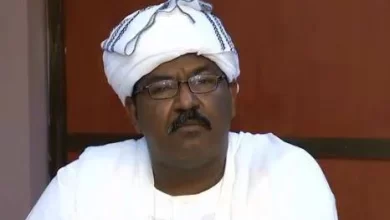
Dr Al-Khidr Haroun
The sharp turns in the history of peoples and states—those that lead to disasters and ordeals—demand pauses in which we feel for the points of danger and the sites of failure, mend breaches, and close gaps, in preparation for resuming the journey with clear sight and for seeking measures that avoid the pitfalls of error and the repetition of crises. In truth, that is among the most pressing obligations and the most sacred tasks. Sudan has endured its most violent shock since independence at the beginning of 1956, as a result of the aggression it faced on 15 April 2023—whose dangers remain manifest and looming, whose wounds still bleed and inflict pain, and whose toll continues to claim precious lives across the length and breadth of the country. And because this is not the first such ordeal in Sudan’s long history—stretching back some eight thousand years—yet after each of them Sudan has remained, retaining most of the features of its earliest formation, this is a sign of hope and a good omen that it will endure and overcome this trial, just as it did with earlier calamities and afflictions.
Much of what has befallen us has been the result of a predatory invasion, tainted by a base arrogance that fills its perpetrators with illicit pride and false grandeur—grandeur that is no grandeur at all. True greatness is measured by the scales of right and justice, not by killing on the basis of identity, terrorising the elderly and women, raping free women and underage girls and boys, cutting open the bellies of pregnant women and hanging them from tree branches until death. If such acts were greatness, then Genghis Khan, Hulagu, Hitler, Mussolini, and Joseph Stalin would be counted among the great—far from it.
The incursions that reached our own homeland include some that occurred centuries before Christ, led by the great powers of the time: Cambyses the Great brought a vast Persian army; emperors came from Greece and Rome. Invasions between us and Egypt also continued back and forth without end. And for every invader from beyond our borders, there were, among the sons of the homeland, abject guides—humiliated informants—who aided them against old men and women, aunts and uncles, killing them and multiplying their humiliation before killing them. Zayd ibn Mukhlaf al-Thaqafi, known as Abu Righal, guided the Abyssinian invader Abraha to the Ka‘bah to destroy it, and his name became a byword in Arab history: “Abu Righal!”—a label applied to every vile traitor who sold his people and his land for dirhams and dinars. The Arabs used to stone his grave after the pilgrimage, even before Islam.
The ruling queens of Sudan—the Kandakas—confronted invaders before people elsewhere had even known female rule, bringing their commanders in chains and fetters. One of them, Queen Amanirenas, placed the statue of Augustus—venerated by the Romans as the founder of the Roman Empire in 27 BC—beneath her feet on the throne. The Romans attempted to retrieve it through negotiations that ended with a document signed on one of the Mediterranean islands, which the Arabs used to call the Sea of the Romans; yet she did not return it. I recall being tasked with meeting the US Deputy Secretary of State Robert Zoellick and handing him a commemorative plate bearing an image of that great queen with those white men shackled in irons before her. He laughed and said to me: “What is this woman doing?” Then he added: “I do not think she was doing anything good!”
The second Kushite capital at Napata—Kareima today—was burned entirely and left as though it had never been, as retribution for taking that statue from a temple in Lower Nubia, south of Egypt. Ezana, King of Aksum, destroyed the great civilisation of Meroë—one that had reached the very heights of achievement, smelting iron to the extent that Europeans later called it “the ancient Birmingham”. Its gatherings dispersed; its princes turned westwards, carrying their knowledge with them, so that the languages of West Africa absorbed elements of what came to be known as “Sudanic languages”.
In the eras of the ancient Nubian kingdoms, cities rivalled the great centres of Byzantium: urban hubs, temples, and, in the Christian period, cathedrals; universities; and, later, khalwas whose domes lit the night with the recitation of the Wise Reminder. Predatory invasions did not cease. Then came the Albanian adventurer Muhammad Ali, draped in the insignia of the Islamic Caliphate, acting with deception and guile in search of Sudan’s formidable fighters and gold to build an army with which to overthrow the Ottomans and replace them as caliph of the believers. Our people fought him at Umm Baqar (Kortie) with whatever horsemen they could muster, and they killed his arrogant son in the heartland of the Ja‘aliyyin. He then unleashed his son-in-law upon us, who reaped thousands of lives and caused migrations in every direction. The people rose against him and liberated themselves at a time when most of the world’s poor lay under occupation by the Mahdi. But then the flame of dignity that had united us dimmed; differences crept in; we resumed killing—killing one another—until the coloniser, who slipped in through our weakness, said he found the North as though it were empty of people. His pretence of pity did not prevent him from slaughtering eleven thousand heroes at Karari, cold-bloodedly, within a few short hours. Omdurman, the capital of Sudan, was devastated by three calamities. Yet Sudan endured nonetheless—and rose again.
The essence of all this is that defeats, setbacks, and failures to achieve balanced and sustainable development do not necessarily require “re-founding”. Sudan was founded eight thousand years ago and has remained, in essence, as it was at the beginning. It bore many names, all meaning peoples of black complexion: Tanehisu, Ethiopia (“people of burnt faces”), Kush, son of Ham, son of Noah the Black, and Bilad al-Sudan. Asian, Arab, Maghrebi, and purely African ethnicities mixed with them across the ages without severing their belonging to the African continent—leading historians and anthropologists such as William Adams, G. Spalding, Richard Lobban, and others to emphasise the continuity of Nubian civilisations, adapting to Christianity and then Islam—an ingenuity that ensured the survival of that distinctive civilisation.
This is a land of civilisation and migration from everywhere: from West Africa, from the greater Maghreb and the lands of Shinqit. That pace increased when the sultans of Darfur and the Islamic kingdoms dug wells along the road heading eastwards towards the White Nile, serving pilgrims and strengthening ties with their brethren in central and eastern Sudan. People blended; bloodlines intertwined; this crucible produced great, creative people.
The “Katib al-Shuna”, as documented by Professor Yusuf Fadl Hasan, relates that when the Abyssinian king Iyasu invaded parts of the Funj Sultanate in 1738 with the help of a rebellious Sudanese man named Nayil Wad ‘Ajib, the Sultan of Sennar, Badi Abu Shalukh, sent a great army that defeated him. News of that victory spread and delighted the Muslim lands, including Sultan Mahmud I of the Ottoman Empire. As a result, delegations came to the Funj Sultanate “from the Hijaz, India, Sind, Upper Egypt, and the far Maghreb, and settled there…” (footnote 14, p. 93, Dar Madarik, first edition, 2008). See also Dr al-Fatih Hasanein’s book on the migration of Maghrebis to the Karkoj area five hundred years ago.
Arabic was firmly rooted; it was not brought by the Khedive, as some claim—indeed, he himself did not speak Arabic. It was in Arabic that the Sultan of Sennar addressed him when his son came as an invader: “Do not be deceived by your dominance over the Ja‘aliyyin and the Shayqiyya; we are the masters, and they are the subjects.” Yet the Condominium administration barred Christian missionary activity north of the 10th parallel—in northern Sudan—fearing the arousal of Sudanese religious fervour, as Lord Cromer judged, and also to avoid the anger of the Egyptian parliament and press, and accusations that the British were Christianising Muslims in Sudan.
This is not an obscure or forgotten land. It has deep roots in glory and has remained a land of influence and أثر. The Idrisi path of Shaykh Ibrahim al-Rashid al-Duwayhi still has followers in Somalia—among them the Somali Mahdi, against whom the British used warplanes for the first time in Africa. Do you not notice the prevalence of the name al-Rashid and ‘Abd al-Rashid there even today? The Salimiyya path derives from his nephew Salim, who succeeded him; as Ofahi noted in his doctoral dissertation, it has followers in Syria and elsewhere in the Muslim world. The University of Africa draws from the same rich, inexhaustible spring.
Some reduce the reasons for failure to “faulty founding” after independence, when politics and elite rivalries dominated. The founding fathers in Africa sought to avoid this by not opening Pandora’s box—by respecting the borders inherited from colonialism. That approach was largely respected, and it was breached only in the case of South Sudan’s secession.
I tried to study, with detachment and objectivity, the hypothesis that Sudan is the only state to have failed to build and preserve a democratic order and territorial unity after independence, and I found that Sudan did not fail uniquely. In Africa and Asia, only very few post-colonial states held together firmly, and even fewer partially succeeded in maintaining democratic systems. In Asia, India preserved a parliamentary democracy but lost territorial unity following the partition of India into Pakistan. The second state that preserved democracy was Sri Lanka. Yet, it suffered a fierce separatist war in its Hindu-majority north—whose Tamil population had been brought by the British from Tamil Nadu in southern India. Its persistence in civilian democratic rule may be attributed to its small size, limited population, and the relative cohesion of its Sinhalese Buddhist majority (75%). India’s success in preserving democracy stems from the Indian National Congress’s long experience in political struggle and from the fact that it was founded in 1885—some 62 years before independence—and served as a broad vessel for India’s nationalities against British colonialism, before the strong Communist Party split away in the 1920s and the Muslim League later. Congress made democracy a natural inheritance in its practice, though reliance on a mechanical majority led to the marginalisation of Muslims, a large minority whom Mahatma Gandhi sought to accommodate in order to preserve the unity of the subcontinent. He even tried to install Muhammad Ali Jinnah as prime minister, as recounted by Jaswant Singh, India’s former foreign minister.
The African states that preserved democracy are also few—among them Botswana, Mauritius, Namibia, and South Africa. Other states suffered coups after independence and later managed to establish democratic systems, such as Ghana, Zambia, and Kenya, though tribalism remained a cover for democracy, and the larger and more cohesive the tribe, the more likely the “democratic” system persisted in some of those countries.
Sudan’s democracy relied on religious sectarianism—a higher rung of development than that based on tribe. It was possible to endure it until it matured—yet the politics of the region do not know patience, even when Sudanese people adorn themselves with it.
The failure of the Indian National Congress to keep India unified resembles, in certain respects, our failure to convince the South to remain within a unified Sudan, despite colonial policies that administered North and South differently as though they were two separate countries, then hurriedly sought to merge them on the eve of independence, hastening its departure and leaving both to their fate. For five decades, it had sown hatred and stirred antagonisms between them, undermining trust. It then attempted, at the last moment, to keep Sudan united—pressuring southerners to accept unity at the 1947 Juba Conference, with promises of federalism that were unknown across the continent and that frightened the North, which saw them as bait for secession. The North did not fulfil its promise, for which it is blameworthy beyond doubt—even if we make allowances for how strange the idea was in continental terms. Mistrust turned into a permanent conflict that ended in full separation.
Some eager elites, quick to condemn the fathers of independence, avoid acknowledging the greater role of colonialism in widening the gap between the two halves of the country through the Closed Districts policy for fifty years—then expecting the independence generation to bridge it simply by agreeing to federalism. We saw how the six-year experiment of the National Unity Government after the 2005 Comprehensive Peace Agreement failed, and how the South prepared for secession from the very first day—incited by the same colonial forces from overseas, or by crude arrangements from some separatists who deluded themselves that they would seize all the oil, impoverish the North, then march upon it and absorb it into a coercive unity according to a “New Sudan” vision modified from Marxism-Leninism to Western liberalism in its anti-religious version. A wise man among them once told me he said to them, “The North has existed for centuries without oil!”
The “Graduates’ Generation”, despite the contempt of the Administrative Secretary Gillan in 1938—who mocked the colonial government’s “graduates” as a grandiose, inflated word lacking real substance, since it included both secondary-school and university graduates and did not exceed three thousand people—nevertheless, in fairness, succeeded in Sudanising the civil service quickly, and managed the transitional elections successfully until independence was achieved. They inherited a vast country—nearly one million square miles—whose economy depended on a single crop: cotton grown in the Gezira, served by old railways, a relic of the nineteenth century, alongside roughly three secondary schools and a solitary university college. Within the limits of what was possible, they strove; they succeeded, and they failed. They developed the railways somewhat, even assisting African states such as Zambia, and extended lines as far as Wau in the South and westward to Nyala. They expanded the Gezira Scheme through the Roseires Dam and extended cultivation to include the Managil area. They established a national airline that was a regional pioneer and founded the University of Khartoum. Those who came after them established sugar factories, grain silos, and a maritime fleet of about 18 large ocean-going vessels, extracted النفط, built transcontinental roads, and founded a university in every state covering all disciplines of knowledge—under extraordinarily delicate and complex conditions. Despite the colonial administrative secretary’s disdain for the educated, Sir William Luce—who served as legal adviser to the Governor-General in Sudan and later advised British Gulf and Yemeni territories—counselled those territories at independence to draw on Sudanese expertise; and Sudanese professionals proved worthy of that trust. The Financial Times magazine devoted its 1978 cover story to Sudan, noting among other things that Britain boasted of having left Sudan with a robust system of education and civil service.
The point is that the early fathers, given the conditions they lived through and the knowledge they acquired under an occupying system, exerted an effort for which they deserve credit. They preserved Sudan with its tolerant, open culture, encompassing ethnicities and beliefs that arrived from every direction. They also committed failures—some rooted in self-interest and miserliness, others in misjudgements whose error devastated the country and its people. What we do not include in this account, of course, are betrayals and setbacks in service of external interests. It is to the credit of most of them that they were not corrupt; most lived modestly among the people.
In sum, the country does not need “founding” anew, but of revisiting how it is governed in a manner that satisfies the majority of its people. Given its vastness, the Funj Sultanate in Sennar ruled for nearly three uninterrupted centuries because it was a decentralised system akin to confederate governance: power was divided between the Abdallab, who controlled the northern region and parts of the Gezira and eastern Nile, and the Funj, who controlled the rest of the country, with overall supervision of the kingdom. Reforming the errors that preceded the war is urgent and necessary; understanding and placing the national interest above all else is obligatory, necessary, and possible.
The anthropologist Ruth Benedict wrote a book in 1946—compiled during the Second World War at the behest of the US War Department—for which she was criticised for using science as a vehicle for war aims. The same criticism was directed at E. E. Evans-Pritchard for writing The Nuer in the service of British intelligence to better control a tribe that had risen against the coloniser in forty incidents. Benedict’s book sought to probe the puzzling Japanese culture, where the Japanese personality appears outwardly calm, peaceful, and extremely polite, while harbouring an unimaginable degree of stubbornness, harshness, and resilience. Hence, the title The Chrysanthemum and the Sword. It offered a deep discussion of the contrast between Western “guilt culture”, in which behaviour is governed by an internal conscience that leads its bearer to confess wrongdoing, accept consequences, and seek forgiveness, and the “shame culture” that the author saw as characteristic of Japan, governed by social acceptance or rejection; if nobody learns of a wrongdoing, its perpetrator suffers little, but if disgrace becomes public, the perpetrator may commit suicide—or so the author observed, akin to describing someone as “a slave of appearances”. Some Japanese intellectuals confirmed to me the gist of her conclusions when I worked in Tokyo: I once played for some of them recordings about wartime horrors—the firebombing that killed one hundred thousand in Tokyo, and how survivors near rivers threw themselves into them—before the nuclear strikes on Nagasaki and Hiroshima. Yet they would repeatedly say that Japan had brought it upon itself by entering a war it had no business fighting.
Benedict concluded that stubbornness did not prevent Japan from reviewing itself; after it smashed its head against the wall, it awakened and undertook the necessary revisions, benefiting from demilitarisation and rising to become the world’s second-largest economy within two decades. Germany did similarly. Both remained what they were before the war—Japan remained Japan, and Germany remained Germany—without being “re-founded”, because founding is the fruit of a long history and of generational features that succeed one another.
We conclude that this war has convinced millions of all backgrounds and affiliations to align behind the homeland and preserve it, regardless of the sacrifices, and to agree on how it should be governed thereafter, according to standards of equality, fairness, and transparency.