Will Our Government Lead Us Astray?
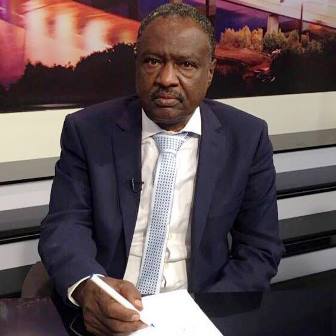
Rashid Abdel Rahim
One of the clearest manifestations of the confusion gripping the government is the contradiction in its decisions on fundamental issues, revealing a lack of understanding of its core responsibilities.
The Electricity Company announced an increase in tariffs, only for the Minister of Energy to promptly issue a decision canceling the hike. Yet neither the ministry nor the company has the authority to set prices. This mandate lies with the Ministry of Finance. At most, the ministry and the company may propose the framework for increases and how they are distributed across tariff categories.
Even greater confusion lies in the government’s announcement that it has approved the state’s general budget. A budget is a binding law, and laws, according to the Constitutional Document, are issued through a joint session of the Sovereignty Council and the Council of Ministers. In legal terms, therefore, there is currently no binding national budget for the state or for anyone.
From a government mired in such chaos, it is unsurprising to see decisions imposing higher fees on a commodity in which Sudan enjoys a global competitive advantage. Fees on gum arabic were suddenly raised from 6,000 pounds to 15,000 pounds in one stroke.
Global gold prices have seen a notable increase this year, with expectations that the upward trend will continue into the coming year. This coincides with confusion in the management of gold in Sudan, where artisanal mining dominates a commodity that should, by nature, fall under direct government control as a subsoil resource. Ambiguity still surrounds plans to establish a gold exchange—will it be in Qatar or in Sudan?
There is widespread talk that most of Sudan’s gold exports are currently directed to the United Arab Emirates, as if hostile actions against Sudan are being financed by the country’s own strategic resources.
Meanwhile, Sudan’s livestock wealth has become hostage to the unilateral visions and decisions of a minister who speaks of projects he alone defines and approves.
The Central Bank of Sudan has issued monetary policies for the coming year, projecting exchange rate stability and declining inflation. However, the reality on the ground makes such goals unattainable, particularly given a government in disarray that relies on raising fees and taxes—measures that burden citizens and stifle trade and commodities.
Many institutions and officials remain based in Port Sudan, incurring heavy expenditures on hotel accommodation, allowances, four-wheel-drive vehicles, and staff, all while operating away from their actual workplaces inside and outside the country.
This occurs amid widespread talk of major corruption, which the government avoids addressing—neither acknowledging it nor decisively denying or combating it.
A return to Khartoum would mean increased production and services, as it hosts major factories and service sectors. These represent revenues from fees and taxes that are currently being wasted.
Our government is lost and far removed from what is required, at a time when the war is entering its third year. Were it not for the army’s professionalism on the battlefield—securing weapons, equipment, salaries, and operational requirements—the country would have been lost.
Will Sudan be lost under the government of Kamel Idris?