With Ministries Returning, Khartoum Reopens the File of Life Despite Its Wounds
Report – Sudan Events
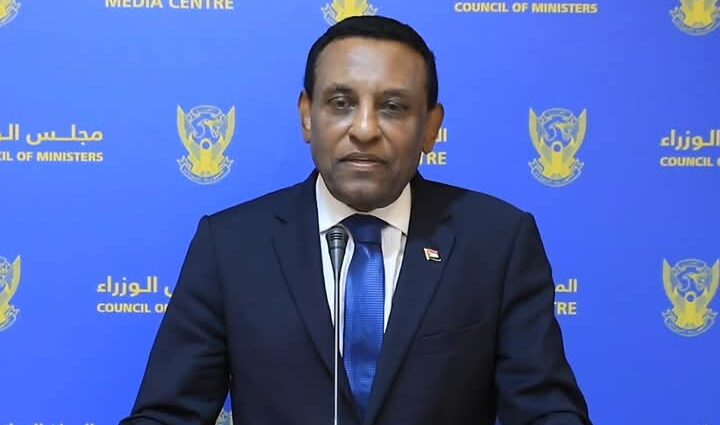
Official work resumed on Sunday at the Ministries Complex in the Al-Maادن Towers in Khartoum, following the return of several ministries, including the Ministry of Justice, the Ministry of Minerals, the Ministry of Human Resources and Social Development, and the Ministry of Culture, Information and Tourism, in addition to the Office of the Prime Minister.
As ministries and the machinery of government return to Khartoum—amid accelerating steps at the start of the new year—the city itself is raising pressing questions about the timing and conditions of this return. Large numbers of employees are now expected to report back to their government jobs in a complex reality that neither addresses all their concerns nor meets their basic needs. Many parts of Khartoum remain unprepared in terms of services and security.
Where—and how—will thousands of families live when their breadwinners are asked to return to Khartoum and resume work? Have the conditions for return been met, including services, security, transportation, and basic necessities? Even if essential goods are available, can an employee ordered back to work afford to support a family amid soaring prices? And the most pressing question of all: where will employees and their families live?
Most families returning to Khartoum have encountered major difficulties compared with the city they left when they were displaced to other states or abroad. Khartoum’s features have changed in many ways and the city itself is now grappling with multiple challenges—some related to services, others environmental and health-related. The destruction left by militia presence in Khartoum has affected all aspects of life: hospitals, health centers, drug warehouses and pharmacies have been destroyed, along with universities, factories, offices, companies, government buildings, homes, shops, and markets. Little was spared.
This devastation has placed enormous burdens on citizens and authorities alike. Large and vital parts of the capital remain without electricity, while others still lack stable water services. Mosquitoes and disease vectors such as dengue and malaria are widespread. Theft, armed robbery, and looting persist, alongside a high cost of living and rampant inflation. Education has been marked by disruption and rising costs, as have housing rents. The city has also seen increased foreign presence, the spread of organized begging, and the return of tea sellers occupying streets—despite the risks highlighted during the period of Rapid Support Forces militia presence.
Property rents have surged dramatically. The monthly rent for a house has reached up to 4 billion Sudanese pounds, while shop rents in Omdurman Market have climbed to 2 billion pounds per month, and in some areas to as much as 4 billion. This is despite the fact that parts of the market that have resumed activity still suffer from a lack of electricity and are forced to close before sunset daily due to security concerns and power outages.
Many traders have moved their warehouses from Omdurman Market and surrounding neighborhoods—such as Al-Bosta, Al-Arab, Al-Hijra, and even Wad Nubawi—into residential homes in Omdurman, fearing theft and armed robbery. These areas remain largely depopulated, except for certain neighborhoods whose residents are mostly displaced people from western Omdurman; the original inhabitants have yet to return.
While some insist on returning to their homes in areas such as Al-Kalaklat, Ombada, and Shambat, they face acute service shortages as a daily reality. During its presence in Khartoum, the militia stripped these areas of electrical transformers, leaving them without power for years. Although the government has begun importing transformers—some of which have already reached Khartoum—large areas remain without electricity. Even if the city’s power infrastructure is restored, electricity generation problems persist, with stations such as Garri and Bahri still out of service. Moreover, many homes were completely looted, with no trace of furniture—or even basic items like spoons—remaining. In some cases, houses were stripped of tiles and electrical wiring altogether.
Salah Wad Al-Hussein, a tax office employee, said: “We were asked to return and resume work from Khartoum, but we still don’t know how. Conditions in Khartoum are not yet stable. We now have to search for housing for our families—my own house, for example, was shelled and looted and is unfit for habitation.” He added that many colleagues are struggling to normalize their lives and return, noting that the government, in deciding to bring ministries back to Khartoum, did not adequately take employees and workers into account—especially given the extremely high rents and the fact that the current center of daily life in Khartoum is largely confined to Karari.
Hassan Al-Alam, an employee at the University of Sudan, said he returned months ago and began seeking solutions for his home in the Jabra area, but the house suffered major structural cracks and its contents were looted. “We support the return and the normalization of life,” he said, “but the government must work with us and accelerate solutions to the service crisis. We want to return to our homes, but the situation requires better organization, more time, and greater effort.”