Targeting Power Transformers: When the Militia Repeats a Failed Tactic
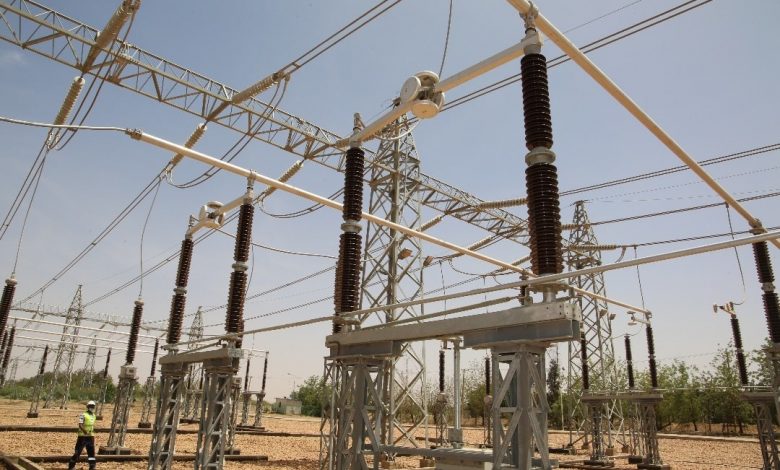
Over the past several days, the Rapid Support Forces (RSF) militia has targeted the cities of Merowe and Atbara in an attempt to breach what remains of public confidence and to reach and damage critical infrastructure—continuing a pattern it has long pursued in its war against the Sudanese people. Earlier this week, the militia attacked the Merowe Dam in an effort to cut electricity supplies to the country, which relies heavily on the dam. The targeting of Merowe has been persistent: a previous drone strike caused significant damage to the dam’s transformers, leading to prolonged power outages across several Sudanese cities. The militia has since attempted to strike the same transformers multiple times, most recently last week.
This week, the militia also targeted electricity transformers in the city of El Obeid, causing severe damage that disconnected the city from the national grid. Its latest attacks on the power sector included strikes on transformers in Atbara and several service facilities in the city. Drones also targeted Ad-Damer, the capital of River Nile State.
It has become increasingly clear, given the militia’s insistence on attacking the electricity sector, that its drones are deliberately targeting power transformers in urban centers in an attempt to disrupt electricity supplies to civilians and impose conditions that could force residents to leave these cities—particularly as electricity and water services, which depend largely on power supply, are halted in most urban areas. This raises a fundamental question: why do the militia’s drones avoid military تجمعات (concentrations) they are fighting, and instead directly target civilian electricity infrastructure? The electricity sector is, ultimately, a civilian service providing essential needs to the population—not a military camp engaged in combat with the militia.
Dr. Osama Hanfi, Professor of Political Science at the University of Sudan, says that, based on his observation of the militia’s way of thinking, the issue is not related to military operations in the conventional sense. “They do not view attacking electricity as a purely military action,” he explains. “They believe that striking such infrastructure will undermine public morale and pressure the government into negotiations. Through these drone attacks and power outages, the militia is trying to send a message: ‘We are here, we exist, and we can change the equation.’ If you review how they manage both the battlefield and the political arena, you will see a clear pattern based on propaganda, rumor-mongering, and attempts to suffocate and besiege military and political leadership by cutting off services.”
He adds: “From the very beginning, whenever talk of negotiations emerged, the militia would rush to shell cities and attack civilians, believing this would force the government to negotiate and make concessions. Yet this has not happened—the government has neither gone to negotiations on their terms nor offered concessions. Still, the militia has clung to the same approach, continuing to believe that pressuring decision-makers by cutting services and producing propaganda could work. Experience has shown, however, that the situation is far more complex. If it were that simple, the militia’s pressure campaigns over the years—during which it destroyed infrastructure, looted the country, and targeted communications, electricity, water, and other sectors—would have produced outcomes aligned with its vision. They did not.”
Al-Yasa‘ Mohammed Nour, a political researcher and director of the Nour Center for Strategic Studies, supports the view that the current drone attacks on electricity transformers may have military justifications linked to battlefield developments. “We have become accustomed to the militia resorting to infrastructure attacks and targeting civilians whenever it suffers defeats on the battlefield,” he says. “They also believe that striking a service as vital to Sudanese daily life as electricity will demoralize the population—especially with the return of large numbers of refugees and the concentration of populations in cities such as those in River Nile State and the Northern State.”
He adds that ethnic and tribal motivations may also be driving the targeting of the Northern and River Nile states. “Such attacks can raise the morale of militia fighters at a time when they are under intense pressure on the Kordofan fronts, where fighting is currently draining their manpower and equipment, exposing the militia’s vulnerabilities. Many issues that militia leaders previously tried to evade have resurfaced amid the ferocity of the Kordofan battles. There are also numerous fears—some military, but mostly ethnic—linked to what members of these tribes did to civilians, which are now coming to the surface.”
Nour concludes: “I believe that most of these operations are attempts to say, ‘We are still in the battlefield, and settlement and negotiation are the only way to stop the war.’ This is a message the militia keeps repeating in an effort to preserve what it has achieved and to evade accountability for what it has done to Sudanese people and the crimes it has committed. In essence, what is happening now is that they are repeating a tactic that has already failed.”