A Political Reading in a World Being Reordered Without Clear Maps (1/4)
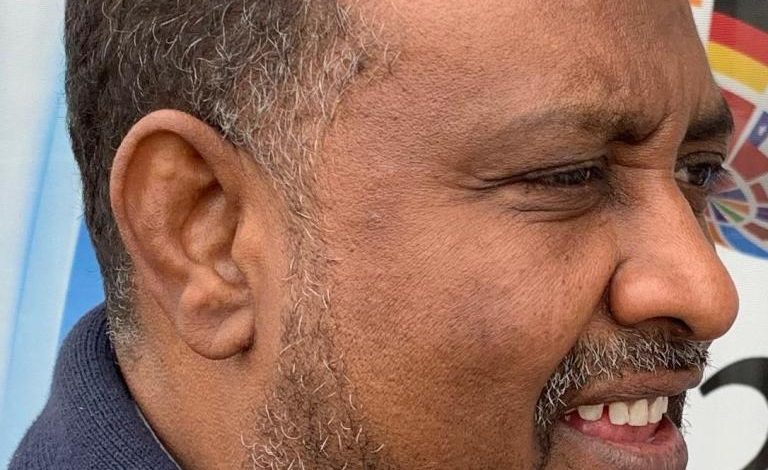
Abdulaziz Yagoub
When Henry Kissinger wrote his book Does America Need a Foreign Policy?, he was not posing a theoretical question, nor was he redefining self-evident truths. At its core, he was attempting to restore politics to its rightful place after it had been hijacked by rhetoric. He believed that the United States, having emerged victorious from the Cold War, had fallen into a dangerous trap: the conviction that power alone was sufficient, that history had ended, and that American values were universally applicable without negotiation, gradualism, or objection.
Kissinger’s vision begins with a simple premise: the world is not governed by good intentions, but by balances of power. A state that ignores this reality does not become more moral than others; it becomes less wise. Values, in his view, are not to be discarded, but they are unfit to replace politics. Politics determines when and how values are defended, at what cost, and with whom or against whom. When values are severed from political calculation, they turn into instruments of justification rather than an ethical framework.
Kissinger argued that America erred when it sought to act as a global judge instead of a manager of balance. A judge delivers verdicts; a balance manager prevents explosions. In a world of multiple civilizations, histories, and interests, imposing a single model inevitably generates resistance. Nor can adversaries be ignored on the grounds that they are “immoral,” because ignoring them does not erase their existence—it unleashes their conflicts.
From this perspective, Kissinger stressed a central idea: foreign policy is not about declaring positions, but about building pathways. It is not about whom we condemn, but whom we negotiate with. It is not about grand slogans, but about the small details that prevent war before it erupts. He warned against confusing deterrence with intervention, and influence with hegemony—because hegemony is exhausted, while influence is managed.
In his book, Kissinger called for a foreign policy grounded in the recognition of limits: the limits of power, the limits of the capacity to change others, and the limits of responsibility. A state that believes it can reshape the world in its own image inevitably overuses its power, only to be shocked when it discovers that the world has not changed—but it has, and has lost its ability to influence.
Kissinger was neither advocating withdrawal nor calling for aggression. Rather, he urged discrimination between what is vital and what is secondary. He believed that excessive interventions weaken the capacity for decisive action, and that turning every crisis into a moral battle deprives politics of its flexibility. Not every injustice can be resolved by force, not every conflict warrants intervention, and not every war is politically winnable even if it is militarily won.
Here lies the idea of particular relevance to the Arab reader: strategic deception does not stem solely from great powers, but also from the discourse presented about their intentions. When wars are framed as a defense of values, we must ask about interests. When intervention is portrayed as rescue, we must ask about cost and alternatives. And when withdrawal is marketed as peace, we must ask who fills the vacuum.
Kissinger was candid in asserting that the international order is not built on justice alone, but on mutual acceptance of the rules of the game. Those who do not participate in shaping these rules do not participate in the game; they are subjected to choices they did not make. Thus, understanding U.S. foreign policy—or any major power’s policy—does not come from believing its rhetoric, but from grasping its position in the balance of power, the limits of its maneuver, and its internal contradictions.
In this sense, Kissinger’s book is not a defense of America, but a guide to reading the world. It teaches the reader how to distinguish between language and reality, between what is said and what is done, and between what is meant to be understood and what must actually be understood. At its core, it is a call to free oneself from political naïveté—not to adopt a blind, harsh realism.
Politics, as Kissinger sought to redefine it, is not the abandonment of principles, but their protection from erosion. Those who do not understand the logic of influence cannot defend their cause, no matter how just it may be, because justice without politics remains a cry, while politics without justice becomes oppression. History does not side with those who shout the loudest, but with those who understand the moment of power and its limits.
For all these reasons, reading Kissinger is not an intellectual luxury, but a necessity of awareness. What he described as a flaw in managing global power, we in the Arab world experience as a daily cost. We are not outside this equation, nor on its margins, but at the heart of its open arenas. Our lands are testing grounds, our causes are bargaining chips, and our divisions are the cracks through which influence seeps.
When we fail to understand politics as it is, not as we wish it to be, we shift from actors to objects, from owners of causes to tools in conflicts larger than ourselves. When we believe rhetoric instead of reading interests, we sometimes fight on behalf of others, and quarrel among ourselves in the name of slogans whose decisions and endings we do not control.
Kissinger did not write to teach America how to dominate, but to warn that blind hegemony strips its owner of control. For us, however, the danger lies not only in the dominance of others, but in our inability to build an independent politics of influence, and in our continued management of conflicts through reaction rather than vision, emotion rather than calculation, alignment rather than interest.
From here emerges the real question that sets the stage for what follows this text: how does this absent politics manifest itself in our Arab conflicts? How did Palestine shift from a unifying cause to an arena of international investment? How did states collapse from within because politics vanished before the state itself? And how did Gulf disagreements move from natural divergences of interest to influence-driven conflicts that weaken everyone and invite external actors?
These are not questions Kissinger answers, because they are not his concern. They are questions we are forced to confront, because the price of absent politics is not paid in books and papers, but in homelands. And here begins the discussion of our Arab reality—not merely as a victim, but as a bearer of responsibility as well.
To be continued.