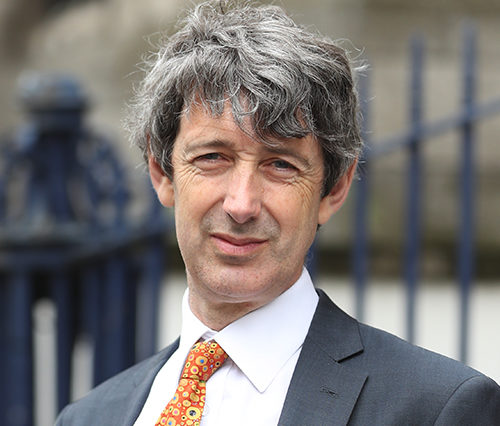
Alex de Waal, Executive Director of the World Peace Foundation, has warned that Sudan’s war is no longer a contained internal conflict, but has evolved into a regional crisis fueled by Middle Eastern rivalries—chief among them competition for influence between the UAE and Saudi Arabia. He cautioned that this dynamic raises the risk of the Horn of Africa, the Nile Valley, and the Sahel sliding into “a vast arena of disorder.”
In an article published on January 8, 2026, titled “The War That Escaped Sudan,” de Waal said the “Quartet” comprising the United States, Egypt, Saudi Arabia, and the UAE has so far failed to produce an effective peace process, despite proposing a plan in September that included a ceasefire, humanitarian access, and negotiations toward civilian rule. He noted that the collapse of the plan was followed almost immediately by a major escalation on the ground.
The article stated that in October, the Rapid Support Forces carried out what de Waal described as “the worst atrocity of the war”, overrunning El Fasher after an 18-month starvation siege. At least 7,000 people were reportedly killed, with up to 100,000 missing, alongside the circulation of video footage showing torture and executions.
De Waal noted that fighting continues to intensify, with the RSF besieging the city of El Obeid in North Kordofan and targeting civilian sites, including a kindergarten, while arms continue to flow to both sides. Observers, he wrote, have documented an increase since October in military cargo flights to airports under RSF control, alongside reports of advanced Chinese drones and Colombian mercenaries, with flight routes traced back to the UAE. This, he contrasted with what he described as increased support from Egypt and Turkey for the Sudanese Armed Forces.
On the regional dimension, de Waal highlighted the entanglement of supply lines through Chad, Libya, Somalia, and South Sudan, with potential spillover into Ethiopia and Kenya. He warned of the overlap between Sudan’s war and tensions between Ethiopia and Eritrea, and pointed to the Red Sea as an increasingly contested strategic arena marked by a race to establish regional and international bases and ports.
In a notable point, de Waal said that Israel’s recognition of “Somaliland” in late December—according to his account—could “raise the stakes” in the Horn of Africa and deepen polarization among competing regional axes.
He concluded by stressing that the immediate obstacle to a settlement is not the UAE alone, but also the internal complexities within the army camp and the Sudanese Armed Forces’ leadership’s ability to manage its internal alliances. De Waal warned that any agreement lacking monitoring mechanisms and civilian protection would not endure, calling for a more robust African-UN role through a peacekeeping force to monitor a ceasefire and protect civilians.