1,000 Days of War in Sudan: Paths to Settlement and an End to the Fighting
Report – Sudan Events
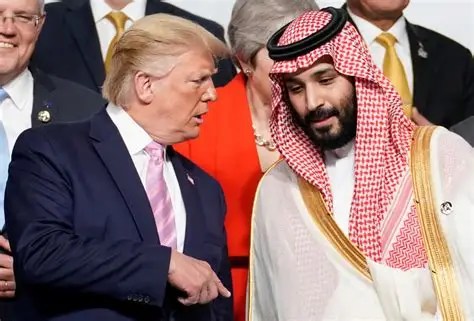
As one thousand days pass since the outbreak of the war in Sudan, political efforts to stop the conflict appear to be moving at their original, sluggish pace—initiatives here and there, protracted backroom talks, and a notable absence of verified information about what is actually taking place. This is despite the involvement of the United States through its president, Donald Trump, and the engagement of Saudi Crown Prince Mohammed bin Salman, as well as the announcement of the joint U.S.-Saudi initiative.
Nevertheless, steps toward resolving the crisis remain scattered and disconnected, divided between those insisting on a “quartet initiative” and others backing the joint initiative. As a result, the political vision for ending the crisis has become hostage to competing ambitions of multiple regional and international actors.
Meanwhile, fighting continues on the ground in Kordofan, which has witnessed—and continues to witness—intense clashes between the Sudanese army and allied military components on one side, and the militia on the other. The militia has retreated from Khartoum, where the first military operations erupted at the start of the war, moving instead to Al-Jazira State, White Nile State, and beyond, eventually reaching Kordofan. The army says current operations there are crucial before launching what it describes as “back-breaking” operations in Darfur.
At the same time, the Rapid Support Forces (RSF) militia has announced the formation of a parallel government in Darfur, choosing Nyala as its capital and appointing Al-Tayashi, a member of the Forces of Freedom and Change, as its head. The group appears to be working to entrench its authority in Darfur, echoing scenarios seen in Yemen and Libya—countries that also experienced wars backed by the United Arab Emirates, which is accused of supporting the war in Sudan.
It remains unclear whether the conflict is entering its final stages or moving into a new and more complex phase. This is not the first time talk has surfaced about a ceasefire or a political settlement in Sudan, only for events to slide into even more violent and deadly confrontations. This pattern was evident following ceasefires implemented under the Jeddah Agreement and the subsequent military and political developments that prolonged the war, devastated Sudanese homes, and claimed thousands of lives in Khartoum, Al-Jazira, and Darfur.
Political researcher and professor of international relations Mohamed Yaqeen says that the longer a war drags on, the more justifications it creates for its own continuation. “Those who benefit from the war will not stop it because of casualties, suffering, or humanitarian needs,” he said. He added: “The war could have been easily stopped after a few months, but now, in my view, matters have become complicated and difficult. Regional and international powers have intervened, seeking solutions that serve their own interests. In reality, these powers do not care whether the solution is appropriate to the crisis or not. Many international actors actually want a solution that keeps the crisis alive, so it can be reignited whenever their interests are threatened.”
Yaqeen continued: “The problem is that we unfortunately follow foreign actors, believing they possess solutions to crises they do not truly understand. This is what complicates our crises and makes reaching a solution extremely difficult and far-fetched. The army and Sudanese citizens in general will not accept the presence of militias in either the military or political sphere, while the militia will not accept proposals that dissolve it or force it to surrender its weapons. Therefore, I believe the gap between reality and the proposed solutions is wide, and so far I have not seen any proposal that absorbs these concerns, addresses them directly, and offers viable solutions.”
Commenting on the situation after the fighting reached Kordofan, Yaqeen noted that in most wars, realities on the ground have a direct impact on political positions. “But this has not happened so far in the Sudanese war,” he said. “The parties are still putting forward political proposals that ignore the realities of the battlefield.”
Military and security expert Yasser Saad El-Din agrees with Yaqeen, arguing that after 1,000 days, a solution to the Sudanese war remains distant on both the political and military fronts. He said most existing proposals are illogical and incapable of stopping the fighting, because those crafting them are states driven by conflicting interests. “Their hearts are divided, just like their interests,” he said, “and they are unable to agree on Sudan, which has unfortunately become an arena for settling disputes between intelligence services and a testing ground for various types of weapons.”
According to available information, El-Din added, the prolongation of the war has opened the door for countries within the region and beyond to reap material and logistical gains they would not have obtained had the war not erupted. “These states are now effectively fighting on the ground and opposing any attempts to build peace in Sudan, simply because peace runs counter to their interests. This is what Sudanese must understand and deal with seriously.”