Eastern Sudan Under Target: An Emirati Aggression Using Internal Proxies
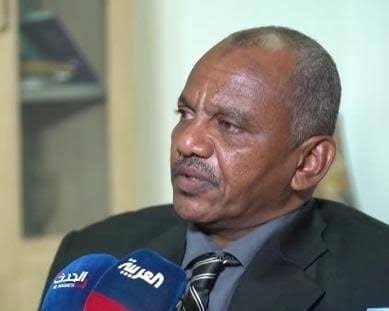
By Ammar Al-Arki
The Emirati–Ethiopian statement issued on January 6 bears an almost verbatim resemblance to the joint statement released by the United Arab Emirates and the African Union Commission. The same language, the same framing, and the same position on Sudan—an alignment that goes beyond ordinary diplomatic coordination and instead reveals a single narrative crafted in Abu Dhabi, then relayed through African capitals and regional institutions. This constitutes a clear violation of Sudan’s sovereignty and of the spirit and charter of the African Union.
More alarming is the fact that Sudan was not a party to any of these meetings. Yet, its conflict was discussed, defined, and “solutions” were outlined on its behalf. This deliberate political exclusion aims to impose a new negotiation track that equates the Sudanese state with a rebel militia internationally accused of committing widespread crimes and atrocities against civilians.
The repeated calls for an “unconditional humanitarian truce” represent a continued attempt to militarily rescue the militia and grant it time to regroup and reposition. Meanwhile, the deliberate disregard for the “Sudanese Peace Initiative”—presented to the UN Security Council, welcomed by the UN Secretary-General, and supported by regional and international actors—can only be interpreted as a political effort to strip the initiative of its substance and reshuffle the negotiating landscape.
In this context, the UAE is no longer merely a political or humanitarian supporter, but an active party prolonging the war. Its tools now extend beyond funding or aid to include political statements, so-called “humanitarian” conferences, pressure exerted through African institutions, and the instrumentalization of certain states as conduits for its agenda.
This picture is further reinforced by the African tour of Shakhboot bin Nahyan. In addition to his meeting with the African Union Commission and his visit to Ethiopia, Brown Land newspaper reported on January 6, 2026—citing informed sources—that he conducted a brief, secret visit to Bujumbura, the capital of Burundi, lasting approximately two hours. According to the sources, Shakhboot met with the President of Burundi, a candidate for the presidency of the African Union, to discuss the Sudan file. Strong indications suggest that the visit focused on an Emirati request to “restore Sudan’s membership in the African Union” within arrangements being managed outside Sudan and far removed from its institutions and national will.
This secret visit cannot be separated from the striking similarity of official statements, nor from the broader tour expected to extend to Kenya and South Sudan. All of this unfolds within an attempt to reengineer Africa’s position on Sudan and reproduce the crisis according to an Emirati vision that has already failed.
This political maneuvering coincides with serious security developments. Field reports speak of the establishment of training camps and airstrips in Ethiopian border regions, and attempts to funnel military supplies to the militia through Benishangul. These developments intersect with rhetoric and movements within eastern Sudan that threaten to destabilize the region and undermine Sudan’s regional relations—particularly with Eritrea—serving as synchronized pressure tools aimed at fragmenting the Sudanese state and opening new fronts against it.
Here, the meaning of “internal tools” becomes clear. They are not limited to Sudan’s internal actors alone, but integrate with instruments across Africa: states, platforms, and institutions that were meant to safeguard national sovereignty, not transform into tools of political coercion. When the African Union Commission issues a joint statement with a non-member state addressing the internal affairs of a member state, this represents a blatant breach of the African Charter.
As for Sudan, what is required is a direct and unequivocal political response—one that firmly establishes the Sudanese Peace Initiative as the sole framework and engages the African Union from the position of an active state, not a targeted one. Sudan is not a peripheral actor in regional security equations; it is a cornerstone of stability in East Africa and the Horn of Africa.
In conclusion, the targeting of eastern Sudan is part of an ongoing Emirati aggression that has chosen to operate through Sudanese and African internal proxies. Anyone who facilitates, covers up, or turns a blind eye bears direct responsibility for the dismantling of the Sudanese state and for undermining regional stability through its eastern gateway.