Sudan War: Between the Political and Military Tracks and Ending the Fighting
Report – Sudan Events
The Governor of Darfur, Minni Arko Minawi, launched a fierce attack on the United Arab Emirates, describing it as an “enemy” and accusing it of attempting, by presenting itself as a mediator, to conceal what he called its crimes against the Sudanese people. He stressed that Sudan would not accept the UAE’s presence on any mediation committee, reiterating the state’s rejection of the so-called “Quartet.” At the same time, he said Sudan welcomes the trilateral initiative comprising the United States, Saudi Arabia, and Egypt.
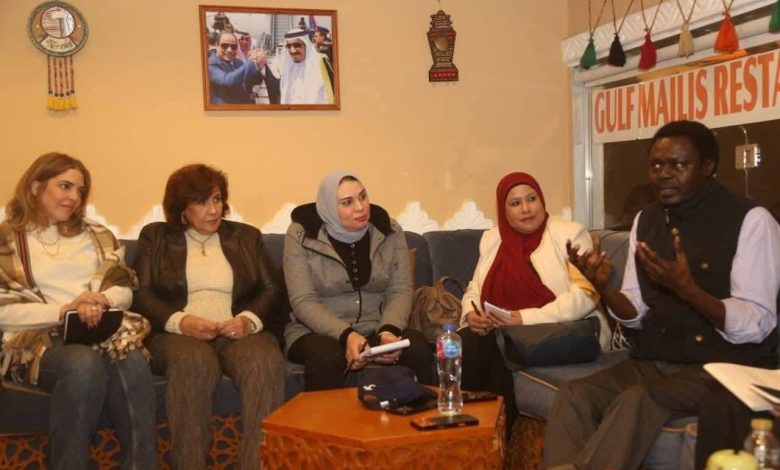
In a meeting with a group of Egyptian journalists, Minawi referred to the proposed ceasefire put forward by some international and regional parties, stressing that a one-day truce is unacceptable unless the militia withdraws—or is forcibly removed—from cities and civilian facilities and is regrouped in camps. He praised Prime Minister Kamel Idris’s initiative, saying it reflects public sentiment and the nature of the proposed dialogues. He added that what he described as “shopfront dialogues” are unacceptable, and that any dialogue must be conducted with the knowledge of the Sudanese people. He argued that the people who fought alongside their army must be partners in any negotiating process and must be fully informed about what is happening and what is being negotiated.
Minawi went on to say that, in his view, any political dialogue should only take place after the end of the war and must be comprehensive, without excluding any party or group. As for claims about Islamist control over the army, he dismissed them as rumors spread by those enjoying “golden residency” in apartments and hotels in Dubai and Abu Dhabi.
Minawi emphasized that this position has also been echoed by members of the Sovereign Council in discussions about various initiatives, noting that negotiations over a political settlement that answers key questions and puts the country on a path toward stable governance should come only after the war ends. This vision, however, may not be accepted by everyone. For example, Dr. Osama Hanfi, Professor of Political Science at the University of Sudan, believes that calling for keeping political negotiations closed until after the war is unrealistic. He argues that the tracks are deeply interconnected and highly complex, and that at some point in the narrative of ending the war, everyone will inevitably confront urgent political issues that must be addressed in the context of stopping the war militarily. While this may not be clearly visible now, he says, it will become evident once negotiations to halt the fighting begin.
Hanfi added, “I believe that linking the tracks is the optimal approach to resolving the crisis—through the existence of a single, professional army, alongside an in-depth dialogue on the future of governance in Sudan, and consensus on a political path that is firmly tied to a military track at the same time.” He continued, “Attempting to separate the tracks in theory may seem logical on paper, but it will greatly complicate matters and eventually close off pathways. A political track that now appears to be best separated from the military track may later be blocked by what is agreed upon militarily, forcing a reopening of issues already settled in the military track and renegotiating them to facilitate a political solution. There are evolving issues that could complicate solutions; we should not close them off, but rather open dialogue around them in a way that allows broad participation and the expression of different views.”
He concluded by saying that the current national spirit, despite the fragmentation experienced at all levels, will help in reaching solutions. He noted that, regardless of how far apart political positions may be, he does not believe anyone wants a return to the arena of war, which he described as destructive and chaotic and which has dragged the country into a deep abyss. He warned that postponing political engagement until the end of military operations would further complicate the situation.
By contrast, political researcher and Director of the Nour Center for Strategic Studies, Al-Yasa Mohamed Nour, does not see Hanfi’s arguments as convincing or as tipping the balance in favor of an immediate political track. While he acknowledges that some of them are logical, he believes that the current complexities and the state of political and societal fragmentation during wartime will not allow for meaningful political understandings. He argues that the claim that Sudan is dealing solely with civilian political forces is not entirely accurate, noting that many of these forces have their guns on the battlefield. “How,” he asks, “can they manage a political dialogue while these weapons remain active?”
He further questioned whether the Sudanese people would now accept the participation of political forces that support the militia in a dialogue that excludes no one, while the guns of those they back continue to grind down civilians and commit massacres. He also asked whether, if a political and military agreement were reached now that reinstates the militia or preserves its armed presence, Sudanese society would accept its participation in political negotiations.
Nour concluded by saying, “The reality is extremely complex, and none of us has clear answers to these questions. Therefore, I believe the logical course is to end the fighting and stop the war before engaging in any political negotiations that would determine the remainder of the transitional period and decide the country’s system of governance and constitutional institutions. Let us stop the war first before entering into political dialogue.”