Peace Efforts in Sudan Will Fail Unless Civilians Are Finally Put First
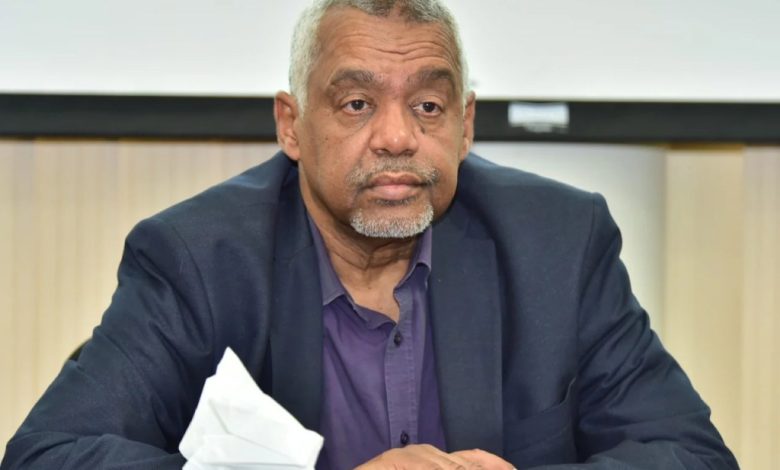
Abdelwahab El-Affendi
A ceasefire stained by massacres, the obstruction of aid routes, and the targeting of humanitarian convoys all stand as evidence that agreements built around armed groups leave communities unprotected and expose them to further atrocities.
Displaced Sudanese from the Heglig area in western Sudan wait for humanitarian assistance at the Abu Al-Naja displacement camp in Gedaref State, about 420 kilometers east of Khartoum, on December 30, 2025 (Abdel Rahman Gomaa/AFP).
Most peace proposals aimed at resolving Sudan’s current devastating war have systematically sidelined civilians.
This neglect goes beyond avoiding the issue of justice for victims of genocide and rape; it extends to a refusal to prioritize the protection of civilians from atrocities.
Nearly all approaches have focused on securing a ceasefire between the Sudanese Armed Forces (SAF) and the Rapid Support Forces (RSF), leaving vulnerable civilians at the mercy of armed actors. The latest U.S. initiative is no exception.
Yet all major atrocities—from the genocide in El Geneina in April 2023 to the mass killing in El Fasher last October—occurred not during active fighting between the two armed parties, but in its absence, under ceasefire conditions.
All major massacres took place during ceasefires, not during battles.
The El Geneina genocide occurred before the war spread to Darfur, when weaker SAF units remained confined to their barracks while RSF forces carried out mass killings. The ongoing tragedy in El Fasher unfolded after the army and its allies withdrew from the city.
In both cases, a ceasefire was in place when the RSF committed its worst crimes. What was needed at the time was sufficient deterrence to protect civilians. Two years of experience have shown that ceasefires without enforceable guarantees to halt abuses do nothing but expose civilians to the gravest violations.
“A Crime Scene”
Months before the El Fasher catastrophe, I recall telling a senior European diplomat—during a discussion on Sudan’s humanitarian needs—that the most urgent requirement was to strengthen the Sudanese army’s capacity to defend threatened cities, so they would not meet the same fate as El Fasher.
But international bodies ignored the obvious conclusion: a “ceasefire” without guarantees to stop atrocities amounts, in practice, to complicity in serious crimes against civilians.
In Khartoum, the brief and partial pause in fighting during the early weeks of the war actually prompted civilian protests, as it gave the RSF more time and space to target residential neighborhoods.
Still, international actors continued to repeat the same demand—ceasefire—mechanically and unimaginatively, disregarding the fact that this approach effectively made them partners in crime.
The sole partial exception may have been the Jeddah Declaration of May 2023, which was never implemented. Although sponsored by Saudi Arabia and the United States, the “humanitarian protocol” on which it was based was drafted by an informal African group led by former South African President Thabo Mbeki. Yet no one pressed for its implementation—not the sponsors, not the African Union, nor any other international actor.
Kamil Idris’s Plan: Limited Progress, Political Naivety
The most recent plan proposed by Sudanese Prime Minister Kamil Idris appeared to make some progress toward curbing atrocities against civilians. However, it was naïve in assuming that the RSF would respond and surrender simply because it was called upon to do so.
The plan was unveiled in a surprise address to the UN Security Council on December 23, 2025. It appeared underdeveloped, having been preceded by neither sufficient domestic consultation nor coordination with regional and international partners. Sudanese public opinion only learned of it when the speech was delivered.
The plan included:
- A UN- and regionally monitored ceasefire
- Withdrawal of the militia from cities it controls
- Disarmament
- A civilian dialogue
- A transitional period
- Elections restoring civilian democratic rule
The most critical phase, however, is a monitored ceasefire that guarantees civilian safety and the flow of humanitarian aid. This phase faces three major obstacles:
- The RSF’s deliberate obstruction of aid routes, as seen in the brutal siege of El Fasher for nearly two years.
- The targeting of aid convoys, facilities, and workers through looting, shelling, killing, and abduction.
- Most dangerously, the complicity of international actors—including some humanitarian organizations—through silence, disregard for violations, and the failure to issue clear condemnations.
Instead of punishing the militia, it continues to receive “political rewards” through international insistence on including it in negotiations without first obliging it to halt its crimes.
A City Destroyed, Then “Assessed”
A stark example is the UN delegation’s visit to El Fasher late last month to “assess the humanitarian situation,” two months after the RSF stormed the city.
El Fasher had already lost three-quarters of its 1.5 million residents due to the prolonged siege. Those who remained were then subjected to killing or detention. The delegation described the city as a “crime scene,” saying it encountered only a small number of civilians in dire psychological condition and suffering from food shortages, and did not know where the rest of the population had gone.
A December report by Yale University’s Humanitarian Research Lab documented RSF attempts to remove piles of bodies to conceal evidence of massacres during its control of the city.
Yet the UN delegation did not ask the obvious questions—perhaps because it could not. UN Secretary-General António Guterres merely renewed calls for an immediate ceasefire to support humanitarian efforts, while UNICEF launched a fundraising appeal.
As if no one noticed that ghosts do not eat and do not need aid.
A More Realistic Path
From this perspective, the prime minister’s ceasefire plan is unrealistic, as it effectively asks the militia to surrender while it still retains significant power.
Yes, the militia must be contained and removed from the scene—but this requires:
- An international presence to halt the flow of weapons to it
- Strong international and regional support for the government
- Enhanced state deterrence capabilities to protect cities and prevent renewed attacks
At the same time, the prime minister calls for UN monitoring of a ceasefire while rejecting the presence of UN forces on the ground—a fundamental contradiction.
The initiative also failed to clearly state that the central objective is the protection of civilians and the cessation of violations.
What Is Actually Required?
The realistic short-term solution entails:
- Forming a strong international and regional coalition to confront the militia
- Forcing it to withdraw from North Darfur, cities in South Darfur, and all other areas it occupies
- Deploying intensive UN monitoring in areas of its presence to protect civilians
- Releasing detainees
- Providing the government with genuine deterrence capabilities through robust international support
Later stages, such as civilian dialogue, must rest on clear foundations, foremost among them:
- Condemnation of past and ongoing crimes
- An explicit commitment to protecting civilians
- Effective accountability for perpetrators
No progress is possible without passing through this stage, and no parties that refuse to condemn crimes or to prioritize civilian protection can be included.
Any initiative must center on:
- Protecting civilians and cities
- Enabling the return of displaced populations
- Reopening schools, hospitals, and markets
- Securing civilian life against any new threats
Only then can civilian life resume and a civilian bloc capable of dialogue emerge.
With nearly half of Sudan’s population displaced, the overriding priority must be to achieve peace, protect civilians, and deter any renewed assaults against them.