Why Peace with the Rapid Support Forces Is Impossible
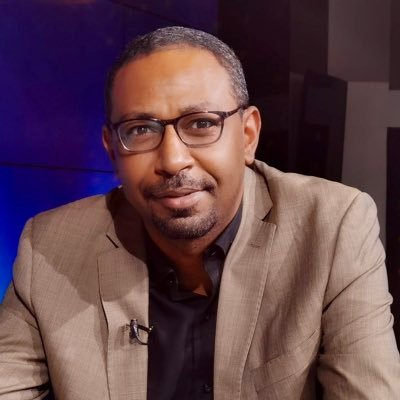
Amjad Farid Al-Tayeb
The armed conflict that has engulfed Sudan since April 15, 2023, between the Sudanese Armed Forces and the Rapid Support Forces (RSF) militia has increasingly evolved from a clash between two military actors into a system of structural violence. This system seeks to redraw political geography through force of arms, reshape communities through coercion, and hijack politics under the weight of collective threats.
As the war enters its third year, it has become evident that most previous initiatives—such as international mediation efforts in Jeddah, the Geneva talks, and more recently the Quadrilateral Initiative—have failed because they ignored, or attempted to bypass, a fundamental reality: when an armed militia controls civilians and uses them as instruments of political and military blackmail, any negotiation becomes merely an extension and legitimization of violence rather than a means to end it.
Perhaps the clearest example of this was the RSF’s exploitation of successive ceasefires brokered through the Jeddah platform. These truces were intended primarily to facilitate humanitarian access and protect civilians, yet the militia used them to expand its military presence in densely populated civilian areas—such as Khartoum and several cities in Darfur—by occupying private homes and public facilities, including hospitals and schools. Periods of calm were used to redeploy and resupply forces without direct confrontation.
The militia later refused to withdraw from these sites, as stipulated in the Jeddah Agreement, leading to the collapse of mediation efforts. Ceasefires thus became tools to entrench violations rather than steps toward genuine peace.
In this context, the new Sudanese peace plan—formally presented by Prime Minister Dr. Kamil Idris to the UN Security Council on December 23, 2025—stands out as the most realistic initiative to date. It represents a systematic development of the roadmap adopted by the Sudanese government earlier that year. Its significance lies not in promising quick or idealized peace, but in correctly diagnosing the war as a form of internal occupation and placing civilian protection at the core of any solution—a factor long neglected by previous initiatives.
The plan rests on a fundamental principle: the withdrawal of militias from civilian areas is a necessary precondition for any peace process or political dialogue. This separation between military control and political legitimacy is essential to breaking the cycle of violence.
The Real Dilemma: The Futility of Negotiation Under the Gun
No negotiation conducted while the RSF controls populated cities and continues to commit abuses against civilians can be considered a genuine peace process. Such talks amount to negotiations under duress, or collective hostage-taking, where civilians are used as leverage under constant threats of killing, displacement, or starvation whenever talks falter or the balance of power shifts.
This is not a theoretical concern, but one grounded in the RSF’s documented conduct during the war. What occurred in El Fasher is a stark illustration. The city was besieged for more than 18 months, from May 2024 until its fall on October 26, 2025. During this period, the militia rejected negotiations and refused a humanitarian truce proposed by UN Secretary-General António Guterres in June 2025—an offer accepted by Sudan’s Sovereignty Council Chairman Abdel Fattah al-Burhan and later reintroduced by Prime Minister Idris in August 2025.
Civilians’ suffering was transformed into a tool of military blackmail. The RSF imposed starvation sieges, restricted civilian movement, and effectively took residents hostage inside El Fasher, even constructing a wall around the city to prevent escape.
When El Fasher fell, it did so under a wave of brutal violence, accompanied by mass atrocities documented by organizations such as Human Rights Watch and Médecins Sans Frontières. Even hospital patients were not spared: the militia massacred 460 patients, caregivers, and medical staff at the Saudi Hospital upon storming the city.
Civilians were not parties to the battle; they became its fuel. Reports indicate tens of thousands killed and hundreds of thousands displaced. After the city’s fall, the crime extended beyond military action to an organized disinformation campaign aimed at denying the scale of atrocities, recasting the tragedy as “liberation,” and cloaking crimes in the language of stability.
Within this context emerged the figure known as Abu Lulu—also called Al-Fateh Abdullah Idris, an RSF fighter—who publicly boasted in documented social media videos, including on TikTok, of killing more than 1,000 people, including field executions of civilians in El Fasher after its fall. He epitomizes how the war has devolved into a spectacle of personalized, filmed violence, where killing and sadism become propaganda tools to terrorize communities and consolidate control.
This phenomenon is not isolated. It echoes what occurred in El Geneina, Ardamata, Khartoum, and villages across Al-Jazira—from Wad Al-Noura to Al-Hilaliya.
Such violence reflects a fascistic ideological structure embedded in the RSF’s behavior. Civilians are not treated as citizens, but as instruments of coercion, subjected to terror as a means of domination. Under these conditions, peace is impossible without dismantling this system of blackmail. Disinformation, moreover, is not a marginal media tactic but a defining feature of the militia’s violent ideology and a structural component of the war’s continuation.
A recent study by academic Marc Owen Jones of Northwestern University revealed a vast disinformation network of approximately 19,000 accounts on X (formerly Twitter) that became active immediately after El Fasher’s fall on October 26, 2025. The network sought to reshape reality by dominating hashtags, promoting “liberation” narratives, and flooding social media with misleading content.
Jones described the network—linked to regional states—as the largest known digital disinformation operation in the world to date. It relies on fake accounts and automated tools to distort public discourse, obstructing the formation of an objective local and global public opinion capable of supporting genuine peace, and instead turning peace efforts into cover for reproducing violence.
Regrettably, some Sudanese political forces participate in this distortion by promoting the acceptance of falsehood as a basis for political action.
Here, the practical application of Antonio Gramsci’s concept of hegemony becomes evident. Control is not limited to physical repression, but extends to shaping collective consciousness through ideological dominance over public discourse, leading people to accept an imposed reality as natural and unquestionable.
As Gramsci described in Prison Notebooks, such hegemony—originally analyzed in response to crises of capitalism—today manifests in the RSF’s digital disinformation campaigns, which seek to transform falsehood into manufactured consensus, thereby legitimizing violence as a means of reshaping Sudan’s social and political reality.
Why the New Sudanese Peace Plan Is More Realistic
The realism of the Sudanese peace plan presented on December 23, 2025, lies in its methodical, sequential logic. It reflects a core principle of modern political philosophy articulated by John Rawls: no just and stable political order can be built without first removing primary coercion.
The plan does not leap into politics before addressing military realities, nor does it ask victims to negotiate with their tormentors while guns remain inside their homes. It seeks to prevent the recurrence of genocidal violence witnessed in El Geneina, El Fasher, Khartoum, and Al-Jazira, before politicians don their ties and sit at negotiation tables.
It begins where any sustainable peace must begin:
- The withdrawal of militia forces from civilian areas, ending the system of blackmail based on threats of mass violence—especially critical given the heavy presence of foreign mercenaries within RSF ranks, who lack social ties to local communities and are therefore more prone to looting and atrocities.
- The assembly of forces in monitored locations outside cities under international supervision, providing security guarantees that no actor genuinely committed to peace could reasonably oppose. This would pave the way for vetting, accountability, and integration processes, rather than leaving weapons unrestrained and violence cyclical.
- The opening of humanitarian corridors, ensuring aid delivery free from theft, political manipulation, or guardianship, thereby improving living conditions and enabling a gradual return to normal life.
- A transition to political dialogue free from the muzzle of the gun, unmolded by drone intimidation or military balance, but shaped by genuine debate over the country’s future.
Through this approach, the plan separates military occupation from political legitimacy and breaks the governing equation of the war since April 15, 2023: whoever occupies cities dictates the terms of peace. This distinction is not a technical detail, but an existential necessity for safeguarding Sudan’s sovereignty, protecting its citizens, and preventing peace from becoming surrender.
Yet it is striking—and alarming—that some political forces within the “Sumoud” coalition, led by former Prime Minister Abdalla Hamdok, rushed to reject the plan. Their objection was not based on its shortcomings, but on its requirement that RSF forces relinquish control of civilian areas—an idea they deemed unrealistic.
This stance is not a legitimate political disagreement, but an explicit justification for continued blackmail. Insisting on militia presence among civilians under the guise of “reality” amounts to accepting hostage logic, normalizing massacres as pressure tools, and surrendering politics to arms. This is not a path to peace, but a morally and politically bankrupt bargain, reminiscent of how certain civilian alliances prolonged Syria’s conflict after 2011 by rationalizing violence.
Beyond this, any serious peace process must aim not merely at redeployments, but at dismantling the RSF’s institutional foundations:
- Its financial and economic influence networks.
- Its cross-border arms supply chains.
- Its political and media support structures that enable it to operate above the state.
The RSF is not simply a rebel group; it is an organized violence project rooted in a war economy—such as illicit gold smuggling—and a fascistic ideology that views society as a resource to dominate, not a partner in nationhood. Militias of this nature—comparable to Boko Haram in Nigeria or the Nazi SS—cannot be integrated into a peaceful future or reformed through cosmetic settlements. Their very essence is incompatible with any vision of a civilian state or sustainable peace.
In conclusion, peace begins with liberating civilians from the grip of violence—not by bargaining away the state over their safety and livelihoods. What gives the new Sudanese peace plan greater realism is its refusal to bypass this reality and its insistence on a long-denied truth: there can be no genuine negotiation while militias occupy cities, and no peace while civilians remain tools of coercion.
Peace in Sudan will not emerge from negotiation rooms alone, but from dismantling the system of violence that has turned society into a hostage and human beings into means. Any path that does not begin by freeing civilians from this blackmail merely writes a new chapter of war—even if it borrows the name of peace.