Reopening of the National Theatre: Attempts to Restore Normal Life in Khartoum
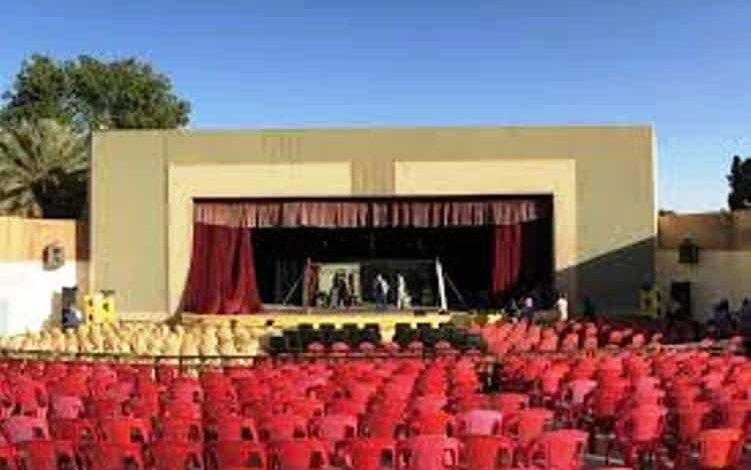
Report – Sudan Events
Amid the absence of well-known theatrical figures who have faded from the scene following their passing—most recently the star Balqees Awad—and as veteran actress Faiza Amsib continues to endure difficult circumstances, with most drama stars remaining outside Sudan, serious efforts are under way to restore theatre to its former stature as a historic landmark of Omdurman.
These efforts come after the National Theatre suffered systematic destruction by the Rapid Support Forces (RSF) militia during its occupation of the area, which also includes the headquarters of the National Radio and Television Corporation, Khartoum TV, Nile Blue Channel buildings, and other media institutions. The militia controlled the area for a prolonged period, during which it carried out widespread acts of vandalism: looting the buildings of the National Radio and Television Corporation, destroying studios, and converting offices into makeshift prisons where unarmed civilians were detained and tortured.
The building—once the headquarters of the Omdurman regional command—was turned into a command center and detention facility. The area itself served as a strategic corridor linking Ombadda and Dar Al-Salam to East Nile, passing through key locations such as the Midwives’ Hospital, the National Radio and Television buildings, and Shambat Bridge. During that time, the National Theatre became a military stronghold, with weapons positioned at its entrance, vehicles stockpiled around it, and its chairs and furnishings used alternately for soldiers’ seating or to block roads while side routes were opened to inspect passersby and arrest them.
Today, the committee tasked with overseeing Khartoum’s rehabilitation and reconstruction—headed by Sovereign Council member Ibrahim Jaber—is attempting to normalize life in the city by restoring its landmarks and reviving community activities, foremost among them culture, arts, and sports. It is expected that the National Theatre will be officially reopened today as part of the broader reconstruction efforts currently under way in Khartoum.
A community committee operating under the name “Rebuilding the National Theatre” has been active in this regard. It previously called for a cleaning campaign at the theatre and is now working diligently to prepare a program for its reopening. At the forefront of these efforts is Abdelbaqi Hussein, who said:
“It is true that the losses are enormous. The National Theatre is a city landmark and has played a vital role in national building. It occupies a deep place in the Sudanese collective conscience. Prominent and influential names have stood on its stage, which itself embodies the creativity of this people and their cultural heritage. That is why we came together to restore this great edifice to life. By God’s grace and through the efforts of our brothers here, the National Theatre will once again welcome its audience, enrich the conscience of Sudanese people, and reclaim its role.”
He added:
“It is deeply unfortunate what happened to it, but look around you—this is what the militia did everywhere it entered. It knows nothing but death, destruction, and ruin.”
Hussein continued:
“We will work to restore and rebuild all theatres, not just the National Theatre, which we started with because it is the oldest and most historic. All theatres were destroyed and looted. In cooperation with the government and its executive bodies, we will revive these theatres so that creatives can return to work, express their people’s aspirations, spread awareness and enlightenment, and help society overcome the painful crises it endured during this war.”
Despite the significant efforts currently being made to rehabilitate the National Theatre, many lost assets still require substantial government intervention, preceded by addressing the real crises long faced by theatre practitioners.
According to Abdullah Hasab Al-Rasoul, Director of the National Theatre, the challenges facing the theatre even before the outbreak of war were already severe. Artistic and cultural institutions, he said, had long been neglected and excluded from the دائرة of official concern.
“The condition of the National Theatre was poor before the war,” he noted, “and it became far worse afterward.”
He explained that persistent problems related to sewage systems and the accumulation of rainwater during the autumn season were difficult to resolve due to the absence of budgets and the deterioration of infrastructure. As for irretrievably lost assets, he pointed in particular to the National Theatre’s archive—an archive that had been painstakingly documented by Hatem Mohamed Ali, but which has now been lost.
The rapid efforts currently under way to revive the National Theatre and normalize life in the city appear, to some observers, like painting bright colors onto a piece of shattered metal. Reviving the theatre, they argue, requires more than restoring a stage, hosting actors and singers, and gathering an audience to watch performances.
According to observers interviewed by Sudan Events, the theatre urgently needs legislative reform and must be placed squarely among the state’s priorities. This includes allocating clear budgets, providing effective mechanisms for operation, and supporting the implementation of its programs—measures essential to restoring its ability to influence society through the dissemination of knowledge and enlightenment in engaging artistic forms capable of attracting and sustaining public interest.