The Humanitarian Truce: A Negotiating Impasse or Mere Maneuvering?
Report – Sudan Events
U.S. President Donald Trump said he would like to convene a meeting bringing together Egyptian President Abdel Fattah El-Sisi and Ethiopian Prime Minister Abiy Ahmed in order to reach an agreement to resolve the ongoing dispute over the Grand Ethiopian Renaissance Dam. Trump’s remarks came during a meeting with the Egyptian president on the sidelines of the World Economic Forum in Davos, Switzerland.
The meeting also addressed joint efforts to end the war in Sudan within the framework of the Quartet mechanism. El-Sisi welcomed the U.S. efforts in this regard, stressing the importance of reaching an urgent humanitarian truce and intensifying international efforts to end the suffering of the Sudanese people.
This raises a pressing question: has the truce itself become the core obstacle? In other words, if a truce were agreed upon and implemented, would people’s suffering end and the killing stop? Have the truces agreed to and implemented under the Jeddah Agreement succeeded in stemming the bloodshed, or has the truce itself turned into a tool for killing and violations?
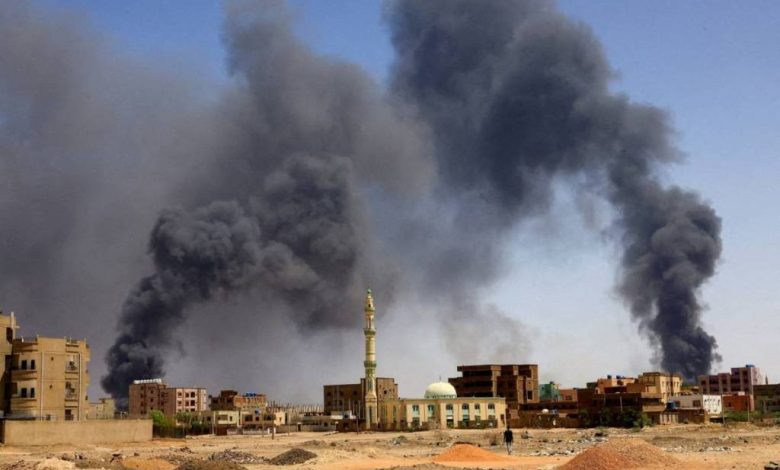
Where is the international humanitarian support that countries and organizations speak of—particularly in Khartoum, for example, which was one of the starting points of military operations, suffered massive destruction, and left millions of unarmed civilians trapped for years without receiving aid, despite repeated talk of truces in Jeddah and humanitarian assistance supposedly arranged for that purpose?
Throughout the years of war, no aid reached civilians trapped in conflict zones except for a small quantity of flour distributed timidly. Meanwhile, hundreds of residents in Khartoum died of hunger and were buried inside their homes. So, what “humanitarian assistance” is the world talking about? In El-Fasher, for instance, residents resorted to eating animal feed in full view of the world and its organizations, while thousands died fleeing areas controlled by militias, their bodies left unburied. Is the truce really the problem?
El-Yassa Mohamed Nour, a political researcher and director of Nour Center for Strategic Studies, says the problem is not the truce itself, but rather how the world describes and understands what is happening on the ground. “This war is unlike wars elsewhere, fought between armies,” he said. “Here, militia fighters abandoned the battlefield and devoted themselves to killing, looting, and robbing civilians. I do not believe there has ever been a war anywhere in the world where soldiers enter people’s homes, order them to sit on the ground, then drag them away and shoot them while demanding that they hand over any gold or money they have. Entire families were killed simply because they told them they had no gold. They asked them, ‘Why are you even alive?’”
He added: “Why does the public reject truces? Is it because people love war? I don’t think anyone loves the continuation of war. It is experience. The Jeddah truces clearly showed that this was sheer deception—an arrangement that allowed militias to enter people’s homes, violate their dignity, loot them, and kill them. Most of the violations in Khartoum occurred during these truces, which were an unforgivable mistake. They became a curse on the people.”
According to Nour, during the truces militia members moved freely, placing vehicles—previously hidden for fear of airstrikes—out in the open streets to settle grudges, pursue officers, traders, and property owners, and loot them. “During these truces, girls were abducted from Khartoum, Bahri, and Omdurman and transported to Darfur. This is not a war that can be dealt with through conventional mechanisms. This is a massacre aimed at eliminating and displacing certain ethnic groups under the pretext of conflict with the army. They often left the army alone and did not fight it; instead, they attacked people’s homes. That mattered more to them than confronting the army.”
He concluded that any truce agreed with them now would likely lead to an increase in killings and extrajudicial violence, with unarmed civilians paying the price. “A truce will not deliver humanitarian aid. That is laughable. Sudanese know it is nothing more than a cruel joke. What it will deliver is more means to kill them.”
Despite Nour’s experience and what he witnessed during the Jeddah truces, Dr. Bakri Mohamed Al-Sir, a university lecturer and political affairs observer, believes that reaching a truce remains important as an entry point to a final solution. “There must be a ceasefire, aid must be allowed to reach people, and civilians must be able to move freely so that we can reach an agreement,” he said. “We will not reach any agreement while gunfire continues.”
He added: “Despite all grievances, I believe the solution begins with stopping the shooting and declaring a humanitarian truce through which we can work to end the fighting permanently and reach a resolution to the crisis. The continuation of fighting at this pace serves no one’s interests and deprives Sudanese of any chance at life. I believe mediation parties are now exploring the establishment of mechanisms to monitor the ceasefire and protect civilians.”