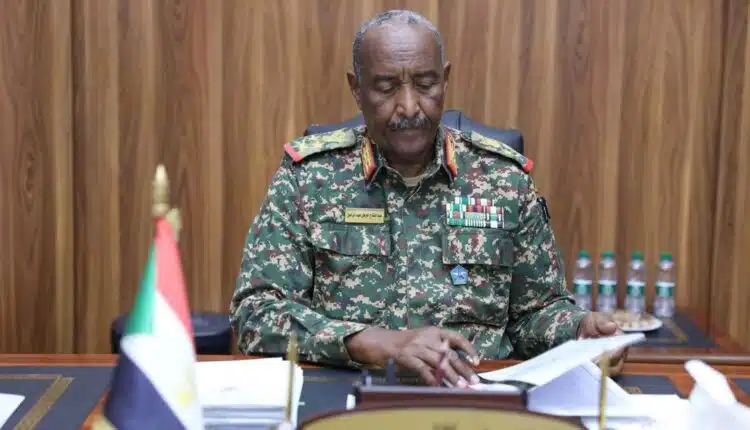
In a lengthy strategic article addressed to the international community, Sudan’s Chairman of the Sovereignty Council and Commander-in-Chief of the Armed Forces, General Abdel Fattah al-Burhan, laid out clear positions regarding the future of the Sudanese state, asserting that the era of “parallel armies” has ended once and for all.
First: Absolute Rejection of “Parallel Sovereignty”
Al-Burhan employed the firm diplomatic term “parallel sovereignty” (Souveraineté Parallèle), warning that international acceptance of an armed authority outside the framework of the regular armed forces amounts to an official invitation to legitimize chaos and dismantle the state. He stressed that the armed forces are the sole legitimate national institution entrusted with protecting the constitution.
Second: The Army’s Conditions for a Ceasefire (Roadmap)
The article outlined three core pillars that the Sudanese army considers non-negotiable for entering any de-escalation process:
1. Complete withdrawal from civilian facilities: Al-Burhan stressed that peace begins with the RSF militia vacating citizens’ homes, hospitals, and schools that have been turned into military positions.
2. Disarmament of heavy and medium weapons: He emphasized that Sudan’s future stability depends on confining weapons exclusively to the state, warning that arms outside this framework represent a “permanent fuse for war.”
3. Rejection of “conflict freezing”: Al-Burhan cautioned that any ceasefire that does not include withdrawal and disarmament would amount to a mere temporary freeze, granting rebels time to regroup — an option the military leadership categorically rejects.
Third: The Shape of Post-War Sudan
Al-Burhan outlined a vision for the next phase based on:
A single national army: Professional, non-partisan, and removed from politics.
Democratic transition: He affirmed that the ultimate goal is free elections in which the people determine their future, but only after “cleansing the country of rebellion” and ensuring the rule of law.
Analysis: A Message to Major Powers
The article stands as a “principles document” directed at international powers, linking Sudan’s security to regional stability. Al-Burhan warned that if the “militia model” succeeds in Sudan, it could spread like contagion across the region, making support for the Sudanese army a matter of international interest in global stability.