Africa and Trump’s Call for an Alternative World Order
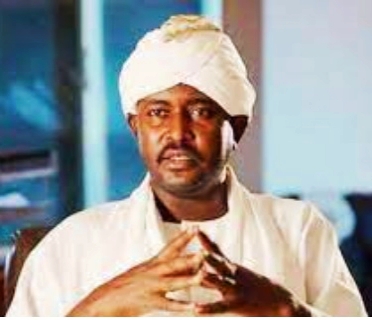
By Al-Sadiq Al-Riziqi
It is difficult to predict how Africa will respond to the stirrings of a profound transformation currently reshaping the global order, and to U.S. President Donald Trump’s attempt to close the chapter on the old system and replace it—by his own reckoning—with a new world order under his leadership. In this vision, Trump seeks to inherit the old world, dismantle its existing international system, assume the helm of global direction and guidance, and appropriate the role of international organizations, foremost among them the United Nations.
In this context, it is worth recalling that the term “new world order” was not widely used as a political concept until it was uttered by the last president of the former Soviet Union, Mikhail Gorbachev, at a time when the world stood on the brink of war in the Arabian Gulf. The United States was then assembling an international coalition to strike Iraq following the entry of Iraqi forces into Kuwait in August 1990. That prescient vision, however, did not anticipate that its first casualty would be the Soviet Union itself, which disappeared less than a year after Gorbachev’s statement. A unipolar system subsequently emerged, with the United States and Europe dominating international decision-making—until the present moment, when Washington declares, without regard for other considerations, its full unilateral control over global decisions, dispensing with partners altogether: it stands against all, and whoever does not fall in line is deemed an adversary.
What concerns us here is Africa’s stance toward this new American empire, at a time when the continent is witnessing sharp developments from west to east, south to north, and across its center.
Despite a body scarred by the wounds of the colonial era and the enduring memories of Africans being traded as slaves in the “New World,” parts of Africa have succeeded in shedding the old complex tied to Europe’s shameful history on the continent—most notably in former French colonies in West and Central Africa. As European dominance recedes in many African countries, new rising leaderships emerge and more mature political currents—more aware than their post-independence predecessors—come to the fore. The continent is abuzz with genuine orientations reflecting social and political developments and the impact of ongoing economic transformations.
Over the past three decades and more, several key African countries have turned eastward to China as an economic partner and political backer, followed by Russia and India. Western (European-American) influence has markedly declined; Western states are no longer the sole players.
Some African countries have settled their political choices around democracy and human rights, sought to achieve positive rates of social and economic development, empowered communities to participate in decision-making, and recognized the need for comprehensive renaissance. At the same time, fragile attempts persist by regimes and governments to consolidate joint African action and build a solid foundation for African Union institutions—still shadowed by doubts about their ability to realize all African aspirations.
There is little doubt that many African countries appear neither eager nor inclined to be swept along by the American caravan and President Trump’s calls. The reason is simple: the current U.S. administration treated several African leaders with disdain and attempted humiliation during Trump’s early days in the White House, leaving a deep mark on African public opinion. This was followed by efforts to pressure South Africa, a pivotal country on the continent.
Many predictions and analyses have proven accurate in asserting that U.S. interventions to resolve Africa’s conflicts would yield no results. American mediation failed to curb the war in eastern Congo or to achieve lasting reconciliation between Rwanda and the Democratic Republic of the Congo. All U.S. efforts to halt the war in Sudan have failed, as have attempts to stabilize the Horn of Africa and South Sudan, and the situation in Libya.
Trump’s threats, followed by airstrikes in Nigeria, and attempts by the U.S. administration to portray its involvement in Nigeria’s internal affairs as protecting Christians, constituted a major source of African aversion and suspicion toward direct American interventions. Such actions sow discord and chaos within African societies and plant the seeds of religious and sectarian strife, particularly in West African countries, where the tragic history of the slave trade remains vivid in popular memory.
If the current U.S. administration has suffered resounding failure across all conflict files on the continent, lacking serious visions for resolving these wars, and if President Trump appears concerned primarily with seizing control of African resources—as seen in his dealings with the Democratic Republic of the Congo, Angola, and the Sahel—then African enthusiasm for a “global peace council” or a new U.S.-led world order does not exceed the cool distance adopted by many African governments. Another reason is that, for four decades, Africa’s central driving force has been the demand to amend the UN Charter, reform the organization, and secure a permanent African seat on the UN Security Council.
No African summit has passed without reiterating this demand, which has become a staple of the continent’s international outlook. There is consensus across Africa on restoring the continent’s global standing. Capitals with the greatest continental influence—particularly Pretoria, Algiers, Cairo, Abuja, Addis Ababa, and Dakar—seek, to varying degrees, to consolidate African positions, fully aware of the narrow margin for maneuver amid the roar of a new imperial machine advancing to sweep the world.
Yet, in all cases, they cannot overcome the acute sensitivity of African peoples and the aversion of political currents on the continent to the mere idea of a return to colonialism and domination under an American cloak.
In southern Africa, a simple accounting shows that countries of the region—South Africa, Namibia, Angola, Zambia, Zimbabwe, Mozambique, Malawi, Mauritius, Madagascar, Lesotho, and Eswatini—have not forgotten the U.S. role in combating the peoples of the region, Washington’s support for European and African repression, its alignment with the apartheid regime in South Africa, and its stance toward the historic figure Nelson Mandela, who was even denied a U.S. visa after being elected president and whose name remained on Washington’s blacklist.
This is compounded by Trump’s recent remarks and their repercussions regarding Britain’s withdrawal and the return of the Chagos Islands to Mauritian sovereignty.
In East Africa, the United States has achieved little: the crisis in eastern Congo persists; South Sudan remains unstable; the Grand Ethiopian Renaissance Dam dispute endures; developments in the secessionist Somaliland region involving Washington’s allies (Israel and the UAE) raise concerns; and the specter of potential war between Eritrea and Ethiopia looms—alongside the war in Sudan. All of this makes it difficult to wager on any new formulas Washington might propose to resolve global problems.
In West Africa—undergoing major transformations for years, with rising Russian influence in Mali, Burkina Faso, Niger, and Guinea-Conakry, and the waning of French roles in these countries as well as Senegal, Chad, and Côte d’Ivoire—the U.S. administration carries a record of retreats and diminishing engagement, compounded by its stance on Nigeria.
The same applies to North Africa: the United States is not regarded as a reliable partner in Algeria, Tunisia, Libya, or Mauritania—at least among influential political currents and public opinion.
It is likely that Africa will turn away from President Trump’s project to reshape the international order, strengthen ties with China, Russia, and India, and seek effective economic and political partnerships with these countries.
Trump has little to offer Africans, particularly after banning citizens of many African countries from visiting the United States, threatening to deport some African communities, cutting U.S. aid programs, and withdrawing from UN agencies and organizations—except the World Bank and the International Monetary Fund.
All these indicators suggest that Trump’s “America First” policy—rooted in control, domination, and the brandishing of imperial force—is a set of tools Africa knows well and no longer finds usable, having experienced the benefits of economic and political partnerships. Africa is no longer what it was during the Cold War.
Some African experts predict that African countries will split into three groups regarding Trump’s project: a first group—the minority—may court the U.S. president and support his new world order; the latter two groups—the majority—will see the first of them, particularly BRICS members and some others, reject it outright, while the third will occupy a middle ground, awaiting outcomes and refraining from declaring a clear position.