Before and After al-Burhan’s Speech… Political Parties and the Fear of Survival
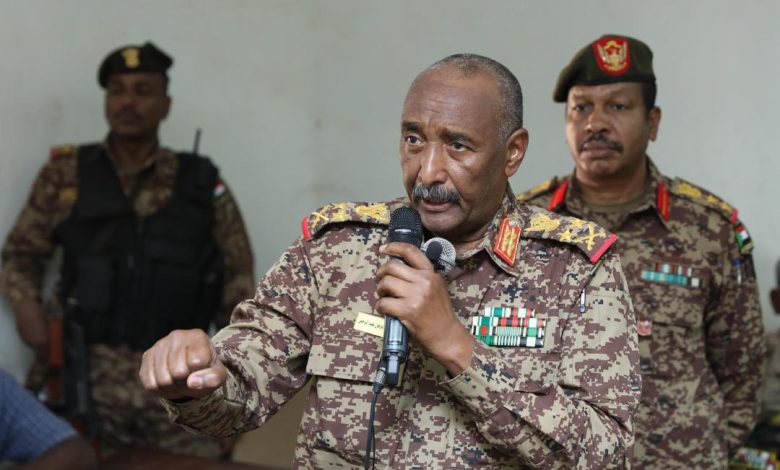
The Chairman of Sudan’s Sovereign Council and Commander of the Armed Forces, General Abdel Fattah al-Burhan, called on Sudanese citizens to return and rebuild their homes, urging them not to listen to what he described as rumors spread by “traitors and agents” who oppose the return of civilians. He said that returning home is a voluntary and personal choice, adding that the holy month would bring together Sudanese returning to their country.
Al-Burhan also directed a message to countries that, he said, continue to host and listen to former Prime Minister Abdalla Hamdok and his group, stating that they are acting against their own people and have become isolated because of their behavior and conduct. “I say to Hamdok and his group: your feet will not set foot on Sudanese soil,” he declared, accusing them of exploiting the causes of the Sudanese people for personal gain.
Many observers believe that al-Burhan’s remarks touched on a deep-seated anxiety shared by these political forces, from their leadership to their members abroad. Most, they argue, face serious obstacles to returning to Sudan and harbor fears about what may happen if they do so—particularly at a time when public opinion views them, at best, as “traitors” who betrayed their country by siding with a militia accused of attacking civilians, violating their sanctity, looting the nation, and destroying it.
Ibrahim Aqil Madibo argues that disagreement with the state is a legitimate political right, but exporting internal conflict abroad and turning the state into a perpetual defendant marks the dividing line between national opposition and what he terms “functional collaboration.” “Whoever sells his country does not speak for his people,” he says, adding that anyone who cooperated with militias and traded in the blood of Sudanese has fallen morally before falling as a citizen or politician.
In this context, and amid a landscape fraught with multiple crises, many believe that the return of members of the “Sumoud Coordination” carries serious risks—both for the individuals themselves and for their presence inside the country. Large segments of the public view them as traitors and criminals whose hands are stained with the blood of innocents. Throughout the war, they are accused of aligning politically with the militia, endorsing its actions from the earliest days, promoting the leadership of Mohamed Hamdan Dagalo (Hemeti) and his forces, and later acting as a political wing supporting the militia.
In recent days, these figures embarked on a European tour across several cities, in what critics describe as an attempt to ease pressure on the militia and accuse the Sudanese army of using internationally prohibited chemical weapons—moves that prompted al-Burhan to address Hamdok and his group directly.
This raises pressing questions: Is there still an opportunity for these politicians to return to the political scene? Is it possible to turn back the clock after all the transformations Sudanese society has undergone?
Professor Fadl al-Mawla al-Na’im, a political science professor, says al-Burhan’s remarks reflect what is now being said openly on the Sudanese street. He believes the general touched on fears shared by many who supported the militia for one reason or another and who now dread returning to the country. “They know arrest warrants may be waiting for them,” he says, “and they know that neighbors and acquaintances may reject them outright.”
According to al-Na’im, similar cases have already occurred, with some returnees facing assault, arrest, or public shaming—outcomes these politicians fear. He adds that Sudanese politicians are well aware that public sentiment has shifted sharply, with the street now viewing them as traitors and agents. “They were pressing for a political settlement between the army and the militia that would guarantee them a safe return, but that never materialized,” he explains. “Now they fear that any return could endanger their lives: the authorities will not ignore them, and the public will not forgive them.”
Attempts to frame the war as a mere political dispute, he argues, are no longer convincing. “This war has killed entire families and violated human dignity. It is neither logical nor acceptable to be lenient with its perpetrators or those who supported them,” he says, concluding that the return of these figures to Sudan would be extremely difficult, a reality they recognize, prompting many to seek to normalize their lives abroad.
Meanwhile, political researcher and Director of the Noor Center for Strategic Studies, Al-Yasa’ Mohamed Nour, believes that political parties which supported the militia have “burned themselves.” He doubts that the public will accept them again, arguing that figures such as Hamdok, Khalid Omar Youssef (Salk), al-Sadiq al-Mahdi’s successors, al-Digeir, Mariam, and others are now outside any realistic framework for returning to or living in Sudan—at least for the time being.
“The atmosphere is extremely charged against them,” he says, “and no one is willing to accept them given their positions on Sudan and its war—a war that destroyed state institutions, ended people’s livelihoods, looted their property, and displaced them.” Despite all this, he notes, these parties stood, “strangely,” alongside those who violated civilians, displaced them, and devastated the country. “This is a position with serious consequences,” he concludes, “and political parties must bear responsibility for it—legally and morally.”