Daqris Prison: A Model for Manufacturing Death
Report – Sudan Events
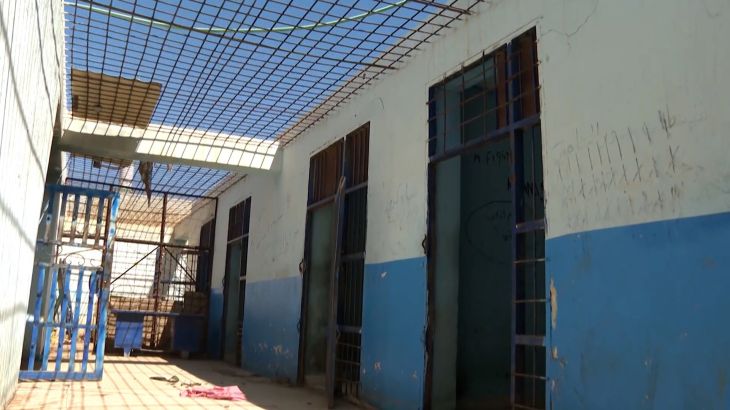
Among the thousands of atrocities committed by the Rapid Support Forces (RSF) militia, Daqris Prison in Nyala stands out as a stark and explicit example of the militia’s utter disregard for human dignity and humanity. The prison, originally built in the city of Nyala to accommodate no more than 4,000 inmates, currently holds over 19,500 prisoners—an enormous number far beyond its total capacity.
Despite the extreme overcrowding, new detainees continue to arrive daily. Guards are instructed merely to push them inside, without assuming any responsibility for their fate. Those who die are removed as corpses, loaded onto a “Thatcher” pickup truck, and dumped into hastily dug pits, where they are buried without identification or record. No one knows who died or why, as such details are of no concern to prison authorities.
Most of the names that have become known to the public belong to prisoners who lost their lives. Their fellow inmates documented their cases under extreme distress and managed to leak the information, as prison management shows no interest in prisoners’ welfare and strictly prevents any information about detainees or their conditions from leaving the facility. Authorities also prohibit the release of genuine prisoner lists, deliberately circulating fake names instead to allow room for manipulation.
A source from inside Nyala, interviewed by Sudan Events, confirmed that the militia is attempting to impose an information blackout around the prison. However, information remains accessible, as anyone can obtain what they want by paying money, despite the strictness of some guards and others’ attempts to divert attention from the deliberate humiliation, intimidation, killing, and even selling of prisoners taking place inside Daqris.
An exception applies to detainees transferred by the militia from Khartoum and Al-Jazira State. A tight security cordon surrounds them, preventing any information from leaking out, as the guards responsible are well-known militia commanders feared by everyone. As a result, it is extremely difficult for any soldier to speak about what happens to these prisoners or even confirm their presence. What is certain, however, is that they are subjected to severe humiliation, continuous torture, and are usually isolated from others. Their numbers are significant, and some are transferred to other detention sites.
The militia operates additional prisons besides Daqris, in Nyala and other cities, villages, and farms. Some of these detention sites were constructed by South Sudanese workers in water reservoirs, later fenced with high steel bars to prevent escape and ensure prisoners remain exposed to sun, rain, and wind at all times.
Information from within Daqris Prison indicates that most deaths result from severe torture and medical neglect, with prisoners left untreated until they die. One of the most horrific recent incidents involved the militia incarcerating prisoners infected with rabies after being bitten by dogs in other areas. These detainees bit other inmates, turning the prison into a contaminated zone. Dozens died from rabies, while many others were injured or shot when they attempted to climb the prison walls in fear of being attacked. Some uninfected prisoners formed human barriers to protect themselves and were forced to kill infected inmates. At one stage, prison authorities intervened directly, using firearms to kill infected prisoners and dispose of them.
This situation caused significant tension even in surrounding areas after reports spread that some rabies-infected prisoners had escaped and attacked militia members deployed in nearby neighborhoods.
The militia has long banned families from visiting detainees, cutting off all news about prisoners and their conditions for extended periods. As a result, determining who has died has become extremely difficult. Families usually learn of a detainee’s death only through scarce information leaked by guards or militia members who share the same ethnic background as the deceased, or after paying soldiers to search for the prisoner and uncover their fate.
For years, the militia has detained around 600 women in Daqris Prison—family members of soldiers who were part of the Nyala garrison—accused of collaborating with the Sudanese army.
The militia disposes of the dead in two ways: either by transporting bodies in four-wheel-drive vehicles and dumping them in desert pits, or by burying them in a mass grave dug by prisoners themselves. Bodies are thrown into the pit and covered with soil only.
Water is rationed to prisoners at one cup of tea in the morning and another in the evening. Food consists of limited quantities of ambaz—animal feed—which is the only available nourishment in Daqris. Many inmates suffer from respiratory problems, as they are not allowed outside, and even reaching the cell door to breathe fresh air is extremely difficult amid the massive human congestion inside the cells.