World Report 2026: Human Rights Trends in the United Arab Emirates
Sudan Events – Agencies
In 2025, a UAE court upheld wrongful convictions and arbitrary sentences against 53 human rights defenders and political dissidents in the country’s second-largest mass trial. Emirati authorities also designated 19 entities and individuals as “terrorists” under broadly worded counterterrorism laws, without due process.
The UAE has pursued a long-term strategy to enhance its international reputation, including by hosting major global and popular events. These efforts to project an image of openness sharply contradict the government’s actions to block scrutiny of its human rights abuses.
Freedom of Expression, Assembly, and Association
The UAE imposes severe restrictions on freedom of expression, association, and peaceful assembly, enforcing a zero-tolerance policy toward criticism of the government through domestic and international surveillance that violates privacy. This has led to widespread self-censorship and the dismantling of independent civil society. Many government critics are serving lengthy prison sentences following unfair trials based on vague charges that violate their fundamental rights.
Authorities use the Federal Penal Code and the Cybercrime Law to silence dissent and restrict free expression both online and offline. These broadly worded laws have been used to criminalize peaceful criticism, resulting in the imprisonment of citizens and residents over social media posts and the steady erosion of civic space.
Arbitrary Counterterrorism Laws
In January 2025, UAE authorities, in absentia, placed 11 political dissidents and their relatives, along with eight UK-based companies linked to them, on terrorism lists without due process or prior notification. The designation—justified by alleged ties to the Muslim Brotherhood—was imposed unilaterally under the UAE’s excessively broad 2014 counterterrorism law, which allows the executive to designate terrorism without judicial oversight or substantive legal safeguards.
None of the individuals or companies appear on internationally recognized sanctions or terrorism lists. Only two of the 11 individuals have ever been convicted or charged with terrorism, and in both cases the circumstances were questionable.
Terrorism designations carry severe consequences, including asset freezes, property confiscation, and the risk of life imprisonment for anyone in the UAE who communicates with the listed individuals. Those affected reported serious personal and financial harm, describing the move as part of a broader campaign of transnational repression targeting dissidents.
The use of vague counterterrorism laws has enabled the UAE to silence critics. UN experts have warned that such laws undermine fundamental rights and are prone to abuse against political opposition.
Prosecution of Government Critics
In March 2025, a UAE court upheld the arbitrary convictions and sentences of 53 human rights defenders and political dissidents following the country’s second-largest unfair mass trial, effectively ending any opportunity for appeal. The court sentenced 43 individuals to life imprisonment and others to prison terms ranging from 10 to 15 years, while a separate appeal remains pending in 24 previously dismissed cases.
The trial was marred by serious due process violations, including restricted access to lawyers, lack of transparency, and credible reports of abuse and ill-treatment. The charges stemmed from the defendants’ peaceful activities, particularly their involvement in forming an independent advocacy group in 2010. Most of the defendants had already been convicted in the 2013 “UAE 94” trial on similar or identical charges and have remained imprisoned since then, in violation of the principle prohibiting double jeopardy.
Among those whose convictions were upheld is prominent human rights defender Ahmed Mansoor, who was sentenced to 15 years in prison. Mansoor received the prestigious Martin Ennals Award for Human Rights Defenders in 2015 and is a member of the Middle East and North Africa advisory committee at Human Rights Watch.
Arrest and Detention of Alleged Dissidents
In January 2025, the Lebanese government unlawfully deported Egyptian-Turkish poet Abdel Rahman Youssef al-Qaradawi to the UAE, where he faces a high risk of unfair trial, torture, and other abuses. Qaradawi was arrested at the Lebanese-Syrian border based on temporary arrest requests from Egypt and later the UAE, which accused him of “spreading false news” and “disturbing public order.”
The charges were based on a social media post he made while in Syria, in which he criticized the governments of Egypt, the UAE, and Saudi Arabia. On January 8, 2025, he was transferred by private jet to the UAE, where he was immediately detained and forcibly disappeared. His whereabouts remain unknown, and he has been denied regular contact with his family.
UAE Support for Sudan’s Rapid Support Forces
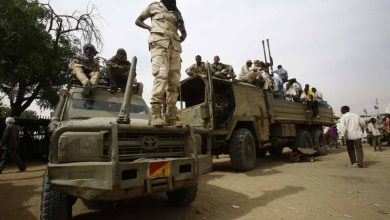
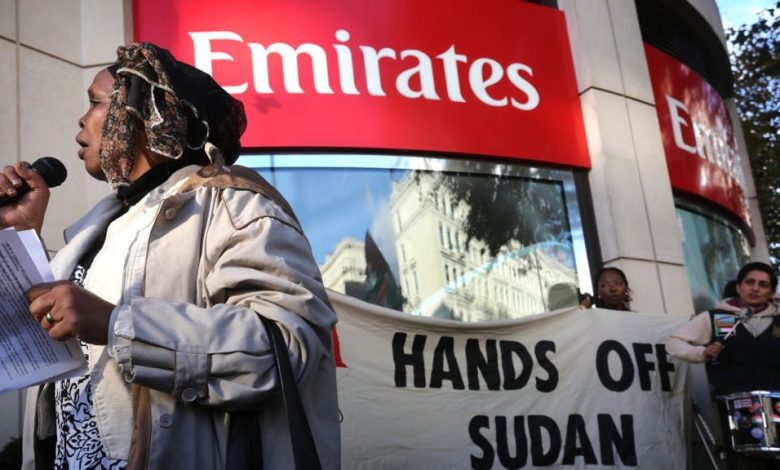
Growing evidence indicates that the UAE has provided support to Sudan’s Rapid Support Forces (RSF), an armed group responsible for widespread war crimes and crimes against humanity, including large-scale sexual violence, during Sudan’s devastating conflict.
Human Rights Watch and France 24 found that the RSF used munitions previously acquired by the Emirati military. Reuters and The New York Times reported that the UAE used an airbase in Amdjarass, eastern Chad—ostensibly for humanitarian purposes—to supply weapons to the RSF.
In September, the UN Security Council renewed Sudan’s sanctions regime. Human rights organizations have called for expanding and enforcing the sanctions, naming governments that violate the arms embargo, and imposing penalties on responsible individuals or entities, including those based in the UAE.
Migrant Workers’ Rights
Despite numerous reforms and laws governing migrant workers’ rights, employers continue to exercise disproportionate control under the kafala sponsorship system. Workers still face obstacles to changing jobs, and employers can file false “absconding” reports even when workers flee abuse, exposing them to detention and deportation.
Migrant workers continue to face widespread abuses, including wage theft, illegal recruitment fees, and passport confiscation, placing them in conditions that may amount to forced labor. The UAE continues to ban trade unions, preventing workers from advocating for stronger labor protections.
Authorities have failed to protect workers from climate-related risks. Migrant workers laboring outdoors are among the most vulnerable to heat-related illness and death. The UAE continues to rely primarily on a midday summer work ban as a heat protection measure, despite evidence of its ineffectiveness.
In addition to inadequate heat protections, migrant workers face serious labor abuses such as wage theft and excessive recruitment fees, undermining their ability to send remittances to families in countries such as Pakistan, Bangladesh, and Nepal.
The UAE still lacks a non-discriminatory minimum wage that ensures a decent standard of living for workers and their families. Authorities in Dubai and Abu Dhabi have recently raided subdivided housing units used as accommodation and evicted workers, but these actions fail to address the underlying issues of high living costs and low wages that force many workers into overcrowded and unsafe conditions.
The UAE’s government partners continue to prioritize trade and strategic interests with the UAE and other Gulf Cooperation Council (GCC) states over human rights. A forthcoming UK-GCC trade agreement lacks explicit human rights protections or obligations, including for migrant workers. Such an agreement risks contributing to ongoing abuses by facilitating wage violations, employer exploitation, and conditions that may amount to forced labor.
Climate Change Policy and Its Impacts
The UAE’s reliance on fossil fuels significantly contributes to toxic air pollution and greenhouse gas emissions, posing serious health risks to residents and exacerbating the global climate crisis. Research shows that toxic air pollution linked to fossil fuel combustion harms respiratory, cardiovascular, and neurological health. However, restrictive laws that criminalize peaceful dissent make it nearly impossible to scrutinize or publicly criticize government environmental policies, limiting accountability and public awareness.
Women’s Rights
The UAE enacted new domestic violence and family laws that strengthened protections but did not fully eliminate gender discrimination. The minimum marriage age was raised to 18. Only non-citizen Muslim women may marry without a male guardian’s presence. Although the new domestic violence law includes sexual exploitation and economic abuse, it defines violence as acts that “exceed the limits of guardianship or responsibility,” leaving room for men to discipline wives and female relatives to an extent deemed acceptable by authorities.
Sexual Orientation and Gender Identity
The UAE Federal Penal Code criminalizes vaguely defined acts, enabling authorities to arrest individuals for a wide range of behaviors, including public displays of affection, gender nonconforming expression, and advocacy for the rights of lesbian, gay, bisexual, and transgender (LGBT) people. The law also criminalizes consensual same-sex relations between adult men.