Liberal Bankruptcy: Between the Epstein Scandal and the “Somoud” Tour
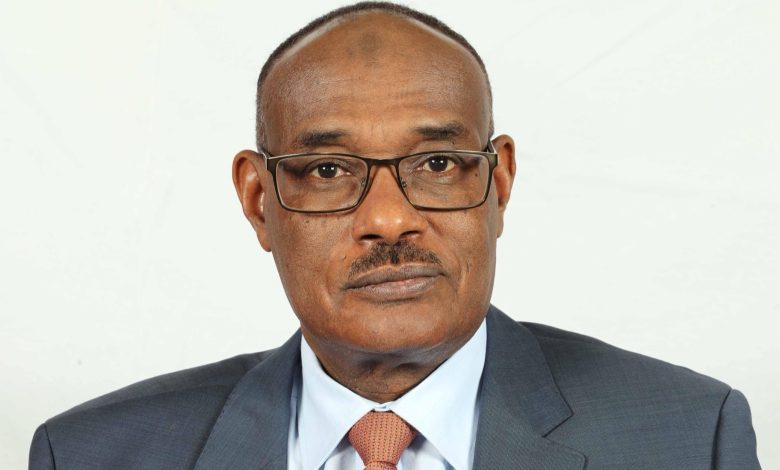
Dr. Al-Dirdiri Mohamed Ahmed
No month in living memory weighed more heavily on the Western world than last January. While what unfolded in Davos during the third week of that month exposed the unraveling of the international order, the release of the Epstein files on the thirtieth laid bare the moral bankruptcy of liberalism—the ideological foundation of the contemporary Western system. Sudan was not far removed from this moment. This violent tremor on the international stage coincided with the European tour of “Somoud,” led by Dr. Abdalla Hamdok, during which the fig leaf fell from Sudanese liberalism just as it had at the global level.
Let us begin with what the disclosure of the Epstein files signifies. Although major scandals—from Watergate to Iran-Contra—are hardly unfamiliar in the West, the Epstein affair is qualitatively different. It amounted to a declaration of the death of the central idea underpinning the Western system. Like the termite that gnaws away at the staff until it collapses, the Western order fell in one stroke.
Jeffrey Epstein was an American Jewish billionaire who amassed a vast fortune shrouded in mystery. Having begun his career as a modest mathematics teacher, he transformed within a few years into a billionaire who owned an entire island off New York, where he established his main residence. He also built another home in New York City itself—the most expensive in the world’s capital, or the capital of finance, or the Big Apple; choose whichever of New York’s lavish titles you prefer. He possessed fleets of private jets and luxury yachts. Epstein’s “trade,” revealed through more than three million pages of documents, one hundred thousand photographs, and two thousand videos, consisted of cultivating relationships within Western political elites in order to entrap their members in acts that rendered them vulnerable to blackmail. His instrument was an organized network for the luring and sexual exploitation of minors, run by his companion Ghislaine Maxwell. The girls were brought to his notorious residence and other properties, all of which were found to be equipped with hidden cameras in every room and corner, recording everything. When required—or when a client’s circumstances demanded—it was Epstein himself who transported the minors to his clients inside and outside the United States aboard his private planes and yachts.
But why minors? Here lies the crux of the matter. This is precisely what makes the Epstein scandal the story of the moral collapse of liberal theory in its entirety.
The crime Epstein chose to ensnare members of the Western elite in is the mother of crimes from the liberal perspective upon which penal systems in North America and Western Europe are built. According to liberal philosophy, the exploitation of minors is not merely an “illegal sexual practice”; it is the crime that undermines liberalism’s central moral value—namely, the inviolability of freedom from exploitation. This is why it is among the very few crimes that liberal theory permits the state to intervene against with full force. It is also unique in attaching an enduring moral and social stigma to the accused even before conviction. Thus, it was a crime carefully selected to blackmail and subjugate politicians and leading media figures. Anyone accused of it falls from great heights and is unlikely ever to recover, becoming pliable in the hands of whoever engineered the trap. To understand why this crime holds such singular status, we must briefly return to liberal theory itself.
Modern liberal ethics are grounded in Immanuel Kant’s proposition that “the human being is an end in himself, not a means.” Exploiting a human being to satisfy another’s desire or benefit objectifies the person—turning him or her into a thing. Since “free choice” is the basis of legitimacy, this pillar collapses when the objectified person is a minor. Hence, the crime of exploiting minors strikes at the very foundation of liberal ethics.
To grasp the gravity of this crime in liberal thought, one may compare it with murder and rape using the three criteria of liberal ethics articulated by John Stuart Mill: freedom, dignity, and autonomy. While all three crimes violate these criteria, the exploitation of minors violates the third—autonomy—in a radical way. In murder and rape, autonomy is violated through coercion or negation of will. In the exploitation of a minor, autonomy is violated by destroying the will before it is even formed—or by replacing it with a false substitute. The violation is therefore structural, not merely situational. This alone suffices to explain why liberalism elevates the crime of exploiting minors above others.
The deliberate use of this uniquely stigmatized crime as a trap for powerful figures exposes the chasm between theory and practice in Western societies. Politicians, intellectuals, and leading opinion-makers show little regard for undermining liberal theory or defiling its sanctities when the watchdog is absent and punishment seems assuredly avoidable. One after another, they fell into the snare, like moths drawn to flame. Liberal theory thus shifted from a system of ideals, values, and standards into a mere instrument of entrapment. Ironically, the first to devour the idol made of dates were the temple’s own priests—the left-leaning (Labour) parties of the West: the US Democratic Party, the British Labour Party, and Israel’s Labour Party. These are the parties that emerged from the mantle of modern social liberalism, which—drawing on Kant and John Locke—prioritizes the “dignity of the individual.”
They fell into the trap in greater numbers than leaders of conservative parties such as the Republican Party, the Conservatives, and Likud. Despite their secularism, these parties derive their moral foundations from religion, grant it cultural protection, rely on alliances with the religious right, and—following Edmund Burke—prioritize the “stability of society.” It was Ehud Barak, the former Labour prime minister of Israel—not Netanyahu—who exchanged thousands of messages with Epstein and regarded him as his chief adviser on high-tech, artificial intelligence, and the modernization of Mossad data-analysis capabilities. President Clinton hosted Epstein repeatedly aboard his plane. President Trump—then a Democratic-leaning financial tycoon—shared parties and soirées with him. Larry Summers, Treasury Secretary in the Clinton administration, exchanged jokes and remarks about women with Epstein and held dinner meetings with him. In Britain, bank statements and transfers from Epstein surfaced for Lord Peter Mandelson, the former Labour minister, who in turn leaked sensitive government information to Epstein regarding the 2008 global financial crisis. Most of Epstein’s interlocutors among intellectuals and senior media figures also hailed from liberal circles, including Noam Chomsky, Michael Wolff (CNN), Landon Thomas (The New York Times), Gabriel Pogrund (The Sunday Times), and Henry Dyer (The Guardian). It thus became clear that liberal ethics rest on falsehood and deception, and that their custodians are the last to believe in or revere them.
In 2006, Epstein was accused of having sex with a 14-year-old girl. Under a plea deal negotiated by his lawyers with prosecutors, Epstein pleaded guilty to that charge in exchange for dropping other charges involving 36 minors. He was sentenced to 13 months in prison, acquiring an indelible stigma. The deal itself was widely seen as further evidence of the moral decay of liberal theory and of the role of money in tilting the scales of justice in the West. After serving his sentence—during which he was permitted to work from his office six days a week—Epstein was released in 2012 and promptly resumed his criminal activities of luring minors and targeting elites.
Upon his release, Epstein told the New York Post, with a brazenness emblematic of liberal audacity: “I am not a sexual predator hunting prey; I am merely a sex offender. The difference is like the difference between murder and stealing a cookie.” That justification convinced few. Given the severe stigma attached to the crime, most celebrities severed ties with him, including former President Bill Clinton and then-former President Donald Trump, who had already jumped ship from the Democratic camp and now portrayed the scandal as a purely Democratic affair. Yet some were persuaded that Epstein had done little more than “steal a cookie” and maintained their friendship, allowing him to remain active among the wealthy and famous until 2019, when new charges landed him in jail. He was later found dead in his cell, amid conflicting accounts as to whether he was murdered or committed suicide.
Among those who maintained relations with Epstein during his period of stigma was Britain’s (former) Prince Andrew, who has since been stripped of his title and evicted from his residence at Buckingham Palace. Another was the former Labour minister Lord Peter Mandelson, who until last year served as Her Majesty’s ambassador to Washington. When Mandelson’s relationship with Epstein was exposed, he was dismissed from the ambassadorship, forced to resign from the Labour Party, removed from the Privy Council, and last week announced his retirement from the House of Lords—where he may soon lose his title altogether. The current British Labour prime minister, Sir Keir Starmer, is now under heavy pressure for having been lenient in appointing Mandelson despite knowing of his ties to Epstein. The chief of staff at 10 Downing Street resigned, taking responsibility for advising the appointment, in an attempt to ease pressure on Starmer. The saga continues, and Starmer himself may yet fall as one of the biggest casualties of the Epstein scandal.
As the moral collapse of liberalism unfolds daily on the global stage, Sudanese liberalism has not been immune.
In that same January, Abdalla Hamdok led a delegation of “Somoud”—apparently in what may be the UAE’s final attempt to reinstate Sudan’s liberal forces on the international scene—on a European tour that included France, Belgium, the Netherlands, Germany, and Britain. The importance of the tour lies less in its immediate outcomes than in its objectives, particularly its unannounced ones. While the declared goal was to push toward a political settlement to end the war and to mobilize international support for Sudanese liberal forces, the undeclared objective was to challenge the Sudanese government’s legitimacy to speak on behalf of Sudan abroad. Here lies the moral lapse of Sudanese liberals.
For “Somoud,” the ongoing war has nullified the Sudanese government—and indeed the state itself—stripping its institutions of legitimacy. The army, like the Rapid Support Forces, is deemed entirely illegitimate. Consider “Somoud’s” visit on January 26 to the executive office of the Organisation for the Prohibition of Chemical Weapons in The Hague. The delegation—comprising Khalid Omar (Silk), Bakri al-Jak, and Najlaa Karrar—called on the organization to form an investigative and monitoring committee regarding the alleged use of chemical weapons by the Sudanese Armed Forces. This dubious appeal aimed not only to brand the army with such an accusation, but to strip it of legitimacy altogether.
Watch some of the videos that have recently circulated of Khalid Omar and Bakri al-Jak to understand how they think—and thus what they likely conveyed behind closed doors. In one video, Bakri al-Jak states: “I’m not a prophet who can say the solution to the army’s problem will come tomorrow just like that. If you ask me about expectations, in my view the solutions are strategic and phased, beginning with announcing international, external, and internal pressure, and declaring some of these systems terrorist and corrupt, subjecting them to harassment. These experiments have occurred in other countries through UN intervention, if we want to go in that direction. And there is another direction, brothers—and this is the thing we can’t say openly—that Sudanese people take up arms and fight these institutions, break them, and rebuild anew.”
This is the official spokesman of the Civil Democratic Alliance of the Forces of the Revolution (“Somoud”). This is the lowest depth to which liberalism in Sudan has sunk. The liberal West itself may have been taken aback by such a proposal. A West concerned that the current military conflict drags on without a prospect of resolution—and thus seeking to cultivate a civilian interlocutor for negotiations—finds that interlocutor instead urging it to contemplate igniting a new war: a war of all against all.
Another video of Khalid Omar reveals the true motive behind the call to fight the army and dismantle institutions: the bogeyman of the “Islamists” (Kizan). Addressing supporters of “Somoud” in a European capital, he said: “The people sitting here are twenty times their number (the Islamists). In reality, they are a minority. The proof that they are a minority is that they have never come to power through elections. They have no way to rule Sudan except through coups or through the current wars and chaos. If they had real social presence, they wouldn’t need to destroy an entire country just to return to power… They are the minority, and we are the true majority.”
The problem of Sudan’s liberal forces is their microscopic size. They would need a geometric progression merely to match the number of Islamists. They failed to do so during the Inqaz era, citing repression as the excuse. They have failed again over seven years since its fall.
In any case, ethics—Sudanese or liberal—are not among the strengths of Sudanese liberals. Bakri al-Jak once remarked, in a circulated video, that the common denominators between them and ordinary Sudanese are “snuff tobacco and moonshine.” That speaks volumes about their view of “Sudanese ethics.” As for “liberal ethics,” when circumstances demanded that they condemn the exploitation of minors by the Rapid Support Forces in Khartoum, Omdurman, Gezira, and elsewhere, they did not utter a single word. All that matters to Sudanese liberals is that the West manufactures for them a government-in-exile whose legitimacy derives from Western recognition, alongside the designation of the Sudanese Armed Forces and Islamists as terrorist organizations.
Do you see how the moral fail of liberalism in Sudan has been vertical—far steeper even than the moral collapse embodied by Epstein and global liberalism itself?