The Trusteeship Model and the Privatization of International Politics: Neo-Colonialism as a Substitute for Peace in Sudan

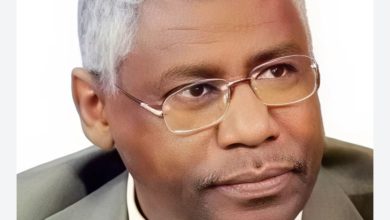
Amgad Fareid Eltayeb
Dangerous ideas in international politics do not emerge from a vacuum. They are birthed in moments of structural collapse—when the principles of international legitimacy are sidelined, the rights of nations are ignored, and the global order reels under the weight of paralysis and exhaustion. In these moments, projects that appear “practical” or “technical” are proposed, but at their core, they are merely reflections of a profound moral and political void.
It is precisely within this context that the proposal to expand the “Board of Peace”—a mechanism initially devised as an exceptional tool to handle the catastrophe in Gaza—to include Sudan has emerged. This idea is being marketed as an innovative response to the failure of traditional mediation, a rational alternative for crisis management. However, its essence reveals a dangerous shift: it does not address the roots of the conflict as a matter of sovereignty and justice; instead, it reframes the war as a technical administrative file to be managed by bureaucratic committees, divorced from the fundamental questions of political dynamics, accountability, people rights, and the rule of law.
This is not a mere procedural detail, but a fundamental redefinition of the Sudanese conflict. It transforms a tragedy that requires justice and accountability into a management problem to be solved with bureaucratic tools. Herein lies the danger: international impotence becomes a gateway for normalizing superficial solutions that legitimize predatory militias, serve external interests, stripping national issues of their substance and handing them over to external actors who operate without context or national foundations. This is not peace—it is the engineering of a new trusteeship under a technocratic mask.
The Anatomy of the “Board of Peace”
The Board of Peace was born in the wake of the Gaza catastrophe, the product of an American plan led by the Donald Trump administration and given cover via UN Security Council Resolution 2803. From its inception, the Board was not just an implementation mechanism; it was a structural shift designed to bypass the United Nations as the central framework for the post- World War II international peace and security.
The Board’s charter was drafted and ratified at the 2026 Davos Forum, not the UN General Assembly. Its executive board is a roster of political-economic figures far removed from traditional diplomacy: Jared Kushner, the son-in-law of U.S. President Donald Trump; Steve Witkoff, a U.S. real estate mogul and Trump’s golfing partner who also serves as the U.S. Special Envoy to the Middle East; American billionaire Mark Rowan, CEO of Apollo Global Management, a New York–based private equity firm; former British Prime Minister Tony Blair; Ajay Banga, the President of the World Bank Group; and Bulgarian politician Nikolay Mladenov, the UN High Representative for the Middle East Peace Process in Gaza.
The United States invited 60 nations to join as founding members, each required to pay $1 billion into a fund controlled by President Trump to secure a permanent seat, otherwise their membership will be limited to three years. This was a clear signal: the logic of the market and private investment has been transplanted into the heart of international politics. As its mandate expands toward global conflicts, the question is no longer Will it succeed? But rather: Who grants it legitimacy? To whom is it accountable? And whose interests do its results serve?
The Boulos Initiative: A Parallel Track
On February 4, 2026, Massad Boulos—the adviser to the U.S. President on Arab and African affairs—made a statement reported by Anadolu Agency in which he said that the Trump administration had prepared a comprehensive peace plan for Sudan. If accepted, the plan would be presented to the UN Security Council and then submitted to the Peace Council for adoption and implementation. This statement is not a passing detail; it constitutes the first explicit announcement of an intention to place Sudan within the operational orbit of the Peace Council. It reveals a premeditated effort to dominate and control Sudan through new mechanisms, while simultaneously exposing two structural dilemmas:
1. The Assumption of Legitimacy: Boulos treats the Board as a body with the inherent authority to manage a sovereign state, without any public debate regarding its legal foundations.
2. Internal Contradiction: This proposal lacks consensus even within the Quad itself (the US, UK, Saudi Arabia, and the UAE). It directly contradicts the Saudi-American proposal introduced weeks ago, which focused on a ceasefire, the withdrawal of militias from civilian areas, and a clear monitoring role for the UN—a path the Sudanese government had accepted in principle.
This track—despite its setbacks—received preliminary acceptance from the Sudanese government and placed the United Nations at the center of the process. Introducing the Peace Council at this stage amounts to a de facto dismantling of that commitment, a reshuffling of the deck, and a clear message that Sudanese consent is not decisive if a model deemed more suitable from Washington’s perspective is available. This was precisely the point of objection raised clearly by Saudi Arabia and Egypt during the Quad meeting held in Washington on the sidelines of the conference convened on February 3, where they stressed that this initiative lacks consensus.
The Peace Council cannot be understood in isolation from the deepening crisis of the United Nations itself. The organization is suffering from political paralysis, systemic blackmail by all parties within the Security Council, and a steady erosion of effectiveness. Yet addressing this weakness cannot be achieved by bypassing the UN, but by reforming it. What is unfolding with the Peace Council is the exact opposite. In practical terms, this approach shifts the center of international gravity from a multilateral institution—flawed as it may be, yet one in which states are formally equal—to a small, unelected body, unaccountable to international oversight, and accessible through membership fees controlled by the U.S. president.
What Boulos is pushing is not a diplomatic evolution, but a parallel initiative intended to bypass previous frameworks for the benefit of specific external actors. His proposal aims to solidify the political division between militia-controlled areas and government-controlled areas—mirroring the “Libyan Model”—to make partition a fait accompli. This has long been the goal of the militia’s backers, particularly the UAE, who now seek to fragment Sudan to mask their bloody support for a criminal entity.
This is not a reform of the international system, but its reengineering along imperial and colonial lines—one that excludes affected peoples and states from determining their own fate. What is happening in Sudan is a mirror of what could unfold across the region and the world if this model is accepted and allowed to pass: a full-scale privatization of international politics.
The Merchant’s Logic
One cannot understand this proposal without looking at Musaad Boulos himself. He does not hail from a diplomatic or academic background in conflict resolution; he comes from the world of pure commerce. Until recently, his primary expertise was the used car trade in Nigeria.
This background is not a personal critique but a key to his methodology. In Boulos’s mindset, crises become opportunities for “deals,” and human suffering becomes a variable to be managed under the mantra of laissez-faire. It is the language of a merchant who sees chaos as a business opportunity and collapse as an open market. This logic reduces Sudan’s existential crisis to a “transaction”: How can we manage the crisis at the lowest political cost and maximum economic profit? This approach empties politics of its moral dimension and treats sovereignty as a negotiable line item.
The Privatization of Reconstruction and Sovereignty
The “Board of Peace” model is perhaps most dangerous in its plans for reconstruction. The proposal suggests a special fund for Sudan’s rebuilding, where donor states—not the Sudanese people—determine priorities and manage operations. This is not financial aid; it is the transfer of state decision-making to external management. These external managers will, by definition, prioritize their own interests over those of the Sudanese people.
In Sudan—a country that won its independence through a proud civilian struggle more than seventy years ago—no serious peace initiative can ignore a fundamental reality: popular memory. The presence of states accused of supporting the Rapid Support Forces militia—chief among them the United Arab Emirates—as part of the management of a body ostensibly tasked with overseeing peace would be met with widespread popular rejection. This rejection does not stem from ideology, but from lived experience marked by bloodshed and devastation. At this point, the issue ceases to be one of regional or geographic representation. Even if the states involved were to change, the very idea of trusteeship would remain unacceptable. The problem is not who governs, but the principle that Sudanese sovereignty should be administered from outside.
This is Multilateral Neo-Colonialism. No single colonial power is in charge; instead, a coalition of international financial interests controls exhausted states through boards, funds, and “management mechanisms.” Sovereignty is not officially abolished; it is simply hollowed out. In this model, major powers do not need to occupy a country; they can govern it via “remote control.”
The Failure of the Gaza Model
Even in its original setting, the Board of Peace has shown no signs of success in Gaza. It has failed to achieve sustainable security, stop the cycle of violence, or launch a credible political process. It has remained confined to relief management and fragile security arrangements, all while attacking international legitimacy—most notably through the campaign against UNRWA.
If this model is faltering in Gaza, why is it being exported to a theater as complex as Sudan? The war in Sudan is not a technical glitch or a dispute between two rival companies; it is a struggle over the very nature of the state. Any approach that ignores this essence is destined to fail—or to “succeed” only by sacrificing the nation’s future.
Peace is not a Deal
What Musaad Boulos and the Board of Peace represent is not a peace project, but a ruins management project. It is designed to ensure the economic interests of external parties and create commercial opportunities for brokers of destruction.
Peace is not a board, a fund, or an implementation mechanism. Peace is a sovereign national act. It begins with the definition of the crime, passes through the gate of accountability, and culminates in a new social contract. Everything else, no matter how elegantly packaged or well-funded, is nothing more than the reproduction of hegemony through modern tools.