They Emerged in Kordofan and Darfur… How Did the Militia Obtain Weapons Reserved Exclusively for States?
Report – Sudan Events
In a new development that, according to some observers, confirms that the United Arab Emirates has “tied its turban tight” and entered a battle of survival as its ally retreats on the ground, the militia has suffered heavy blows in Kordofan and Darfur. Military operations have expanded into areas the militia — along with the forces of Abdulaziz al-Hilu — had believed were distant from the army and largely secure.
It has now become evident that the Sudanese Armed Forces and allied units possess the capability to reach these areas, owing to the qualitative weapons systems they have begun deploying, including modern drones and warplanes capable of striking distant and highly sensitive targets.
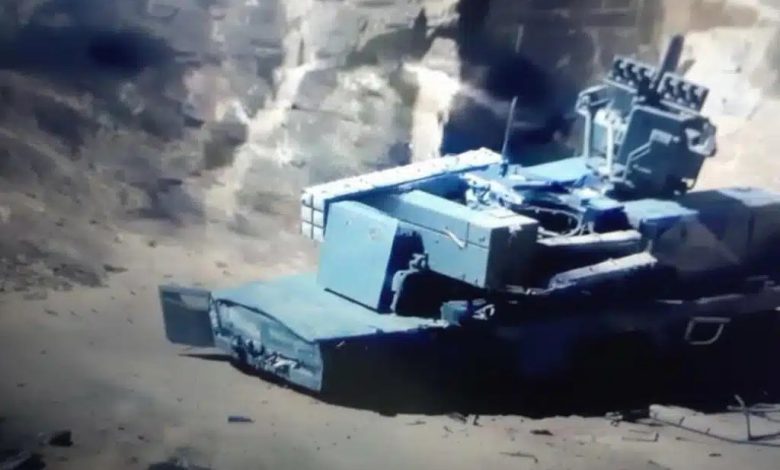
Developments on the ground suggest what appears to be direct intervention by the UAE aimed at preventing the militia’s collapse through the provision of weapons that no militia, under any circumstances, could independently acquire. The purchase and ownership of such systems are restricted to states. These include the FK-2000/FB-10 air defense system and Chinese-made FH-95 and CH-95 drones. According to a statement by the Sudanese Armed Forces, such weapons cannot be obtained on the open market by a militia; their acquisition is only possible through a state that purchases and subsequently transfers them — a scenario the statement says applies to Emirati support for the militia.
In a statement issued the day before yesterday, the army said that the entry of such advanced weaponry into Sudan indicates direct backing by a state, as these are strategic systems sold exclusively to regular armies. Military leadership expressed surprise at how such sophisticated systems reached a rebel militia, adding that foreign experts are operating these complex platforms. The army said it possesses information confirming the presence of foreign technicians managing and running these systems in Kordofan and Darfur.
The statement further questioned how these advanced systems entered militia hands despite the arms embargo imposed on the Darfur region. Eyewitnesses had previously reported that army drones targeted militia air defense systems, shooting down advanced strategic drones.
Recent social media posts by militia soldiers and officers revealed wide reactions to the army’s airstrikes, speaking of breaches within their ranks and acts of betrayal that enabled warplanes to accurately target missile platforms, inflicting severe damage and completely destroying them. This, according to the reports, has left Darfur’s skies open to army aircraft, which are now operating with near-total freedom after neutralizing most of the modern air defense systems deployed by the militia.
The battlefront has shifted suddenly for the militia from South Kordofan — where fighting remains intense — to North Kordofan, where the army has reached the outskirts of the city of Bara, currently witnessing fierce clashes. The escalation followed the infiltration of a unit from the Operations Authority of the National Intelligence and Security Service behind militia defensive positions, enabling a coordinated assault alongside army forces stationed in the area. The militia reportedly found itself under fire from multiple directions, suffering significant casualties, making the army’s deeper advance into the city seemingly a matter of time.
A similar situation is unfolding in the city of Al-Nuhud, where the militia is facing attacks from all sides. Major General (Ret.) Salah Mohamed Khalid stated that the militia is currently enduring sustained and powerful strikes from army drones and warplanes, which have further lowered already fragile morale among its fighters. He noted that the militia is grappling with severe fuel shortages, hampering vehicle movement and supply lines, despite repeated assurances from its leaders that fuel shipments were imminent.
“The expansion of battlefronts and the inability to maneuver freely due to fuel shortages and the heavy presence of warplanes and drones have disoriented the militia, leaving it in urgent need of continuous supplies — which are currently unavailable,” he said. He added that the army “has a long breath” and is steadily degrading the militia’s capabilities by targeting its vehicles and personnel, leaving forces on various fronts dependent on small, often isolated groups suffering from a lack of reinforcements.
Military expert Yasser Saad al-Din said the army’s recent statement clearly referenced documented information regarding the entry of weapons that militias cannot possess, as they are sold exclusively to regular armies and governments. He stressed that such information must be documented and presented to international organizations and countries involved in Sudan peace initiatives.
“The continued flow of this type of strategic weaponry to the militia prolongs the war, fuels instability, and results in more civilian casualties,” he said, emphasizing that such evidence is critically important and must be brought before the international community.