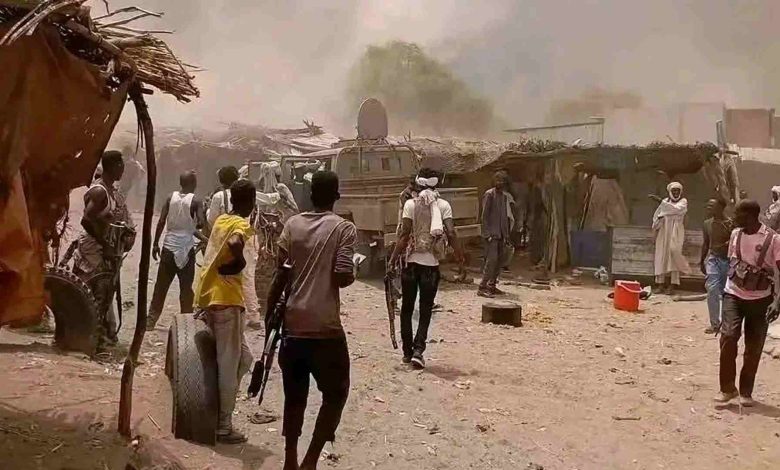
A report by the UN Office of the High Commissioner for Human Rights stated that the Rapid Support Forces militia unleashed a “severe and horrific” wave of violence during its latest offensive to seize the city of El Fasher last October, committing widespread atrocities amounting to war crimes and potential crimes against humanity.
Based on interviews with more than 140 victims and witnesses, the office documented the killing of more than 6,000 people during the first three days of the attack on the capital of North Darfur State.
The report estimated that at least 4,400 people were killed inside the city, while another 1,600 died along exit routes while attempting to flee, noting that the actual death toll is likely far higher.
The report, issued Friday, concluded that Rapid Support Forces fighters and allied Arab militias carried out indiscriminate attacks that included mass killings, summary executions, sexual violence, kidnappings for ransom, torture of abductees, and the use of children in hostilities.
It added that the attacks targeted civilians based on their ethnic origin or alleged affiliations.
For his part, the UN High Commissioner for Human Rights, Volker Türk, stressed that these deliberate violations confirm that “ongoing impunity fuels cycles of violence,” calling for credible and impartial investigations to establish criminal accountability for commanders and senior officials.
Türk noted that the scale and intensity of violence in El Fasher compounded the severe abuses suffered by residents during months of prolonged siege and continuous shelling, pointing to testimonies indicating the systematic use of sexual violence as a “weapon of war.”
The High Commissioner urged all parties to the conflict to immediately halt grave violations, calling on influential states to act urgently to prevent a repeat of the El Fasher tragedy and to support international mediation efforts aimed at achieving a cessation of hostilities and establishing a path toward inclusive civilian governance.