African Union Summit: Sudan and the Test of Continental Independence
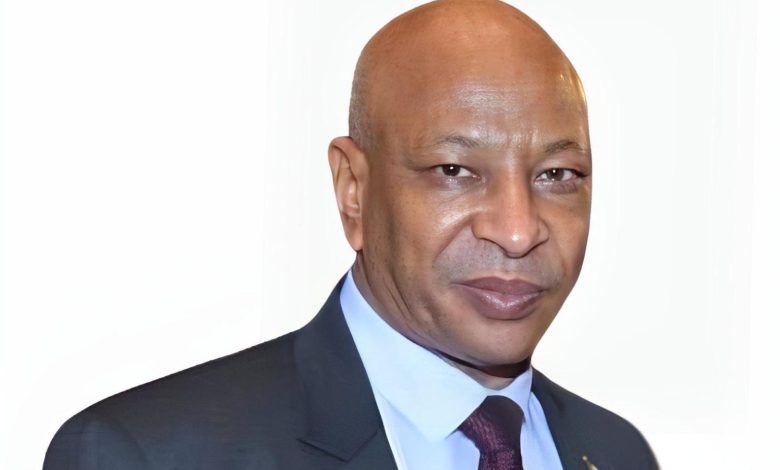
Ambassador Dr. Muawiya Al-Bukhari
The 39th Summit of the African Union convenes this year at a historic moment that leaves no room for diplomatic courtesies. The continent is not only grappling with accumulated security and economic crises; it is facing an existential question about the future of its continental architecture: Is the African Union still capable of crafting an independent African approach to crises, or has its decision-making become hostage to external balances that supersede its collective will and the mechanisms of the African Peace and Security Council?
Africa is currently confronting a pressing triad: fragile governance, expanding conflicts, and economic strain. Coups and eroding legitimacy, armed groups and resource-driven wars, debt burdens, inflation, and structural dependence on external actors. These challenges are compounded by intensifying global competition and mounting climate and food security pressures, while continental institutions remain limited in effectiveness and distant from their charters and their duty to protect member states.
The strategic imperative is clear: to move from crisis management to the construction of stable, institutional states capable of leading genuine integration.
Within this context, Sudan stands out as the most revealing test case.
Sudan: From Domestic Crisis to a Mirror of Systemic Dysfunction
Since the outbreak of war, the African Union’s role has appeared hesitant and limited in impact. Statements of condemnation, general calls for a ceasefire, and support for fragmented negotiation tracks—often influenced by international orientations, some of whose actors remain parties to the imposed conflict—have not translated into a coherent continental initiative capable of steering a settlement or imposing a unified framework with a defined timeline.
More problematic is the continued suspension of Sudan’s membership, imposed in October 2021 under a different political context, despite the country’s transformation into a battlefield threatening the very integrity of the state. Here, a contradiction emerges: How can an organization that upholds the principle of “African solutions to African problems” exclude a pivotal state from its system at a moment of comprehensive collapse, while simultaneously seeking to play a role in resolving its crisis?
The continuation of suspension is no longer an effective instrument of pressure; rather, it has become a factor weakening the Union’s capacity to influence events, while opening space for non-continental platforms to assume management of the file.
Sudan and the Duality of Approach: A Comparative Reading
To understand Sudan’s position within the African Union’s agenda, comparisons with Mali, Guinea, Burkina Faso, and Niger are instructive. Following Mali’s coup in August 2020, the Union swiftly suspended membership but maintained institutional engagement through regional mediation, recognizing transitional authorities and establishing timelines—however imperfect—for restoring constitutional order. The same pattern was repeated in Guinea (September 2021), Burkina Faso (January 2022), and Niger (July 2023), grounded in the same principle: rejection of unconstitutional changes of government. Sudan itself experienced a similar suspension in April 2019, which was later lifted.
In those cases, suspension did not evolve into total political rupture. Rather, it functioned as leverage within a defined negotiation process, keeping channels open and offering a gradual pathway for reintegration into the continental system.
By contrast, the Sudanese case appears institutionally distinct. Since the October 2021 suspension, no clearly articulated continental framework has emerged to redefine relations with the Sudanese state amid rapid transformations, nor has a declared timeline for conditional reintegration been established—despite the country’s shift from political crisis to a comprehensive proxy war threatening state unity. This divergence raises questions not only about differing national contexts, but also about consistency in the application of standards. Are decisions of suspension and reintegration governed by fixed institutional criteria, or by shifting political balances shaped by regional and international calculations—and by the influence of certain senior officials?
The issue is not flexibility per se—pragmatism is intrinsic to diplomacy—but rather the absence of a transparent, declared standard defining when suspension serves as corrective leverage and when it becomes an exclusionary measure that undermines the Union’s influence. When approaches vary in severity or in subsequent pathways, the principle the Union seeks to protect is weakened, and the slogan “African solutions to African problems” recedes from practical commitment to symbolic rhetoric.
External Interventions: Partnership or Influence?
This disparity cannot be understood in isolation from the growing external presence across Africa. Global competition over resources, strategic corridors, and investment has become a defining feature of the continental landscape. The problem does not lie in partnerships themselves, but in the absence of transparent criteria governing the relationship between financing and political positioning, including risks of leverage and financial corruption.
When significant portions of the Union’s operational budget depend on non-African partners, independence inevitably faces a test. When continental discourse varies in confronting interventions that prolong conflicts, the credibility of the Union’s charter—affirming sovereignty and non-support for internal strife—erodes.
In the Sudanese case, the Union has appeared less resolute in addressing interventions that have complicated the conflict and more inclined toward cautious positions that fall short of the existential threat facing a central member state within the Red Sea, the Horn of Africa, and the broader regional framework.
The Summit: A Moment of Review or Continuity?
The current summit stands at a decisive crossroads:
- Will it restore the continental track as the primary framework for a settlement in Sudan?
- Will it reassess Sudan’s membership status in a manner that promotes stability rather than entrenches isolation?
- Will it establish a clear mechanism to monitor interventions fueling conflicts within member states?
The stakes extend beyond Sudan; they concern the credibility of the African Union itself. Failure to manage the crisis of a founding and strategically central state would send a negative message to other members regarding the viability of the continental system.
Financial Independence as a Condition for Political Independence
One structural lesson underscored by the Sudan crisis is that political independence is inseparable from financial independence. As long as the organization’s financing relies significantly on external partners, the scope of autonomous continental decision-making will remain constrained. Genuine reform begins with restructuring the financing model, strengthening member state contributions, and safeguarding the Commission’s institutions from opaque influences.
Conclusion: Sudan Is Not Peripheral—It Is the Measure
Sudan today is not a marginal file on the summit’s agenda; it is the benchmark for measuring the African Union’s ability to defend its charter and reclaim the initiative. If it fails to produce an independent approach to a crisis of such magnitude, strategic weight, and demographic significance, the discourse of “African independence” will remain an empty slogan.
The summit is not required to end the war overnight. It is, however, required to restore continental agency from any overriding influence. That is the real test—and the greatest challenge. Enabling Sudan to fully resume its role and restore its membership under these imposed and devastating circumstances demands exceptional awareness and resolve from African leaders to empower the country to reclaim its place in shaping the continent’s destiny.



