Militia Faces Condemnation, Declining Morale, and Disrupted Supply Lines
Report – Sudan Events
The African Union Peace and Security Council has expressed deep concern over the continuing armed conflict in Sudan, which has resulted in heavy loss of life, widespread destruction of infrastructure, and a severe humanitarian catastrophe—particularly in El Fasher, where residents are suffering from famine and acute food shortages.
The Council reaffirmed its commitment to respecting Sudan’s independence, sovereignty, and territorial integrity. It took note of statements delivered by the Council’s Chair for February, Egyptian Foreign Minister Badr Abdelatty, as well as the Chairperson of the African Union Commission, Mahmoud Ali Youssouf, in addition to representatives of the Intergovernmental Authority on Development (IGAD), the League of Arab States, and the United Nations.
The Council strongly condemned the grave violations attributed to the Rapid Support Forces (RSF), including systematic killings, mass displacement, and ethnically motivated attacks against civilians. It called for accountability for those responsible, unhindered humanitarian access, and the protection of aid workers. The Council renewed its call for an immediate humanitarian ceasefire as a prelude to an inclusive Sudanese-led dialogue addressing the root causes of the conflict, stressing that there is no sustainable military solution.
It welcomed the Sudanese national peace initiative presented by the transitional Prime Minister and urged its full implementation in accordance with the African Union’s roadmap, calling for a more inclusive political process aimed at restoring an elected civilian government. The Council also condemned external interference and rejected the parallel government announced by the “Tasis” coalition led by the RSF, urging states not to recognize it. It further called for accelerating the identification of external actors supporting the conflict through the sanctions subcommittee and appealed to the international community to mobilize resources to meet urgent humanitarian needs, while commending neighboring countries that have hosted Sudanese refugees. The Council announced the dispatch of a field mission to Sudan to engage with all parties, keeping the situation under active review.
In parallel with the Council’s meeting in Addis Ababa, the RSF reportedly targeted the Al-Karqal area linking the cities of Al-Dilling and Kadugli. The Sudan Doctors Network stated that an RSF drone attack killed two civilians and critically injured four others. The network emphasized that the strike hit a populated residential area, describing it as a fully constituted crime that claimed civilian lives. It held the militia responsible, describing the incident as part of a long pattern of violations against unarmed civilians.
Meanwhile, the Sudanese Armed Forces carried out strikes in Nyala, delivering what were described as precise and powerful blows in the Airport district. A second strike targeted the Al-Nim forest south of the 16th Infantry Division headquarters, reportedly killing several militia fighters. The most significant strike hit the Industrial District, targeting gatherings of militia mobile units stationed there. Eyewitnesses reported casualties among fighters present at the time of the strike, with substantial damage inflicted on vehicles assembled inside a compound in the area.
At the same time, the militia reportedly began relocating and concealing visible military assets across dispersed locations, as Nyala increasingly faces near-daily drone and air force strikes. Surrounding villages have also become unsafe following drone operations targeting multiple areas across Darfur where RSF groups were allegedly mobilizing and preparing to reinforce their forces on active fronts. The army reportedly shelled, using heavy weaponry, a reinforcement convoy moving from Darfur toward South Kordofan. It also targeted trucks traveling from Ethiopia to the Yabous camp.
Clashes continue along Export Street, where the militia is reportedly attempting to engage the army in battles designed to distract it and enable the entry of supplies into the city of Bara, which is said to be only moments away from being retaken and cleared of the militia that has wreaked havoc there and in surrounding villages.
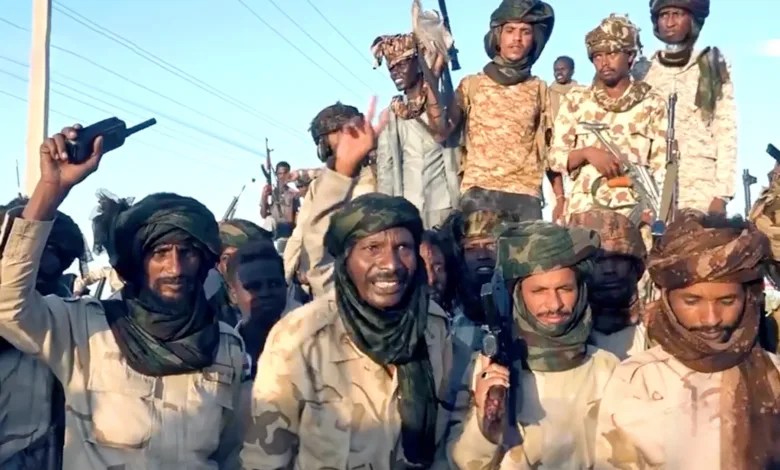
With the arrival of the holy month of Ramadan, many observers expect fighting to intensify in Kordofan and Darfur, given the steady influx of forces and equipment into operational theaters. Militia forces are reportedly facing mounting risks, particularly after supply lines were disrupted and morale declined sharply due to delayed salaries, the disappearance of key commanders, lack of reinforcements, and the absence of new areas to loot.
Reports indicate that some militia groups have opted to surrender to the army following guarantees and contacts made with certain military leaders. Sources close to the fighting groups stated that several commanders have been out of contact with the central command and control room for months. Some had reportedly been receiving limited communication from Abdel Rahim Dagalo, which later ceased after unfulfilled promises to send fighters’ salaries.