Sudan: RSF Abuses During Seizure of El Fasher Amount to War Crimes
Report – Sudan Events
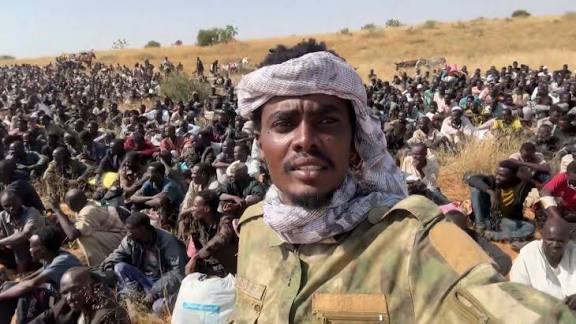
The Rapid Support Forces (RSF) unleashed a “wave of extreme violence… shocking in its scale and brutality” during their recent offensive to seize the besieged city of El Fasher last October, committing widespread atrocities amounting to war crimes and possible crimes against humanity, according to a report published today by the Office of the United Nations High Commissioner for Human Rights.
Based on interviews conducted with more than 140 victims and witnesses in Northern State, Sudan, and eastern Chad in late 2025, the report documents the killing of more than 6,000 people in the first three days of the RSF assault on El Fasher, following 18 months of continuous siege. At least 4,400 people were killed inside the city during those days, with more than 1,600 others reportedly killed along escape routes as they fled. The actual death toll from the week-long attack is, the report stresses, undoubtedly far higher.
The findings indicate that the RSF and allied Arab militias carried out widespread attacks including mass killings, summary executions, sexual violence, ransom-based abductions, torture and other ill-treatment, arbitrary detention, enforced disappearances, looting, and the use of children in hostilities. In many instances, the attacks targeted civilians and persons hors de combat based on their ethnic identity or perceived affiliation.
UN High Commissioner for Human Rights Volker Türk stated: “The deliberate violations committed by the RSF and allied Arab militias in the latest assault on El Fasher underscore how ongoing impunity is fueling relentless cycles of violence.”
He added: “Credible and impartial investigations must be conducted to determine criminal responsibility, including that of commanders and other superiors. These investigations must lead to genuine accountability for the gravest crimes, through all available avenues—whether fair and independent Sudanese courts, the exercise of universal or extraterritorial jurisdiction by third states, or proceedings before the International Criminal Court or other mechanisms.”
The report states there are “reasonable grounds to believe” that the RSF and affiliated Arab militias committed acts amounting to war crimes, including: killing; intentionally directing attacks against civilians and civilian objects; launching indiscriminate attacks; using starvation of civilians as a method of warfare; targeting medical and humanitarian personnel; committing sexual violence, including rape; torture and other forms of ill-treatment; pillage; and recruiting and using children in hostilities.
The patterns of grave violations documented in El Fasher mirror those previously recorded during RSF attacks on Zamzam camp in April 2025, and in El Geneina and Ardamata in 2023. Taken together, they reveal a sustained and organized course of conduct pointing to a systematic attack against the civilian population of Darfur. Violent acts knowingly committed as part of such an attack would constitute crimes against humanity.
Türk further stated: “The unprecedented scale and brutality of the violence inflicted during the assault have significantly compounded the horrific violations already endured by El Fasher’s residents throughout months of prolonged siege, ongoing hostilities, and shelling.”
The Human Rights Office documented multiple incidents of mass killings targeting sites where large numbers of civilians had gathered, with an apparent intent to maximize harm. Witnesses provided consistent and independent accounts of one incident in which approximately 500 people were killed when RSF fighters opened fire with heavy weapons on a crowd of around 1,000 individuals sheltering at Al-Rasheed student housing at the University of El Fasher on October 26. One witness described seeing bodies thrown into the air “like a scene from a horror film.”
RSF fighters also reportedly carried out summary executions within El Fasher of civilians accused of “collaborating” with the Sudanese Armed Forces and allied joint forces, often determined on the basis of non-Arab ethnicity, including members of the Zaghawa community. Teenage boys and men under 50 were particularly targeted.
“During my recent visit to Sudan, I heard firsthand testimony from survivors describing how sexual violence was systematically used as a weapon of war,” Türk said. Survivors and witnesses described patterns of rape and gang rape, ransom-related abductions involving sexual violence, and sexual assault during invasive body searches, with women and girls from the Zaghawa and other non-Arab communities facing heightened risk.
The report also documents widespread ransom-related abductions during civilians’ flight from the city, with consistent accounts describing a pattern of financially motivated kidnapping and detention. It identifies 10 detention facilities used by the RSF in El Fasher, where severely inadequate conditions led to disease outbreaks and deaths in custody. Among them was a children’s hospital converted into a detention center. In addition, thousands of people remain missing and unaccounted for.
The High Commissioner renewed his call on parties to the conflict to take effective measures to end the grave violations committed by forces under their command, and urged states with influence to act urgently to prevent a recurrence of the documented abuses in El Fasher. “This includes respecting the existing arms embargo and ending the supply, sale, or transfer of weapons and military materiel to the parties.”
He further reiterated his appeal for states to do everything within their power to support local, regional, and international mediation efforts aimed at achieving a cessation of hostilities and a pathway toward inclusive civilian governance. “In a protection crisis of this magnitude, human rights must remain at the center of efforts to secure a lasting resolution to the conflict,” Türk concluded.