Khartoum Residents Ask: When Is the Return — and How Do We Live?
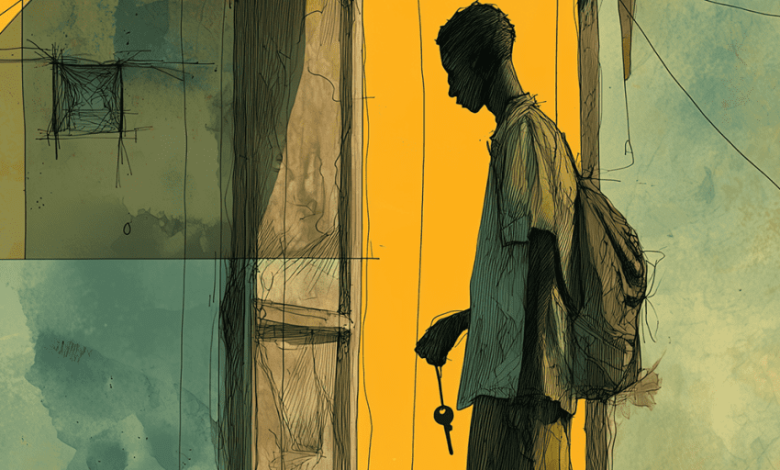
Sudan Events – Agencies
Nearly a year after the Sudanese Armed Forces recaptured the city of Khartoum from the Rapid Support Forces, bringing an end to direct clashes within the capital, the streets and buildings of Khartoum remain largely deserted. Entire neighborhoods stand empty, stripped of the rhythms of daily life. The city center is silent and desolate, save for scattered pockets on its far edges.
Residents ask a simple, pressing question: How are we to live?
Khartoum today offers neither stable sources of income nor meaningful employment opportunities. The cost of living has soared sharply, economic alternatives are virtually nonexistent, and essential public and daily services have collapsed.
Restoring normal life in the capital faces formidable challenges. Chief among them are the widespread and largely uncontrolled proliferation of weapons — a factor that risks renewed conflict and further human rights violations — alongside economic deterioration, shrinking labor markets, rising unemployment across broad social sectors, spiraling prices, and the breakdown of health and education infrastructure.
A correspondent for “Atar” observes that most returnees have settled on the outskirts — in North Bahri, the far south of Khartoum, and northern Omdurman — while residents within Khartoum itself have clustered in older neighborhoods such as Rumeila, Al-Shajara Al-Hamadab, and Al-Jerif West. Other districts, including Burri, Arkawit, Al-Manshiya, Al-Sahafat, and Al-Maamoura, are nearly empty.
Sulaiman Al-Waseela, who lived in the Al-Ashra neighborhood in southern Khartoum before the war, poses the question: When will we truly return?
He has gone back to his home in Al-Ashra several times from the city of Shendi, where he was displaced, in order to repair damage caused by vandalism. Yet he has been unable to reside there permanently, choosing instead to stay in Al-Kalakla until repairs are completed. His family remains displaced in Shendi for several reasons: their children’s schooling, the slow return of neighbors, and what he describes as the painful paralysis of life in a neighborhood whose rhythms he once knew intimately.
“This is not the neighborhood where I was born, whose houses and streets and people I knew by heart,” he says. “It has changed completely. The market is closed and motionless all the time. The houses are empty. No neighbors, no companionship. No transport, no electricity or services. No life, no work.”
Al-Waseela recounts how the war stripped him of his livelihood. He lost both his capital and his shop in the Popular Market, which itself has struggled to resume activity after being looted and burned to the ground. Recovery remains slow and uncertain, particularly as surrounding districts — Al-Sajana, Al-Deim, Al-Sahafat, and Arkawit — remain sparsely populated, their residents scattered between internal displacement, exile, and migration abroad.
In the early months of the war, Hassan Al-Mahi fled with his young family to Cairo, leaving behind everything he had built over a lifetime: a house in East Kalakla purchased with years of labor, a wholesale shop in the local market, and a white car that served both as savings and as a means of work and family connection.
All of it was lost. An airstrike reduced his home to rubble, leaving not a single standing wall. Furniture and the car were stolen. Goods were looted from both storage facilities and his market shop.
After two years in Cairo, Al-Mahi returned alone — not to Khartoum, but to Atbara’s market — hoping to chart a new beginning. Conditions in Khartoum, he says, remain far from viable, even after the government resumed operations from alternative headquarters.
“I follow news of the local market closely,” he explains. “It is not ready for traders or for purchasing power to return. There is no buying or selling. Even the dry port is silent — like a graveyard.”
He visited his ruined home once, only to leave in deep psychological distress. He has since decided that his children will remain in Egypt to secure their education and future. “This is a final decision,” he says. “There is no going back.”
Muawiya, a novelist and university lecturer, cut short his displacement in the Northern State and returned to his home in Al-Azhari, south Khartoum, as soon as the army regained control. He left his family behind, determined to assess the condition of his house and resume work at a private university that recently reopened in Omdurman.
He arrived at his home on foot.
“My eyes filled with tears as I stepped inside,” he recalls. “Thieves had taken almost everything — furniture, belongings — leaving only three iron beds and a single mattress on the floor. They left the stove, a wardrobe containing three shirts and one worn pair of trousers, some utensils. The library survived, though the books were scattered across the floor.”
In the early days after the RSF’s withdrawal, Khartoum appeared even more destitute than it does now. Basic necessities such as ice were nearly impossible to find. Drinking water was drawn from clay jars, and potable water was available only from street vendors transporting it by cart. The situation has since improved somewhat with the reactivation of water stations in Al-Mogran and Soba, though electricity remains cut off in most areas. Efforts to restore power continue, but progress is slow.
Muawiya now lives alone in Al-Azhari while commuting daily to Omdurman, where life appears considerably more normal than in Khartoum. Yet the commute is costly: six bus rides a day amount to roughly 9,000 Sudanese pounds — a sum disproportionate to his income and daily expenses, as well as the needs of his displaced family.
Most of his neighbors in Al-Azhari are unemployed, preoccupied solely with securing food after many community kitchens shut down. Residents rarely travel within the city due to prohibitive transport costs. By sunset, Khartoum descends into darkness. Few venture outside after nightfall. The silence is broken only by intermittent barking dogs and the passing of military or police vehicles. Some households rely on solar power for light.
While Muawiya notes a gradual increase in returns to the capital, the move remains fraught with risk. Malaria and typhoid are spreading. Cooking gas, fuel, and other petroleum products are scarce.
He believes that decisions to return are largely shaped by personal circumstance. Those without homes or stable livelihoods in displacement areas are more likely to attempt voluntary return. Yet a critical obstacle remains: education. Schooling in Khartoum State continues to falter, compounded by the weakness or absence of other essential services.
“People return to Khartoum scarcely recognizing it,” Muawiya concludes. “And it scarcely recognizes them.”
Source: Atar