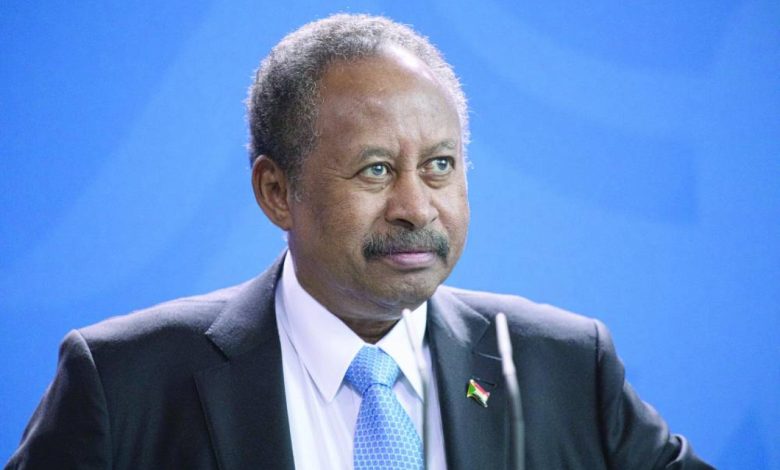
Al-Ahdath has learned that British authorities dispatched a representative to meet with Sudan’s Ambassador to the United Kingdom, Abu Bakr Al-Siddiq, requesting assistance in preventing members of the Sudanese community from organizing marches and protests against the “Sumoud” delegation one day before its arrival in London at the beginning of February.
The representative reportedly stated that British authorities had decided to secure and police the delegation and prevent any protesters from approaching it, in order to avoid a repeat of a previous incident outside Chatham House. Sources said Ambassador Abu Bakr Al-Siddiq informed the envoy that the embassy had no connection to the demonstrations, emphasizing that those protesting against “Sumoud” or other groups neither act on embassy instructions nor seek its permission, noting that most are British citizens exercising their legitimate right to freedom of expression.
In a related development, organizers of a meeting held by the “Sumoud” alliance delegation were forced to change the venue of a gathering with some supporters in London despite maintaining strict confidentiality. Opponents of the alliance reportedly identified the original hotel venue and announced plans to protest its hosting of the meeting, prompting hotel management to cancel the event. It was subsequently moved to another hotel under tight secrecy and heavy security measures, including the deployment of 20 police vehicles, strict entry controls, and an organized exit protocol requiring each attendee to leave individually through the rear gate after police presence and taxi arrival were confirmed.
Al-Ahdath also learned that the Sumoud delegation failed to secure a meeting with the Dutch Parliament during its visit to the Netherlands and was unable to meet the Prosecutor of the International Criminal Court, who declined to receive the delegation. The delegation limited its activities to visiting the headquarters of the Organisation for the Prohibition of Chemical Weapons in The Hague and meeting Ambassador Thomas Schieb, Chair of the Executive Council of the OPCW. The delegation called on the organization to form a committee to investigate the alleged use of chemical weapons by the Sudanese Armed Forces in several areas during the ongoing war.
The delegation presented what it described as “reports supported by material evidence from various areas inside Sudan,” including cases it claimed involved victims currently receiving treatment abroad. However, some Sumoud leaders, notably Khalid Omar Yousif and Jaafar Hassan, later denied directly accusing the army, stating instead that they had called for an investigation into allegations of chemical weapons use.
According to Al-Ahdath’s monitoring, the Sumoud alliance delegation’s tour, which included the Netherlands, the United Kingdom, France, and Germany, ended in significant failure. The visit resulted in only limited meetings with officials, most notably Germany’s Federal Minister for Economic Cooperation and Development. In the United Kingdom, meetings were confined to members of the House of Lords, Baroness Joyce Anelay and Lord David Alton, in addition to marginal public-relations-oriented encounters aimed at mitigating the perceived failure of the tour, which was marked by evident concern over engaging with Sudanese expatriates in Europe.
Witnesses reported that only 43 individuals attended a meeting organized by the delegation with members of the Sudanese community in London. They also alleged that criticism directed at Khalid Omar Yousif by one woman was prearranged to help improve his image following an earlier altercation with a Sudanese community member in the Netherlands. Dr. Hamdok and members of his delegation reportedly adhered strictly to heightened security measures, avoided sitting in hotel lobbies, and refrained from going out into public spaces for fear of reactions from Sudanese residents in Europe. This followed a previous incident in London last year, when British police escorted Dr. Hamdok and his companions out of Chatham House through rear exits under heavy guard — an episode that reportedly dealt a significant blow to the Sumoud alliance, which faces considerable popular isolation both inside and outside Sudan.