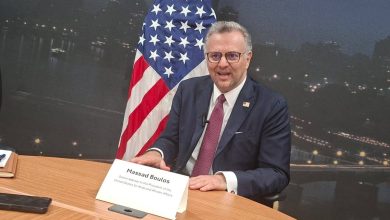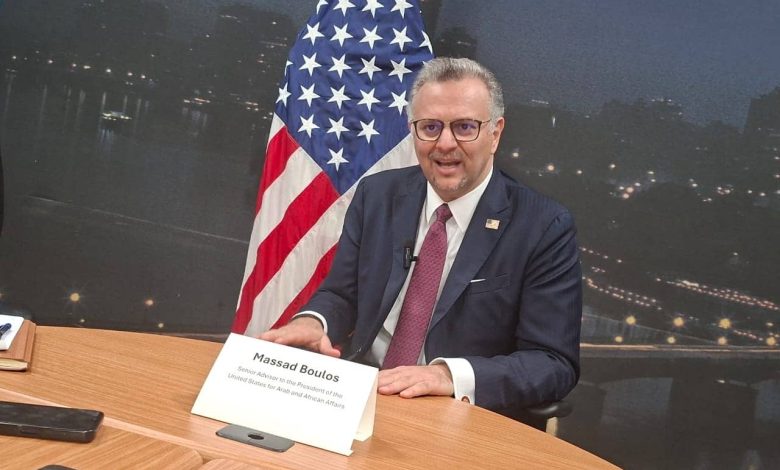
The U.S. Special Envoy to Sudan, Massad Boulos, announced the imposition of new sanctions targeting leaders of the Rapid Support Forces (RSF), while affirming that the United States will not tolerate attempts by “Islamist networks” linked to the former regime to obstruct Sudan’s civilian transition.
Sanctions and Diplomatic Pressure
In an address before the United Nations Security Council, Boulos revealed that the measures include asset freezes, travel bans, and restrictions on arms transfers against RSF leaders implicated in acts of ethnic cleansing, sexual violence, and the use of starvation as a weapon of war. He said the steps form part of a broader strategy aimed at holding perpetrators accountable across all sides of the conflict, including elements associated with the Muslim Brotherhood that he accused of seeking to regain influence within state institutions.
“No Clean Hands” in the Conflict
The U.S. envoy offered a blunt assessment, stating that “there is no clean party in this conflict.” He held both the Sudanese Armed Forces and the Rapid Support Forces responsible for prolonging the war and deepening civilian suffering. Boulos condemned RSF siege tactics in El Fasher and criticized airstrikes, shelling of densely populated areas, and arbitrary arrests carried out by the Sudanese Armed Forces.
Five-Point Roadmap
Boulos outlined the U.S. administration’s vision, under the leadership of President Donald Trump, for resolving the crisis. The proposed roadmap is built around five key pillars:
- Immediate humanitarian truce: To ensure unhindered delivery of aid.
- Protection of civilians: Guaranteeing sustained humanitarian access during and after the conflict.
- Security arrangements: Negotiating a permanent ceasefire through a phased approach.
- Civilian transition: Establishing a civilian-led government free from military or extremist domination.
- Reconstruction: Securing international commitment to rebuilding infrastructure once a credible civilian framework is in place.
Message to the Generals
Boulos stressed that “Sudan’s future cannot be determined by generals,” but must instead be shaped by civilians — including doctors, teachers, and the youth who led the revolution. He announced that total U.S. assistance since the outbreak of the crisis has reached $2.5 billion, warning that funding alone will not suffice as long as aid convoys are obstructed and relief workers targeted.
The envoy concluded by asserting that a sustainable solution requires dismantling patronage networks and parallel militias, and ensuring the organization of free and fair elections under international supervision.