The UN Security Council Address: Between the Pretense of Neutrality and the Realities of War in Sudan
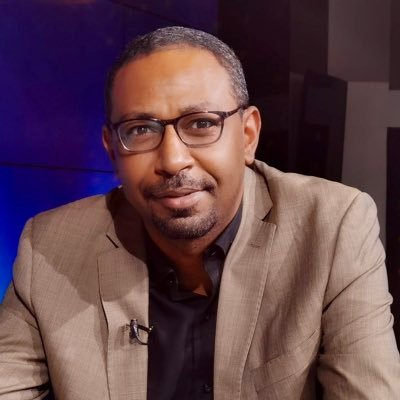
Amjad Farid Al-Tayeb
The farcical speech delivered yesterday at the UN Security Council by Massad Boulos regarding Sudan stands as stark evidence of the extent to which political actors who claim false neutrality are, in fact, complicit in prolonging the war by promoting the narratives of the Rapid Support Forces (RSF).
Boulos adopted a position entirely detached from reality, advancing a discourse of superficial equivalence between the warring parties in Sudan. This is the same line consistently promoted by successive civilian coalitions—first the Civil Front, then Taqaddum, and later Sumoud—despite the documented defection of significant elements within these alliances to openly align themselves with the militia, while their regional patron in the United Arab Emirates continues to sponsor all who serve its agenda.
Boulos’ rhetoric, severed from the facts on the ground, trades in half-truths—an approach he appears to have perfected, telling each audience precisely what it wishes to hear. It is true that no party in any war is entirely innocent. Yet the moral compass that identifies the aggressor and the perpetrator of crimes remains unmistakably clear.
The Sudanese Armed Forces are engaged in what is, by every measure, a defensive and just war—defending their people, their land, and their state. War is inherently tragic, but this conflict was forced upon us in defense of tens of thousands who endured eighteen months of fascistic siege, only to be killed in El Fasher when the RSF militia overran the city. It was fought in defense of patients and medical staff at the Saudi Hospital—460 victims reportedly killed by the militia upon seizing the facility. It was fought for the millions in Khartoum and Al-Jazira who were looted, displaced, and subjected to grievous violations by the RSF in their homes and livelihoods, and who returned only after the army liberated these areas from the grip of the militia backed by its Emirati sponsor. It was fought for the hundreds of thousands in Al-Dalang, El-Obeid, and Kadugli who welcomed the arrival of Sudanese soldiers breaking the sieges imposed upon them.
None of these realities appear to merit Boulos’ consideration. Yet their lived experience alone exposes the falsehood of equating Sudan’s national army with what many Sudanese view as a fascistic militia supported by external interests. Such equivalence serves those who seek to exploit Sudan’s suffering for their own agendas.
I will not belabor Jean-Jacques Rousseau’s reflections in The Social Contract on how social order aspires to discipline and coherence in times of peace, but cannot be fully preserved in times of war—when the imperatives of survival inevitably supersede the demands of ideal conduct. Such philosophical nuance may prove challenging for someone whose professional background lies in used-car trading.
Indeed, Boulos’ address to the Security Council was delivered not with the logic of statesmanship committed to stability through sovereignty, rule of law, and accountability, but with the mindset of a broker seeking a profitable deal between market actors.
As for the Muslim Brotherhood—invoked repeatedly by Boulos to raise the specter of threat in a manner seemingly designed to satisfy his Emirati patron—the Sudanese people themselves overthrew them. It was Sudan’s citizens and their living civic forces who dismantled authoritarianism from within, standing against the enforcers of the Bashir regime and its militias, whose return is now being attempted under new guises.
We will write the future of democratic transition in our country. We are neither awaiting your permission nor capable of being dictated to—and we never will be.
Today, Sudanese citizens stand united against what they perceive as the gravest threat: the RSF militia and what they describe as Emirati neo-colonial ambitions—save for a small circle of loyalists whose voices are amplified through intermediaries.
If Boulos truly speaks of peace in Sudan, he must understand that peace will not emerge from commercial brokerage. It will come through national policies that preserve the integrity of the state and serve its citizens. Sudan will always have a national army, regardless of changes in political leadership. But there will be no lasting place for the RSF. On the contrary, its continued existence would mean the destruction of Sudan itself—a fate the Sudanese people will not permit.
Mr. Boulos: we thank you for your efforts. Having been removed from the Congo file and passed over in matters relating to Gaza, perhaps it would be more fitting to turn your attention to gold and mineral deals—far from our country.