The Situation in Mustariha: The Militia Distributes Death
Sudan Events – Agencies
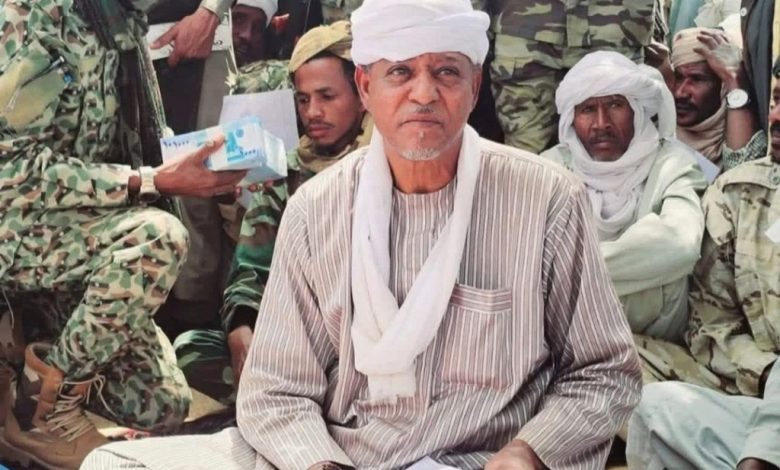
Ahmed Mohamed Abkar, official spokesperson for the Revolutionary Awakening Council, told that Musa Hilal is safe and has been moved to a secure location. He added that the Rapid Support Forces (RSF) militia targeted the hospital, civilian homes, and the residence of Sheikh Hilal.
Abkar said the militia attacked Mustariha from four directions, with the participation of “mercenaries” from South Sudan. He confirmed that the assault left civilians dead and wounded, homes burned and looted, and residents forcibly displaced.
Media platforms affiliated with the militia had earlier attempted, following drone strikes on Mustariha, to promote the narrative that the drones belonged to the Sudanese Armed Forces. That account quickly collapsed. Within hours, RSF forces entered Mustariha and carried out retaliatory abuses against its residents. Once visibility improved, it became clear that Musa Hilal had not been harmed and had indeed been relocated, though his son, Haider, was killed in the second wave of attacks.
Eyewitnesses said Revolutionary Awakening Council forces that withdrew from Mustariha are now regrouping. They confirmed that most of the fighters who attacked the area were from the Awlad Mansour and Al-Salamat tribes, backed by large numbers of South Sudanese combatants.
Pages affiliated with the militia circulated reports of numerous vehicles leaving frontlines and combat axes after news spread of Abdul Rahim’s assault on Mustariha. Sources indicated that some militia units clashed with departing Mahamid fighters to prevent them from heading to Mustariha or joining Musa Hilal’s forces.
Some observers likened Abdul Rahim’s actions to “shooting himself in the foot,” arguing that such a move places Arab tribes in Darfur and their traditional leaders under immense pressure. Silence, they warn, could trigger further crises. Attempts by Abdul Rahim to intimidate and silence all parties may yield dangerous consequences, potentially plunging Arab tribes into internal conflicts and cycles of revenge.
Ismail Bato, a local resident, said Abdul Rahim’s “reckless behavior” risks bringing fire to their own communities. “What is happening now is that vengeance will take precedence over any agreements or interests,” he said. “This time the reprisals will be devastating, because heavy weapons have entered these areas and tribes possess stockpiles of ammunition hidden even from militia commanders. These will surface in tribal fighting.”
He added that Musa Hilal will not remain silent and will not allow what happened in Mustariha to pass without response, considering that “the war in Darfur has now begun.”
While some analysts believe the attack on Mustariha was a reaction to Hilal’s recent speech, Bato argues it forms part of a broader and more complex struggle—one centered on legitimacy within Darfur’s Arab constituencies, the monopolization of arms, the dismantling of historic centers of power, and the reshaping of tribal leadership structures.
The flaw in this theory, adopted by some militia leaders, he said, lies in the assumption that others are merely pieces to be moved at will—an assumption that may prove false. Some tribal leaders, or nazirs, now reportedly harbor resentment toward Abdul Rahim Dagalo, accusing him of humiliating and insulting them in a recent meeting over what he described as their weak mobilization efforts and their repeated demands for benefits he deemed unrealistic.
During that meeting, Abdul Rahim allegedly threatened to halt salaries and allowances if they resumed calls for payments to families of the dead and medical treatment for the wounded.
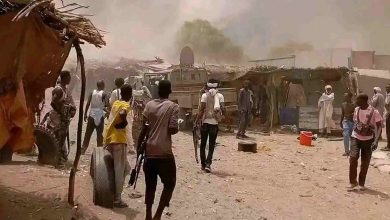
Inside Mustariha’s damra (settlement), eyewitnesses describe an absence of organized military operations. Militia fighters reportedly roam neighborhoods looting homes and removing furniture in preparation for later transport. Most residents have fled to surrounding areas. Bodies reportedly lie along roads, and fires continue to burn in some buildings, while armed forces have positioned themselves at the area’s entrances.
Observers noted that fighters were seen eating and drinking openly during daylight hours in Ramadan. Nearly all homes were entered and stripped of belongings.
The move appears unlikely to pass without repercussions. Statements attributed to Mahamid youth groups and coordination bodies have called on fighters within the militia ranks to withdraw and urged broader mobilization to confront the current situation.
According to political analysts, the emergence of rival armed actors within the Arab tribal bloc poses an imminent threat to Abdul Rahim and his allies. The presence of competing forces could trigger new alignments and recalculations.
Abdul Rahim, critics argue, may have the capacity to ignite conflict among Arab tribes—but not to contain it. The war may not erupt immediately, but he has, they say, provided it with every reason to ignite, laying out the matchsticks amid vast stockpiles of weapons and ammunition.