The Prestige of the State Is Not Borrowed: A Reading of Reception Protocols for Sudanese Officials in the Region
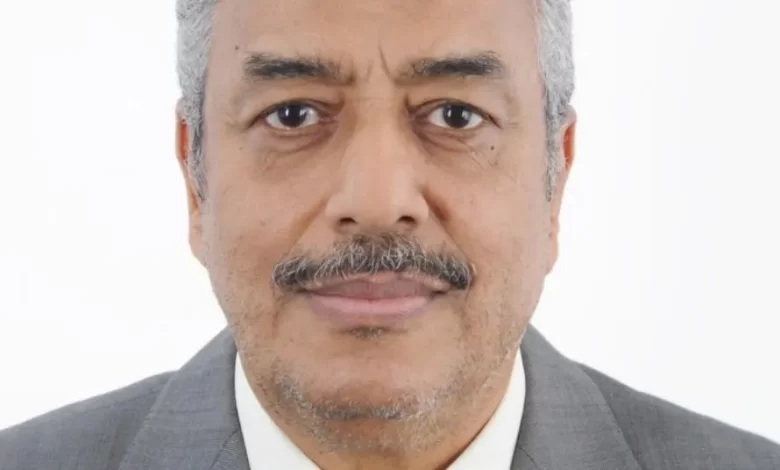
Dr. Ismail Satti
Official receptions are not a passing procedural detail, nor a decorative scene staged for cameras. Diplomatic protocol is a silent political language in which messages are delivered without words: Who receives you at the airport? Is the red carpet rolled out? Does the honor guard stand in formation? Is the national anthem played? Every gesture carries meaning; every omission sends a signal.
When a head of state visits another country, the honor accorded is not to the individual, but to the office that embodies the sovereignty of his nation. Any downgrading in the level of reception is therefore not interpreted as a personal slight against the visitor, but as an indication of how the host state perceives the visiting country’s standing within the regional political balance.
Within this context, a troubling question emerges: Why do some visits by Sudanese officials to countries in the region appear to fall short of the customary standards afforded to heads of state? Why is the head of state at times received at a level below that granted to his counterparts?
Protocol as a Mirror of Political Reality
Observers of regional dynamics note that states are received according to their political weight and internal stability, not according to their history or the sentiments others may hold toward them. A stable state—one with functioning institutions, disciplined economic management, and a clear strategic vision—is treated as a full partner. A state mired in institutional ambiguity or decision-making turbulence, however, is approached with caution and reservation.
Over the past seven years, Sudan has projected a deeply unsettled image: political turmoil that clouds visibility, the absence of consolidated institutional legitimacy, a bloody military conflict, and inconsistencies in external messaging. In such a climate, it is only natural that diplomatic protocols reflect this state of disarray.
The reception of figures such as Abdel Fattah al-Burhan, Kamil Idris, or any other Sudanese official is not measured by sentiment, but by prevailing political equations: the degree of recognition of institutional legitimacy, the capacity to honor commitments, the level of domestic stability, and the clarity of the counterpart with whom other states are engaging.
Between Symbolism and Sovereignty
Sovereignty is not a slogan raised in speeches; it is the tangible ability to command respect in international relations. When state institutions weaken and internal disputes are managed through domination rather than consensus, the message conveyed abroad is unmistakable: this is a state that has yet to settle its own affairs.
Regional actors operate with pronounced pragmatism. They do not gratuitously antagonize others, but neither do they extend full symbolic recognition to a state that lacks full stability. Any fair assessment of reception levels must therefore begin within Sudan itself, before attributing ill intent or condescension to external parties.
The Crisis Begins at Home, Not at the Airport
It is easy to take offense at a muted protocol scene; it is far harder to ask: What have we done to restore the prestige of the state?
- Do we possess civilian institutions operating under a clear constitutional framework?
- Is our external discourse coherent or indistinct?
- Does our economy provide us with negotiating weight?
- Do we project to the world the image of a cohesive state—or that of an open arena of conflict?
Prestige is neither imported from another capital nor imposed by a red carpet. It is built through political stability, clarity of legitimacy, internal respect for the rule of law, and the capacity to manage differences within the framework of the state rather than outside it.
A Reading Beyond Emotion
It is unwise to turn every procedural detail into a battle over dignity, just as it is unobjective to ignore its implications altogether. A measured reading requires acknowledging that protocol reflects balances of power and legitimacy; it does not create them.
If we seek a different reception scene in regional airports, we must first transform the scene of the state at home. States are received as they define themselves. When Sudan restores its institutional unity and political stability, it will not need to demand parity; parity will emerge naturally—not as a favor granted by others, but as a consequence of restored statehood.



