Sudan and the Hard Choices

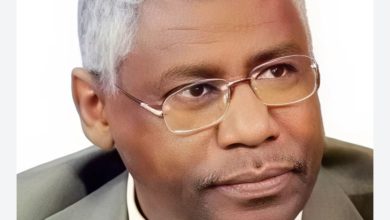
By Dr. Abdel Azim Hassan
The incident of the Black Stone nearly ignited a war among the tribes of Mecca. Yet the ingenious solution devised by the Prophet Muhammad to manage the crisis did more than defuse the tension; it offered humanity a practical model of what is now known as a “round table,” where all parties sit as equals in search of a way out. However, merely sitting together is not enough. Consensus does not become reality unless it is accompanied by objective solutions and clear procedural measures.
In Sudan, the prevailing political behavior has long revolved around competing for power that is often undeserved. Time and again, a party—or a coalition of parties—seeks to court the military establishment in hopes that it will hand over authority to them. Yet the same establishment soon turns against them. With the repetition of this pattern, the military institution has effectively become the largest political force clinging to power—either ruling alone or sharing authority with a stake no less than the lion’s share.
Thus, the conflict has ceased to revolve around how to build the state and instead centers on who controls power. Meanwhile, the nation itself has remained outside the equation of competition. The truth that must be acknowledged is that the continuation of this approach will lead only to a complete political vacuum. As long as civilian actors remain unwilling to transcend their differences for the sake of their country, a moment may come when there is nothing left to contest.
Politics, in its true sense, is the management of public affairs in a way that safeguards people’s interests and fulfills their aspirations. From this perspective, it becomes necessary to search for a political settlement formula based on broad national consensus. Such a formula could begin, in its initial phase, by bringing together the forces that reject the rebellion of the Rapid Support Forces, and later evolve into a national roundtable that includes all parties.
Participation in such deliberations, however, should not automatically confer the privilege of leading the transitional phase. That responsibility ought to be entrusted to individuals who are not affiliated with any political party or partisan alliance.
Ending Sudan’s wars will not be achieved through slogans, but through difficult decisions and choices that require political courage and genuine will. These choices must open the path for competent national figures who are not aligned with the camps of the old guard—an establishment that has not only failed to govern the country effectively but has also obstructed attempts at reform for seventy years. Sudan today does not need further struggles over power; it needs the courage to choose between saving the state or losing it.