Militia Strikes Female Dormitories in Kosti and Continues Trafficking Girls in Darfur

Report – Sudan Events
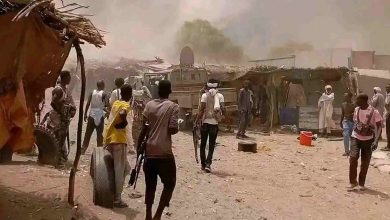
On Sunday evening, the city of Kosti was hit by drone strikes carried out by the Rapid Support Forces (RSF) militia, targeting multiple areas of the city. One of the strikes hit a student dormitory known as Al-Qouz, affiliated with Al-Imam Al-Mahdi University, causing injuries among residents.
Eyewitnesses reported that the militia deployed suicide drones and a long-endurance strategic drone that hovered over the city for an extended period. Several university buildings were targeted, starting with student activity centers, then the library, and finally the female dormitory, causing panic and fear as loud explosions were heard across the city. Some female students were injured, and news spread that the dormitory had come under direct attack, forcing the students to flee from the drone fire amid darkness and chaos.
Witnesses confirmed that the strategic drone lingered over the female dormitory for a prolonged period before striking it.
Previously, the Minister of Human Resources and Social Development, Salma Ishaq, reported that 2,500 women had suffered severe violations by the RSF since the outbreak of the war. Speaking on the occasion of International Women’s Day, she noted that this figure does not reflect the full scale of abuses, as the reported cases only include those that reached healthcare facilities.
Since their deployment in Khartoum, RSF forces have committed widespread crimes against women, including exploitation, enslavement, and trafficking. The militia has reportedly sold girls and women in neighboring countries, forcibly relocating them from central Sudan and Khartoum to cities such as Al-Duwayin, Nyala, Saraf Omra, and Khor Ghannam—a name that gained notoriety in the fourth month of the war, becoming a source of fear for many families in Darfur.
Families in Khartoum, Gezira, and other regions have fled their homes fearing abduction and sexual assault of their daughters—a well-known tactic of the RSF. In addition to murder and looting, every area entered by RSF forces has witnessed rape and abductions of girls. While the scale of abductions was initially limited, reports on social media of missing girls soon multiplied.
Mass rapes have taken place in areas under RSF control, but many cases go unreported due to the stigma surrounding sexual violence in Sudanese society. Families often protect their daughters’ privacy, seeking private remedies rather than public disclosure. These violations continue to the present day.
RSF has also engaged in looting banks, homes, and institutions, and in the early stages of the war, they established facilities for holding abducted girls in Khartoum and Bahri. Survivors from Al-Durushab recounted being taken to houses where 19 girls were held, forced to cook for soldiers, wash clothes, and serve as nurses for the wounded. They suffered from limited access to drinking water and were deprived of adequate food.
This is only one of many RSF-run facilities for the enforced disappearance and forced labor of girls. Other sites exist in Bahri, Khartoum, and Omdurman, reflecting a broader system of abduction and the establishment of trafficking networks.