Between Airstrikes and Drone Attacks… The Militia Under Pressure
Report – Sudan Events
Many observers believe that military activity along the various fronts has slowed in recent days, interpreting the situation as a sign that developments may be unfolding behind the scenes. Others have speculated about different scenarios. However, a source within the operations command in Kordofan dismissed such interpretations as inaccurate.
According to the source, the entire Kordofan region is now approaching what he described as “liberation,” noting that the militia is currently losing equipment and fighters across multiple fronts—particularly in Umm Garfa, Umm Kureidim, Al-Mazroub, as well as Al-Nuhud, Al-Sanout, Kadam and Abu Zabad. He added that along the road linking these towns, bodies of militia fighters and burnt-out vehicles can be seen scattered along the route.
“There are no orders to halt operations,” the source said, adding that the army has its own operational methods. “Our instructions are to advance, not to retreat. The liberation of Kordofan is approaching.”
As the end of the holy month of Ramadan draws near, residents in Kordofan and Darfur report an increase in the movement of warplanes and drones targeting weapons depots, gatherings of militia forces, and their supply lines.
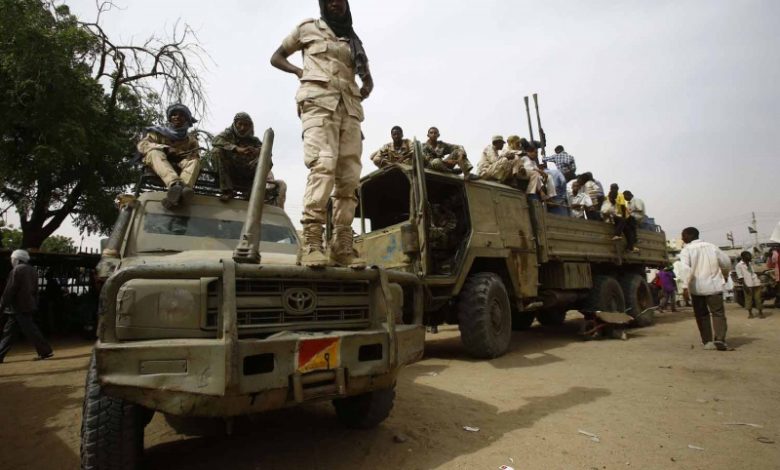
The Sudanese army has recently carried out intensive airstrikes on positions belonging to the Rapid Support Forces (RSF) militia in the Kordofan and Darfur regions. The strikes targeted logistical supplies crossing the border, as well as gatherings of forces preparing to advance toward army-controlled towns in Kordofan—particularly in the northern areas—and near the far western borders with Chad in Darfur.
In recent days, the army has focused its surprise strikes largely on locations in eastern Kordofan around Jabra Al-Sheikh, Umm Siala and Umm Garfa in a move aimed at fully securing the capital. Reports indicate that the strikes inflicted significant losses on RSF forces, particularly among military vehicles that were seen burning with flames rising from them.
A military source told Al Jazeera Net that the armed forces are working to regain full control of all territory in North Kordofan State, particularly in its eastern areas bordering Khartoum State, including Jabra Al-Sheikh. The source added that the army had inflicted heavy damage on RSF units in North Kordofan, culminating in the recapture of Bara—the state’s second-largest city—last week.
He explained that the airstrikes have tightened the siege around RSF forces in Jabra Al-Sheikh and Umm Siala, predicting swift offensive operations to retake those towns at any moment. The army, he said, remains determined to “clear all towns in eastern Kordofan and fully secure the rear of the Sudanese capital, Khartoum.”
Meanwhile, the army’s drone units launched what were described as the most intense and extensive attacks last week. A military source told Al Jazeera Net that the armed forces succeeded in destroying what he described as the “hard core” of RSF forces in West Kordofan State, which has largely been under their control.
According to the source, drone strikes targeted RSF positions in the towns of Al-Fula, Al-Nuhud, Abu Zabad, Al-Sanout, Al-Mujlad and Babanusa in West Kordofan. The strikes reportedly destroyed more than 100 combat vehicles as well as ammunition and fuel estimated at thousands of liters.
The same source noted that after securing large areas of Kordofan, the army is planning to expand westward from its bases in Kadugli and Al-Dilling. He suggested that the operation to regain control of West Kordofan would proceed along multiple axes, particularly after the RSF had been “stripped of its core fighting power in the region through airstrikes.”
He also revealed what he described as a growing reluctance among young men in West Kordofan to join RSF ranks following the recent aerial bombardments. According to the source, the militia is also facing severe financial difficulties, including the inability to treat wounded fighters and failure to pay salaries for three months—factors that have led many combatants to abandon the battlefield, forcing the group to rely increasingly on mercenaries.
Another military source told Al Jazeera Net that the army last week destroyed a logistical convoy belonging to the RSF carrying ammunition and fuel from a neighboring country. The convoy had crossed a border crossing last Thursday, but drones pursued it and “turned it to ashes” near the entrance to a town.
Airstrikes were not limited to the Adi Kongo area. On Friday, RSF forces were reportedly preparing a surprise attack on the town of Al-Tina near the Chad border, concentrating their fighters in West Darfur State in the towns of Kulbus, Sali’ah, Jarjira and Forbaranga. However, the army launched pre-emptive drone strikes on gatherings in Sali’ah, Forbaranga and Kulbus, forcing the RSF to abandon its planned assault on Al-Tina—the army’s only remaining stronghold in Darfur.
A senior security source told Al Jazeera Net that drone strikes in West Darfur inflicted heavy losses on RSF fighters. He said they killed one of the militia’s most prominent field commanders, Major General Abdel Rahim Bahr, who had been responsible for recruiting mercenaries from neighboring countries and leading battles in several areas.
The strikes also reportedly killed more than 73 fighters, including Adam Taha, the field commander responsible for the Rahid Al-Nuba, Umm Siala and Bara sector, who died in an air raid.
Today, the militia faces what observers describe as a dual battle: mounting military pressure from the Sudanese Armed Forces on the ground, and increasing disruption to its supply networks across the region. This, analysts say, explains the relative decline in its ability to maneuver and sustain operations at the same pace seen at the outset of the war.