Police Confirm: Anyone Who Obtained Sudanese Citizenship Illegally Will Be Stripped of It
Report – Sudan Events
Ongoing operations by the joint forces—comprising the army, security services, police, and several supporting units—are clearly visible across Khartoum. These forces are working to dismantle a number of complex and interconnected files, including the issue of foreign nationals, the removal of informal settlements, the crackdown on the “Tas’a Tawila” gangs and so-called “Shafshafa” looting groups, as well as individuals impersonating members of the regular forces.
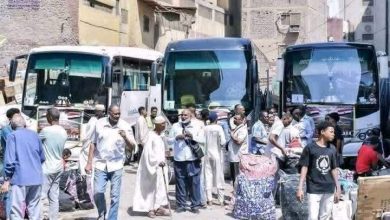
All these issues are intertwined and complicated, largely because they were left unaddressed for many years. Their consequences are now erupting with a noticeable impact. A significant factor is the presence of large numbers of foreign nationals—particularly from South Sudan, Chad, Ethiopia, and several West African countries—whom authorities had previously allowed to move freely throughout the country.
According to security sources, some of these foreign nationals later joined the Rapid Support Forces militia, took up arms, and participated in violence against the same population that had allowed them to live in Sudan without residency permits or even identification documents. Some reportedly formed factions within the militia and criminal gangs such as the “Tas’a Tawila,” which in some cases took control of entire neighborhoods—such as the South Sudanese gang led by “Bakobi” in western Omdurman.
These developments prompted authorities to intensify efforts to address the issue of foreign nationals, whose numbers are said to have reached the millions. Many have settled in well-known neighborhoods in Khartoum, as well as on the outskirts of the city and in informal settlements that have become safe havens for criminal groups and hubs for drug trafficking and illicit alcohol production.
With thousands of Sudanese having fled their homes during the conflict, many of those houses were reportedly occupied by foreigners, who used them as residences or bases for trading in stolen property. The situation has thus evolved into a major challenge.
Efforts to apprehend and deport foreign nationals are complicated by the fact that many migrants—particularly from South Sudan—have obtained identity documents linked to the disputed Abyei region between Sudan and South Sudan. Such documents, under a political agreement between the two countries, grant holders the right to remain in Sudan, making deportation more difficult.
In addition, thousands of migrants from West African countries have reportedly obtained Sudanese national identification numbers, creating what authorities describe as a highly complex administrative file.
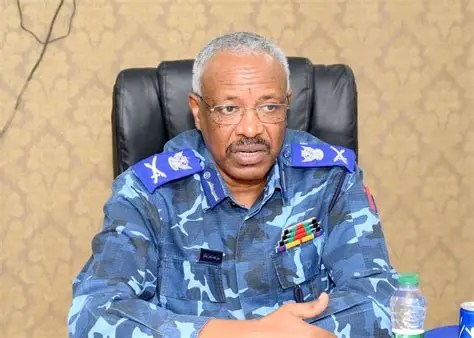
The head of the Passports and Civil Registry Authority, Lt. Gen. (Police) Osman Dinkawei, confirmed that Sudanese authorities are determined to review citizenship files and national identification records. He stressed that anyone who obtained Sudanese citizenship through illegal means will have it revoked.
Speaking at the police’s Ramadan forum organized by the General Administration of Guidance and Media, Dinkawei said authorities are currently reviewing national ID records to address any irregularities that may have occurred in previous years. He added that any individual who obtained Sudanese citizenship through fraudulent means will be stripped of it.
He also noted that claims about massive numbers of foreigners receiving national identification numbers in recent years are exaggerated and not as large as often portrayed. A specialized committee, he said, is currently reviewing the files to ensure that all procedures complied with the law.
At the same time, Dinkawei revealed that approximately 71,000 identification cards have been issued to foreigners of Sudanese origin. He also announced the establishment of a large center to house foreign nationals in the Al-Jereif area of Khartoum, where individuals residing in the country illegally will be gathered while deportation procedures are completed.
For his part, the Director of the Police Criminal Investigations Department, Maj. Gen. Sami Abu Al-Hassan, said a wide security deployment has gradually restored life to the capital. He noted that police forces have been stationed at 367 security checkpoints and have secured 16 entry points around Khartoum.
Abu Al-Hassan added that daily security campaigns have succeeded in eliminating approximately 98 percent of open drug dealing in the capital. Police motorcycle patrols and emergency response vehicles—currently numbering 30—are also operating across several localities.
He further explained that police are coordinating with other security forces to combat looting and robbery, while strengthening security in markets and public spaces.
Overall, authorities stress that the issue of foreign nationals must now be addressed seriously and resolved through the enforcement of the law, including the deportation of all those violating residency regulations—particularly nationals from South Sudan, Chad, and Ethiopia, who make up the majority and whose numbers are estimated in the millions.
Recent campaigns carried out by joint forces in areas such as East Nile, Ombada, Karari, and Saleha southwest of Omdurman underscore the seriousness of the situation. Officials say that years of silence regarding the heavy foreign presence contributed significantly to the current challenges.
Security seizures during these campaigns highlight the gravity of the issue. Dozens of foreigners violating residency laws have been arrested, many of whom were found in possession of weapons, narcotics, illicit alcohol production equipment, and stolen property belonging to citizens—discoveries that authorities say are repeated in nearly every operation.