New and Shocking Atrocities by RSF Revealed
Sudan Events – Agencies
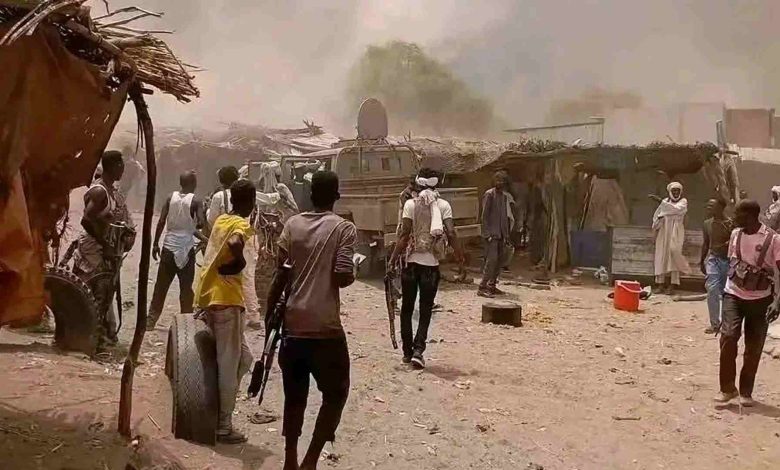
The American newspaper Al-Monitor has published a new report based on an investigation by Agence France-Presse (AFP), revealing previously undisclosed atrocities in the city of El Fasher. The report details how militias transformed every facility, civilian building, and even shipping containers into prison cells where civilians were held in dire conditions.
AFP conducted interviews with civilians, including individuals with severe injuries and women who had been subjected to rape and forced miscarriage. The report suggests that what has been revealed so far represents only the tip of the iceberg.
It recounts the story of dozens of people crammed into a suffocating, sealed shipping container. One detainee, Ibrahim Nour El-Din, said that each thud signaled another death caused by overcrowding, as Rapid Support Forces continued to force more detainees inside.
The number of detainees during the RSF’s control of El Fasher in North Darfur in October 2025— a battle the United Nations said bore “hallmarks of genocide”— is estimated to be in the thousands. Nour El-Din, 42, said: “As people died of thirst and hunger, we were beaten and forced to bury them in the open.”
Speaking from the crowded refugee town of Tawila, west of El Fasher, he added: “We were forced to work, carrying their belongings, supplies, and weapons. If we moved slowly, we were whipped.”
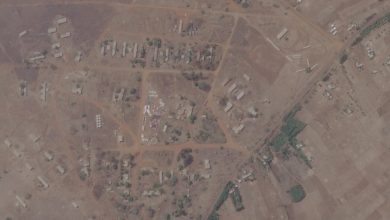
In February, according to the report, the UN Human Rights Office and the Centre for Information Resilience (CIR) in London said the RSF had converted hospitals, schools, warehouses, and shipping containers into a vast network of makeshift detention centers.
RSF forces maintain a tight grip on El Fasher, allowing only limited humanitarian access. Aid workers describe the city as a “ghost town.”
However, in Tawila, an AFP journalist gathered rare testimonies from five former detainees, speaking to them inside fragile shelters made of straw and torn fabric.
“Sips of Water”
Under a straw shelter, Nour El-Din leaned on a crutch, still weakened by his injuries.
On October 26, he and six others were trying to flee the RSF’s final assault on the city when they were shot at, beaten, and accused of fighting alongside the army.
He was taken in a Land Cruiser to the stock exchange market east of the city, then imprisoned with about 120 men in a suffocating container. For over a month, they survived on small sips of water and minimal lentils.
Testimonies, satellite images, and verified video footage analyzed over months by the United Nations and international investigative bodies showed that detainees included government employees, doctors, journalists, teachers, and aid workers.
Many were detained for ransom, accused of army affiliation, or targeted based on tribal identity.
Nails Torn Out with Pliers
The United Nations reported that El Fasher Children’s Hospital was one of the largest RSF detention centers, where “more than 2,000 men” were held “without water or food.”
Abdullah Idris, 45, said he was detained by RSF fighters.
“They took us to the children’s hospital and accused us of being fighters. I was held there for a month,” he told AFP, adding that he had nothing to drink except saline solution and could only watch as dozens died each day.
The UN recorded up to 40 deaths daily during a cholera-like outbreak, killing 260 people in a single week. In addition to disease, he said: “The torture was horrific, especially against young men. If you tried to speak, they would shoot you.”
Another detainee, Ahmed Aman, said some prisoners had their nails ripped out with pliers.
After weeks in the hospital, he was transferred to Garni, northwest of El Fasher, where documented footage showed “at least 600 detainees” being forcibly marched, including women and children.
Sexual Violence and Forced Displacement
Nidal Yasser, 27, was abducted the day after the RSF attack on the city.
For six weeks, she was moved between detention sites, including the “land port,” a bus depot near the market where the UN said hundreds were held in around 70 shipping containers.
“I was beaten, bound, and interrogated. When they learned my husband was a soldier, the torture worsened,” she said.
“We were subjected to exploitation and sexual harassment, and were rarely allowed to use the bathroom.”
She and other women were ordered to pay a ransom of $2,000, but everything she owned had already been looted.
She was eventually taken to a house, assaulted, and then abandoned in a remote area, forced to walk dozens of kilometers to Tawila, where she suffered a miscarriage along the way.
The UN documented widespread torture and “cruel, inhuman, and degrading treatment,” including sexual violence, beatings with wooden sticks, flogging, and suspension in painful positions from trees.
“They Killed People Front Our Eyes”
Mechanic Ahmed Al-Sheikh, 43, now walks with a limp and has lost vision in one eye after being beaten by an RSF fighter.
He only reached safety in February after spending four months in Shala prison, where the UN said more than 2,000 detainees were held by January.
“They killed people right in front of us,” he told AFP.
“They would choose people at random and kill us like animals.”
According to the UN, at least 6,000 more detainees were transferred from El Fasher prison to Tigress prison in Nyala, the de facto capital of the RSF, where they are held under a complete communications blackout.