Into a Grey Zone… How Do Sudanese View the Middle East War?
Report – Sudan Events
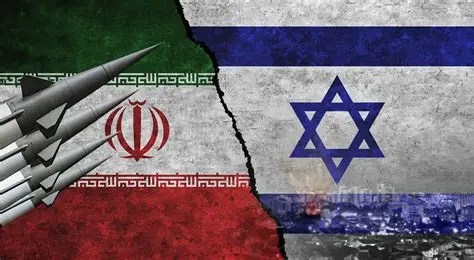
Professor Fadl Al-Moula Al-Naeem, a political science specialist, says Sudanese perceptions of the unfolding conflict in the Middle East are shaped by complex and often conflicting realities, making it difficult to form a single, clear consensus. However, he notes that a majority view Iran’s attacks on Saudi Arabia and Qatar as a grave mistake that has muddied perceptions of the US-Israeli strikes against Iran. While public opinion in Sudan generally opposes US and Israeli actions against Iran, Tehran’s strikes on Saudi Arabia, Qatar, Bahrain, and Oman have fueled widespread resentment.
According to Al-Naeem, Sudanese public sentiment distinguishes between Gulf states that are seen as supportive of their regional environment and largely non-interventionist, and others viewed differently. In this context, Gulf countries—apart from the United Arab Emirates—tend to receive sympathy from Sudanese audiences. The UAE, by contrast, is widely perceived as hostile due to its alleged actions in Sudan, leaving it with little public support.
Lawyer Mohamed Al-Fatih, known as “Soma,” argues that the issue is closely tied to the UAE’s role. He says Sudanese observers find little credibility in Iran’s claim that it is targeting US military bases in Gulf countries. Saudi Arabia, he notes, had earlier declared it would not allow its territory to be used for attacks on Iran, while Qatar is widely viewed as unlikely to permit strikes against neighboring states, given its diplomatic role in mediating regional disputes.
“The war is fundamentally an aggression against Iran,” Al-Fatih says, “but Iran has turned it into aggression against its neighbors—an approach that is difficult to understand. Even if Tehran sought to pressure the Gulf, targeting densely populated cities filled with civilians—many of whom oppose US-Israeli actions—cannot be justified.” He adds that such actions have shifted sympathy into anger, questioning the strategic logic behind striking Gulf states.
Al-Fatih further notes that Sudanese sentiment toward the UAE is markedly different. “I am not concerned with what is happening between Iran and the UAE,” he says. “From a Sudanese perspective, the UAE has taken actions that make sympathy toward it illogical. Those who support it are largely militia leaders, fighters, or political actors seen as having betrayed their country.”
A similar view is echoed by Romah Abu Alia, who says any expression of support or sympathy for the UAE in Sudan often leads to heated public reactions. He notes that while Sudanese audiences largely condemn Iran’s strikes on Saudi Arabia, Qatar, Bahrain, and Oman, they do not necessarily view its actions toward the UAE in the same light.
Abu Alia argues that Iran did not need to expand the conflict to include Gulf states, as its confrontation is primarily with the United States and Israel. By doing so, he says, Tehran has drawn neighboring countries into a conflict that will inevitably have economic repercussions for them. At the same time, Iran appears to be raising the cost of the conflict for Washington and the broader international community, even as the war shows no clear signs of ending according to initial expectations. He warns that the possible deployment of additional US forces could escalate the situation into a ground war with unpredictable consequences.
Most Sudanese, the report concludes, believe the economic fallout of the conflict will be severe for Sudan’s already strained economy. With international and regional powers preoccupied by the Middle East war—and many key actors in the Sudanese file directly involved—the prospects for a political settlement in Sudan appear increasingly remote. This suggests that the conflict in Sudan may continue, further deepening economic challenges that are already beginning to surface.
Some analysts point to a potential opportunity for Sudan to leverage its geopolitical position by turning its ports into strategic hubs supporting Gulf stability and entering into partnerships to address disruptions caused by the ongoing conflict. However, one issue remains deeply contentious: the UAE. Sudanese public sentiment broadly holds that the UAE has played a deeply harmful role in Sudan, making any form of cooperation with it highly controversial.
In summary, Sudanese opinion clearly rejects Iran’s attacks on Gulf states as unjustified aggression. Yet this rejection does not extend in the same way to the UAE, reflecting a deeply divided regional perception shaped by Sudan’s own recent experience.