The Iran War and the Sudanese Situation: Three Levels of Impact

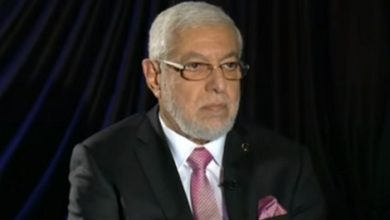
Amjad Farid Al-Tayeb
The U.S.–Israeli confrontation with Iran did not emerge from a diplomatic vacuum. It erupted while negotiation channels were still open under Omani mediation. Following a round of talks in Geneva that concluded on February 26, 2026—described as having achieved a measure of progress and warranting further technical continuation—the abrupt shift from diplomacy to military confrontation on February 28 came as a shock. In a single moment, the region moved from managing tensions through diplomatic tools to the logic of open war, devoid of clearly defined objectives or realistic endgames.
This escalation, along with its implications—most notably the killing of Supreme Leader Ali Khamenei, the partial dismantling of Iran’s leadership structure, and the subsequent large-scale response that lacked political rationality—did not merely alter the situation in the Gulf. It redefined the broader equation of regional security and stability across the Middle East, including Sudan, which has been experiencing a moment of structural fragility amid its own war since April 2023.
Regardless of differing interpretations regarding the initial spark of the conflict, Iran’s subsequent response appeared, from a purely strategic perspective, politically disproportionate and lacking a coherent regional compass. The Iranian reaction extended beyond targeting the United States and Israel, striking infrastructure, civilian sites, and energy facilities across several Arab countries, including Qatar, Saudi Arabia, Jordan, Bahrain, the United Arab Emirates, and Kuwait. Even Oman witnessed an attack on the port of Salalah, despite Muscat’s central role as a mediator seeking to prevent the outbreak of war.
Doha had publicly emphasized the need for de-escalation, while Saudi Arabia had formally informed Iran—through direct diplomatic channels as early as January 14, 2026—that it would not permit the use of its airspace, territory, or bases for any potential U.S. military action against Iran. Riyadh, Doha, and Muscat had all been actively engaged in regional efforts to avert the crisis. Yet the Iranian response targeted these very states in a manner that reflected not rational deterrence but rather an inclination toward broadening the conflict—even against countries that had sought to keep the door open for de-escalation or, at the very least, to prevent the complete collapse of the regional order.
For Sudan, the impact of the U.S.–Iran war is not determined solely by geography or its position within the Arab security sphere. It is also shaped by the timing of the conflict, unfolding amid the ongoing Sudanese war that began in 2023. This is a complex context in which regional ambitions and rivalries intersect, political narratives compete to reshape reality, and internal economic pressures deepen as a result of prolonged conflict.
Sudan is not a distant observer of an isolated Gulf crisis. It is an integral part of a broader Arab security environment stretching from the Gulf to the Red Sea. It is simultaneously affected by developments in the Strait of Hormuz and the Bab el-Mandeb, as well as by the supply chains connecting them. As disruptions to the Strait of Hormuz—through which roughly 20 percent of global energy trade passes—combine with growing concerns over maritime security in the Red Sea, particularly with the involvement of the Houthis, Sudan faces not only price shocks but also a profound upheaval in the security environment within which it operates.
From this perspective, Sudan’s official stance has been unequivocal. From the early days of the crisis, the Sudanese government strongly condemned the Iranian attacks on Arab states, describing them as blatant and illegitimate aggression—language that preemptively shut down any attempt to question its position. This stance was further reinforced by the Chairman of the Sovereignty Council, General Abdel Fattah al-Burhan, who engaged in communications with Gulf and Arab leaders to express solidarity.
He also issued a clear public warning to domestic actors against speaking on behalf of the state on this matter, reaffirming Sudan’s support for Arab national security and its rejection of any infringement upon it. This position is not a mere diplomatic detail; it is a clear political declaration that firmly places Sudan within the Arab security framework, leaving no room for maneuver or ambiguity.