Akanji… The Official Language of Control
Report – Sudan Events
There is no doubt that the Sudanese Air Force has played a decisive role in this war, often turning the balance entirely despite the major challenges it faced at the outbreak of fighting. At the time, the number of aircraft stationed at Wadi Seidna Air Base in Omdurman was limited, and the planes themselves were outdated. Nevertheless, they operated day and night over the skies of cities, sacrificing one martyr after another.
The sound of anti-aircraft fire echoed continuously across Khartoum, while the roar of aircraft never ceased. The Air Force became the most formidable factor in the equation—the element that frightened and intimidated the militia. At that time, there were neither strategic drones nor suicide UAVs. Despite their small numbers and aging models, the army’s fighter jets struck militia positions, spreading fear among their ranks.
Gradually, the army began receiving new warplanes and advanced drones, which established control over the skies and maintained air power as the number one factor in the battle. Today, it is engaged in cutting off supply lines and forcing cities into submission, particularly after successfully countering the advanced systems deployed by the militia in Nyala.
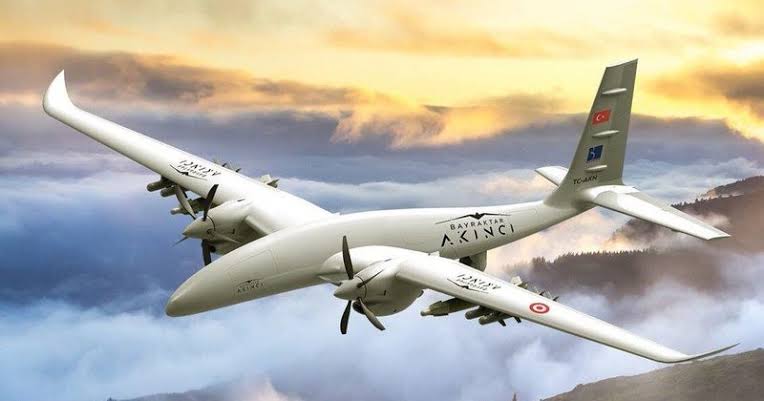
Military expert Mohamed Mostafa explains that the Akanji drones, recently incorporated into the Air Force, have driven significant transformations in recent months. These changes are not only linked to increased firepower but also to improved command capabilities in distributing roles, relying on Akanji systems that have provided the army with quantities of light and medium weapons while reducing operational costs.
He added: “In the past, control was measured by the number of heavy sorties. Today, it is measured by how long the sky remains under effective surveillance.”
He continued: “This continuous presence over Nyala has created both psychological and operational pressure on the militia, without requiring the army to deploy maximum force every time.”
The Sudanese army confirmed that its ground and air forces carried out intensive strikes on Rapid Support Forces positions in Kordofan and Darfur, as well as their supply routes from southern Libya. According to an official statement, more than 40 combat vehicles were destroyed, hundreds of militia fighters were killed, and several strategic drones, hideouts, and operational stations at Nyala Airport were also eliminated.
The statement further indicated that army forces expelled the militia from large areas in Darfur and Kordofan and continue operations to dismantle the remaining elements. Meanwhile, reports have emerged suggesting the army is close to receiving weapons, aircraft, and military equipment from Pakistan.
Despite militia attacks targeting locations in El-Obeid and civilians in the city of Dilling, the army continues to dispatch reinforcements to its positions in Kordofan, where fierce and ongoing battles are taking place to seize strategic areas, cut supply lines, and prepare for further operations in Darfur.
Eyewitnesses confirmed successive strikes by army aircraft and drones on Nyala Airport, which have now become a daily occurrence. Forces affiliated with Abdelaziz al-Hilu, along with the militia, are currently facing difficult conditions in South Kordofan. This coincides with a wide deployment of army and allied forces along the borders of Blue Nile State and Ethiopia, following attempts by the militia to smuggle weapons and military equipment عبر the Sudan–Ethiopia border.
At the same time, the Sudan–Chad border has witnessed extensive activity by Sudanese warplanes and drones targeting supplies coming from Libya’s Kufra Airport.
The battles in Kordofan have been directly affected by disruptions in supply lines, particularly fuel shipments originating from southern Libya. This has had a clear impact on the militia’s mobility and its ability to maneuver across large areas, as its wide movements and flanking operations consume significant amounts of fuel.
The “mobilization calls” (faza‘) have also been affected, as markets have run dry of fuel, slowing down their response and making them increasingly influenced by reports of heavy militia losses and the scarcity of target-rich areas for looting. Looting has been a key driver of mobilization and one of the militia’s primary incentives for recruiting fighters.
With neighboring states such as Khartoum and Northern State issuing orders to prevent fuel shipments from reaching Kordofan and Darfur—where fighting is ongoing—supply routes have effectively come under the control of Akanji drones and the army’s UAV systems.