The Smell of Mango
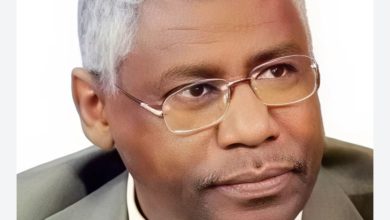
Mohammed Mohammed Khair
In this beloved country, there are scents that draw you in and make your nose the voice of your soul (despite yourself). The smell of guava, the smell of mango, and the smell of Sudan itself. I am one of those who have been surrounded by these scents in exile until I finally returned here.
When we finished building the outer wall of our house, located in one of the richest regions in clayey soil, I “planted trees” before I “built rooms,” and I dreamt of the smell of mango. I planted guava, oranges, palms, lemons, and mangoes, and adorned them with torenta plants and Selwa flowers, dedicating my life to them.
I decided to befriend the trees because their nature is lighter than that of humans. The tree is the only creature that does not harbor malice. It is forgiving because it bends its branches to the winds, just as workers wipe their sweat. And because it is the open house for birds at all times, and I love birds because some women resemble them. Look at what I wrote in my poetry:
I have no lineage in doves
Nor a bond with birds
Except that I am passionate about women who resemble birds
They have the cunning
That might elevate them to the status of birds.
Once, a woman with a bright voice greeted me,
And feathers flowed from every pore of my skin
Until my lips curled, and I was struck by love like the bloom of basil
(And I responded, chirping) to her greeting!
My return to Sudan was tied to a wish to have a fruitful and fragrant mango tree, with smooth leaves like the cloth of the free Swakina, bearing fruit year-round and slender in shape. I bought it from the College of Agriculture in Shambat, through an agricultural expert with whom I shared classroom seats. He chose for me a tree from South Africa and told me it would bear fruit in five years, and its yield would be yellow with a touch of red, symbolizing its resistance to “racial segregation.” I waited all these years, nurturing it, fertilizing it, and watering it, until it completed its fifth year, which ended last week without producing offspring to become my grandchildren!!
A few days ago, an agricultural engineer visited me to console me, and I told him about my tree. He stood before it, examining it, diagnosing it, and treating it, but then he said to me: “This mango tree is male!”
The news slapped me, shook me, and unsettled my composure. I had abandoned Canada, reconciled with the regime, boycotted my friends, and had activists all over the internet attack my body (“like flies on bones”) for the sake of having a fruitful mango tree… only for it to be male?!
The engineer noticed my pallor upon hearing the news and the sadness that spread across my face, so he said to me: “But God has blessed you with a lemon tree,” to which I responded, “May it be one of the hidden blessings.”
I began staring at the tree that had hidden its identity from me for five years. I didn’t want to call it “the mango tree.” I named it “the mango” because “mango” is the masculine form of “manqa” (mango), just as women are the plural form of a woman. I remembered the poetry of Yusuf Rizqa:
“It is not the ‘ta’ in my obedience/
For the sake of my shape/
To get married to me.”
And I thought of my uncle Ali Jan the famous butcher from Omdurman Market. We worked with him during summer breaks with carrots. He had folk sayings (cut from his own head) such as “Keep the egg away from the stone, and hold the female from the male.”
I kept staring at my beloved tree, which I thought was female.
The engineer’s words troubled me, because I still dream that my tree is female. So I decided to “get a second opinion.” I indeed had a long conversation with an agricultural expert about the gender issue in mangoes, and he told me that there are no male mango trees in all the plains, meadows, orchards, and farms; all mango trees are female (they are considered spoiled by their indulgence… and Islam keeps them away from adultery). But I told him that my tree has not borne fruit yet. He explained that it self-pollinates, and this process happens in its fifth year.
I was greatly pleased by the idea of self-pollination. It is a “cover,” for what damages human reputation more than crossbreeding with crossbreeding. I was happy to know that when my tree reaches maturity, it will not need a male to provide the necessary chaos, and I was pleased that it will self-pollinate, giving me fruit that comes from between its branches whenever it desires. It is the only self-pollination exempted from stoning and free from all guilt. I was also pleased to know that my tree will be a guide for females to the primal lust that stirs deep within them.