Halting Gold Exports to the UAE: Gains for Sudan
Report – Rehab Abdullah
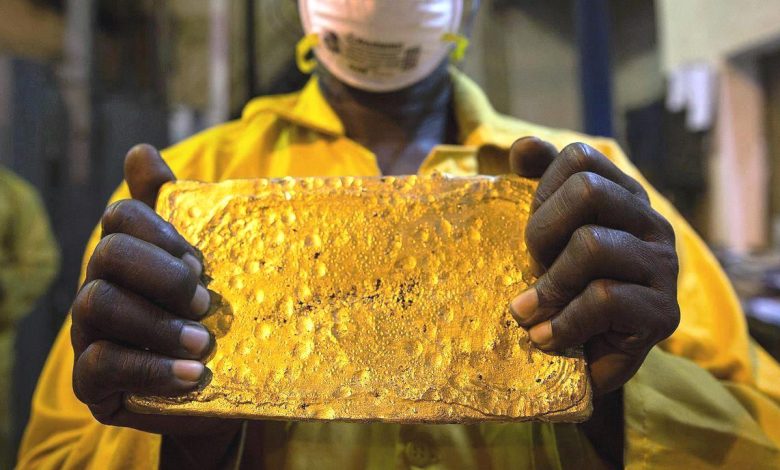
Debate over Sudan’s gold exports to the United Arab Emirates (UAE) has long been clouded by contradictory government statements and allegations that exports are dominated by companies linked to powerful figures, who monopolize the trade for personal gain—reaping foreign currency profits while failing to remit export proceeds to the Central Bank of Sudan. As a result, the country has lost millions of dollars in potential revenue.
Despite repeated announcements that gold exports to the UAE would be halted, no formal decision was implemented by the relevant authorities, and exports continued. This persistence has raised questions, particularly in light of Sudan’s designation of the UAE as a hostile state.
Calls to Halt Exports
Halting gold exports to the UAE has been a popular demand among Sudanese displaced by the war against the UAE-backed Rapid Support Forces (RSF). Since the outbreak of the conflict in mid-April 2023, officials have repeatedly pledged to suspend exports to the UAE. However, personal interests often appeared to outweigh official boycotts.
Former Minister of Minerals and senior Sudan Liberation Movement figure, Mohamed Bashir Abunomo, revealed in May this year that Sudan was moving to end gold exports to the UAE and open new markets elsewhere. He dismissed reports of a 20-year commitment to supply gold to the UAE as “nonsense,” stressing that Sudan was not bound by any long-term agreements.
Abunomo pointed to Qatar as a preferred alternative due to its positive relations with Sudan and unconditional support, adding that the government was exploring markets in Saudi Arabia, Egypt, Bahrain, Turkey, and Russia, facilitated by government incentives for exporters.
He clarified that most Sudanese gold exported to the UAE was shipped by private companies, not under binding government contracts, and that the preference for the UAE stemmed from its banking facilities and open market—though companies were now being encouraged to diversify.
Abunomo disclosed official production figures: 42 tons in 2022 (before the war), 23 tons in 2023 (due to the war), and a projected 64 tons by the end of 2024—signaling a recovery. He noted that actual production could be higher due to unregistered artisanal mining and smuggling.
In the same month, Finance Minister and Justice and Equality Movement leader Dr. Jibril Ibrahim confirmed the decision to stop exports to the UAE and pursue alternative markets, acknowledging that the UAE’s upfront payments and trade guarantees had made it an attractive destination, particularly in Sudan’s unstable economic climate.
Modest Output
Former Sudanese Mineral Resources Company Director, Dr. Mujahid Bilal Taha, noted that despite modest proven reserves—over 1,500 tons—they could sustain production for the next 20 years at current rates. However, he said Sudan’s output remains small compared to global industry leaders, and attracting major international mining companies could multiply production.
Traditional (artisanal) mining, he warned, continues to expand, necessitating a clear strategy to regulate operations, limit environmental harm, and maximize economic benefits.
Opening new gold export markets, he argued, is relatively feasible but requires coordinated state action to secure trade channels and ease export procedures. He also stressed that smuggling should be examined carefully, as not all unrecorded gold fits the traditional definition of smuggling—some is merely stored while owners await safe, profitable opportunities to bring it into the formal economy.
Taha cautioned that fully liberalizing gold exports might not be suitable at present, and listed challenges to market diversification, including customs duties in most countries, private-sector dominance of gold ownership, and exporters’ dependence on the UAE for simplified logistics, visas, and banking. He said adapting to new markets would require procedural adjustments, including mutual recognition of refinery certifications.
The Central Bank’s Withdrawal
Economic expert Eng. Al-Tayeb Al-Jaali criticized the Central Bank of Sudan’s withdrawal from purchasing artisanal gold, arguing that current policies have failed to protect the resource, fueled smuggling, and reduced official revenues.
He said Sudan’s core problem was not a shortage of markets or demand, but the absence of a strategic, long-term vision for managing gold as a national asset. Instead of treating gold as a quick cash commodity, Sudan should use it as collateral for concessional financing or as the basis for gold-backed financial instruments—citing Turkey’s 2017 program, which mobilized over seven tons of gold from citizens into the banking system via gold-backed bonds and certificates.
Direct gold sales, he stressed, should be a last resort, as gold is a finite resource and strategic reserve for future generations. Building a national gold reserve, he argued, could stabilize Sudan’s currency and economy, especially since Sudan is Africa’s third-largest producer.
Regarding exports to the UAE, he noted that most shipments were private-sector-driven, with Dubai favored for its ease of transactions. But without a regulated domestic market, Sudan would continue to lose export proceeds. A national refinery, fair pricing, and local buying by the state, he said, could retain revenues and ensure better oversight.
Traditional mining, which accounts for over 80% of Sudan’s gold production, remains unregulated and environmentally damaging, and suffers from conflicting policies among authorities.
Lack of Political Will
Al-Jaali concluded that Sudan does not lack gold, markets, or partners—such as Turkey, Russia, China, Qatar, and Saudi Arabia—but suffers from a lack of political will to end chaos and build a transparent, well-managed national gold system that supports macroeconomic stability.
Alternative Markets
Gold strategy expert Atef Ahmed urged Sudan to urgently secure alternative markets with strong banking facilities to avoid negative fallout for exporters who previously relied on the UAE.