Sudan: Endless Bloodshed, Endless War
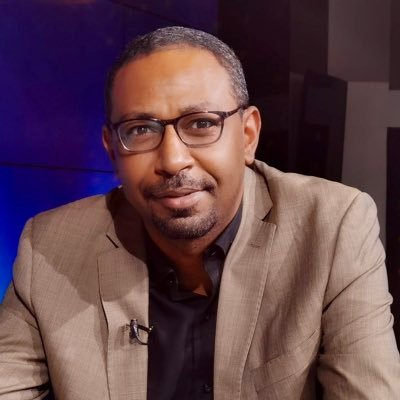
By Amjad Farid Al-Tayeb
Amid the unrelenting darkness cast by war across Sudan, scenes of killing, destruction, and displacement have become not exceptional horrors, but enduring features of a bloody present unmatched in the country’s modern history.
Since April 2023, when fighting erupted between the Sudanese Armed Forces (SAF) and the Rapid Support Forces (RSF), the images of devastation in Khartoum and Al-Jazira, the reports of famine in El-Fasher and Nyala, and the mass killings in El-Geneina have ceased to shock. Nor have the unprecedented accounts of rape and sexual violence in Khartoum and Darfur halted the machinery of violence. Brutality has become the rule, not the exception.
The conflict is no longer merely a military confrontation; it has morphed into a wholesale humanitarian massacre. Civilian casualties have surpassed all reckoning: more than 61,000 killed in Khartoum alone, 15,000 massacred in El-Masalit by RSF militias early in the war, with some estimates placing the civilian death toll at 150,000 nationwide. Over 14 million Sudanese have been forced from their homes; 10 million have fled to areas under SAF control, while more than 4 million crossed borders—what UN agencies repeatedly describe as the world’s largest displacement crisis.
The RSF has waged deliberate starvation tactics—blocking humanitarian aid, as in the ongoing siege of El-Fasher since April 2024, and poisoning water sources and crops during its occupation of Al-Jazira. Massacres—El-Geneina, Ardamata, Wad Al-Noura, Zamzam camp, Hilaliya—have seared themselves into the collective memory. Wherever RSF columns advanced, they left the indelible mark of blood and ruin.
At the heart of this tragedy, El-Fasher, the largest city in North Darfur still held by the army, has become a symbol of defiant resilience. Since April 2024, RSF forces have encircled it, severing supply lines, yet the city endures wave after wave of assault. Its heroism is marred by atrocities—most horrifically, the RSF’s assault on Zamzam displacement camp, where hundreds were killed and wounded in hours, women and children subjected to unspeakable violence. A Guardian investigation revealed over 1,500 civilians killed during the 72-hour assault from April 11–14, with hundreds still missing.
Politics has collapsed into militarization. Some civilian forces, willingly or under duress, aligned themselves with regional agendas profiting from Sudan’s war—abandoning independence and national projects. Peaceful instruments of change were dismantled; politics was hollowed out, reduced to an appendage of others’ wars rather than a vehicle for Sudanese self-determination.
Economic Devastation
The war has plunged Sudan into economic freefall. By December 2024, the Sudanese pound had lost 233% of its value, collapsing by 460% by mid-2025 compared with prewar levels (from SDG 650 to SDG 3,000 per US dollar). Inflation soared to hyper levels, with semiannual rates of 136.7% in the first half of 2024. Widespread looting of banks by RSF fighters in Khartoum drove inflation to frenzy. Growth stalled; half of Sudan’s productive capacity was destroyed within two years. Basic needs became unaffordable, while job losses and dwindling output pushed the nation toward social collapse.
Extreme poverty and famine have created fertile ground for militia recruitment. For many young men, bearing arms is now the only means of survival. Ethnic polarization has deepened, weaponized by warring parties. With public services—health, education, water, electricity—decimated, legitimacy of any authority is redefined: no longer by slogans or control, but by the ability to secure life’s bare minimum. This profound shift threatens to rewrite Sudan’s social contract from the ground up.
Foreign Hands in Sudan’s War
External meddling is unmistakable. Regional powers continue to arm and finance the RSF, amplify its narratives, and obscure its atrocities. Recently, the presence of Colombian mercenaries fighting alongside the RSF drew condemnation from Colombian President Gustavo Petro, who repeatedly decried their role on X, while Bogotá formally apologized to Khartoum. Sudanese civilians have also reported RSF units bolstered by French-speaking mercenaries from across West Africa. These interventions not only prolong the war, but transform it—from a power struggle into a deliberate dismantling of the Sudanese state. Cutting these lifelines is not just a political demand; it is a practical necessity.
Possible Futures
History and geography warn that prolonged wars fracture and metastasize. Sudan’s conflict now stands at a crossroads of grim possibilities:
1. Total state collapse—“Sudan of factions.” Central authority shrinks to isolated enclaves, with the rest divided among SAF, RSF, armed movements, and tribal militias. Borders become porous corridors for arms, contraband, and fighters, threatening Chad, South Sudan, and Ethiopia with destabilization.
2. Proxy battlefield. The war festers under deepening foreign interventions. Competing powers escalate their involvement, transforming Sudan into another Libya or Yemen—a long, grinding proxy war with ripple effects across the Horn of Africa and Nile Basin.
3. Frozen conflict. Neither side prevails; frontlines harden into static boundaries with sporadic clashes. While seemingly less bloody, this scenario fragments Sudan into a failed state, dependent on aid and shadow economies—an enduring humanitarian burden for neighbors and NGOs.
4. Ethnic–regional war. The most perilous path: conflict splinters into ethnic cleansings and local wars, especially in Darfur, Kordofan, and Blue Nile. This risks de facto breakaways, mass atrocities, and a regional spillover of refugee crises and communal violence, eroding the very idea of a unified Sudan.
All scenarios converge on one truth: prolonged war means irreversible damage, radiating beyond Sudan into the Horn of Africa, North, and West Africa, sowing decades of instability.
A Path Out
Ending the war is not impossible—but demands urgent, coordinated action. A comprehensive, internationally guaranteed ceasefire must be enforced. Arms embargoes—such as UN Resolution 1591 on Darfur—must be activated with transparent monitoring. A genuinely Sudanese-led political process must begin, inclusive of victims, displaced communities, and civil society, coupled with reconciliation efforts to repair the social fabric and dismantle ethnic recruitment. Justice—through national or international courts—must hold perpetrators accountable, denying impunity. Reconstruction and economic revival must proceed in parallel, rebuilding civilian state institutions as the bedrock of sustainable peace.
Conclusion
Sudan’s war is no longer a temporary political crisis or a military clash—it is an existential catastrophe threatening the state itself. Continued bloodletting means further disintegration, not only for Sudan but for the entire region. Ending this war is not optional. It is a national and human imperative: cutting off foreign support, halting the killing, and rebuilding a civilian state founded on rights, justice, and a new social contract that restores peace, stability, and dignity for all Sudanese.