Anticipated Talks to End Sudan’s War: Real Prospects or Diplomatic Optimism?
Sudan Events – Agencies
U.S. Presidential Advisor for Africa and the Middle East, Musaad Boulos, confirmed that Sudan’s army and the Rapid Support Forces (RSF) are “moving closer to direct talks” to end one of the world’s worst humanitarian crises. Bloomberg reported that Washington is engaged in discussions with both sides to agree on “general principles,” noting that neither party holds decisive control on the battlefield, making both “ready to talk.”
Boulos also pointed to the RSF’s reported consent to allow aid deliveries into El Fasher, amid reports of a limited initial flow of supplies. However, UN sources have yet to confirm whether such aid has actually entered the besieged city.
Background: The “Quad Roadmap” and a Compressed Timeline
The U.S. push coincides with what is now being referred to as the “Quad Roadmap” (United States, Saudi Arabia, UAE, and Egypt): a three-month humanitarian ceasefire to be followed by a permanent truce, and then a nine-month political track leading to a civilian-led transitional government. Independent analyses and humanitarian groups have welcomed the framework, while warning that it remains fragile without robust enforcement mechanisms and credible pressure on violators.
The Humanitarian Picture: El Fasher on the Brink
El Fasher remains the epicenter of the crisis: more than 260,000 civilians—half of them children—have been trapped under siege for nearly 500 days, with repeated reports of famine and severe shortages of healthcare and clean water. In late August, UNICEF warned of a “devastating catastrophe” for children and reiterated its call to halt the fighting and open safe corridors.
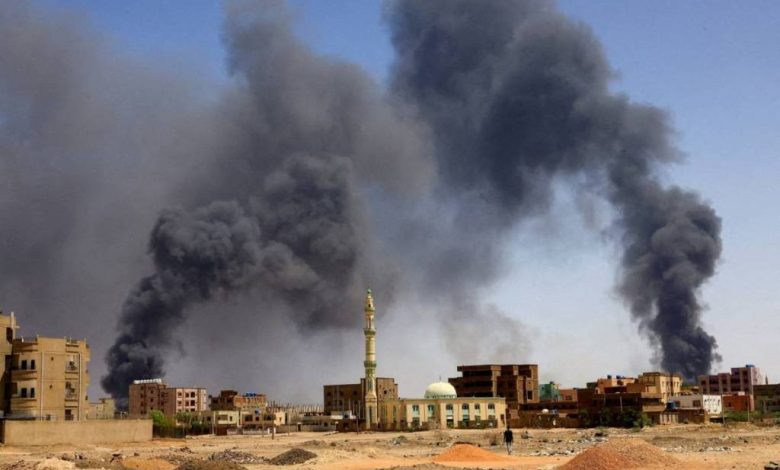
Recent UN updates highlight worsening hunger, cholera outbreaks, and intensified bombardment in and around the city. In the past week, dozens were killed in drone strikes on a mosque and a crowded market, underscoring the fragility of the situation and undercutting any perception of improved security.
Where Do the Prospective Talks Stand?
According to Bloomberg, Washington is working with both sides on “general principles” ahead of a possible direct meeting. In theory, these principles would overlap with an extendable humanitarian truce, arrangements for aid access, de-escalation measures (such as halting drone and artillery strikes in urban areas), and monitoring mechanisms including a “hotline” to address violations.
But nominal commitments are not the same as implementation—particularly in besieged cities like El Fasher, where accusations of indiscriminate attacks and killings based on identity continue to mount.
Why Might Talks Succeed Now?
A Stalemate of Weakness: Neither side can secure a quick victory, creating incentives to test a political process that might reduce the costs of war.
A Relatively Unified Regional Framework: The Quad’s structured timeline helps curb the fragmentation of past mediation tracks (Jeddah/Addis Ababa/IGAD/Doha), making coordinated pressure more feasible.
Escalating Humanitarian Shocks: Mounting civilian tolls and international scrutiny—exemplified by El Fasher—may prompt tactical concessions that open the door to broader negotiations.
Why Might They Fail?
The Reality in El Fasher: The ongoing siege and attacks undermine credibility of “aid flows,” revealing how field actors can derail any agreements.
Fragmented Command Structures: Multiple militias and cross-border loyalties weaken centralized authority, limiting the ability of either side to guarantee compliance.
Conflicting Patron Interests: Divergent agendas of foreign backers—and a track record of failed summits—suggest that sustaining a unified diplomatic “umbrella” may prove harder than announcing it.
Expert and Policy Views
International Crisis Group argues that success depends on realistic, sequenced steps: measurable humanitarian pauses, monitoring mechanisms, neutralizing spoilers, and broad civilian inclusion—not just signatures on paper. Peace timelines without addressing root causes, they caution, will not hold.
Regional policy analysts warn against “calendar diplomacy” that imposes rigid deadlines (3+9 months) without enforcement tools to stop violations or arms flows, leaving the plan vulnerable to collapse at the first military flare-up.
UN agencies (UNICEF/OCHA) insist that aid reaching El Fasher is the first test of credibility. Every day of delay, they stress, costs more lives among children and women.
Near-Term Scenarios
1. Initial Humanitarian Breakthrough: A local ceasefire around El Fasher enabling the first confirmed UN convoy into the city—a critical litmus test for claims of “aid flows.”
2. Structured Direct Talks: A first meeting under Quad sponsorship with joint monitoring and confidence-building steps (e.g., prisoner exchanges, opening crossings). Its success hinges on the mediators’ ability to rein in field spoilers.
3. Rapid Breakdown: Renewed escalation in El Fasher or a high-impact attack derailing momentum, pushing the political track back indefinitely—a recurring pattern in past efforts.
Editorial Takeaway
The story is credible in attribution: Bloomberg directly quoted Musaad Boulos on the near prospect of direct talks. But tangible progress on the ground—especially in El Fasher—remains the ultimate yardstick of seriousness. Until aid convoys are verifiably inside the city, such pledges amount to conditional diplomatic optimism more than a concrete breakthrough.