The War in Sudan: Between International Power Struggles and Internal Division
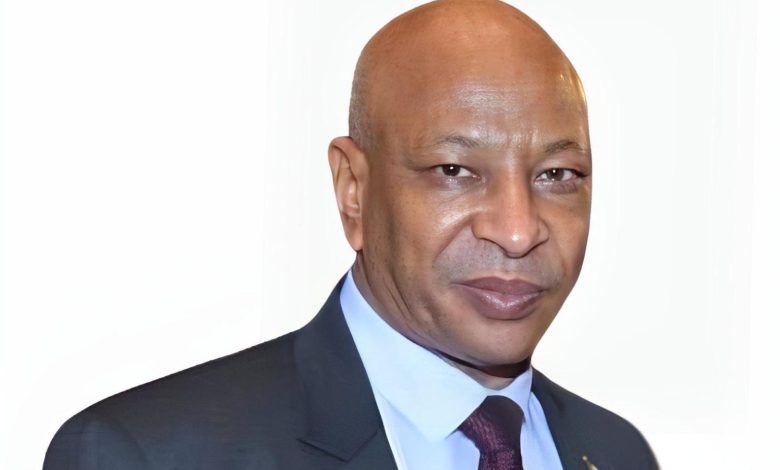
By Ambassador Dr. Muawiya Al-Bukhari
Introduction
Since the outbreak of the war launched by the rebel Rapid Support Forces (RSF) on April 15, 2023, Sudan has entered one of the most dangerous and complex phases in its modern history. The crisis is no longer a mere military confrontation between the Sudanese Armed Forces and the militia; it has evolved into an open-ended war with regional and international dimensions, where global interests intertwine with internal divisions—inflicting a heavy human and economic toll and devastating the country’s infrastructure.
This paper aims to analyze the Sudanese war from two primary angles:
1. The international struggle for influence—reflecting the competition among major and regional powers over resources and strategic positioning; and
2. The internal fragmentation that mirrors the fragility of the state, the complexities of identity, the failure of political elites, and the erosion of social cohesion.
I. Sudan as an Arena for International Power Struggles
1. Geostrategic Significance
Sudan occupies a pivotal position at the crossroads of the Red Sea, the Horn of Africa, the Nile Basin, and the Sahara. This location has made it a focal point for competition among major powers such as the United States, Russia, and China, as well as regional players like Egypt, Saudi Arabia, the UAE, Turkey, and Iran.
The conflict is thus no longer purely domestic—it has become a stage for redrawing spheres of influence across Africa and the Middle East. The renewed activity of the “International Quartet” and the African Union’s involvement exemplify this complex entanglement.
2. Natural Resources
Sudan possesses vast reserves of gold, rare minerals, fertile agricultural land, oil, and gas, along with a strategic Red Sea coastline. Yet these riches have become fuel for war instead of foundations for development. Both domestic and external actors now compete over them through smuggling, military support, and illicit deals.
Without a transparent national governance framework, these resources will remain catalysts for recurring cycles of conflict and foreign interference.
3. Forms of International Involvement
Western intervention: The West views the war as a threat to Red Sea stability and seeks to impose a political settlement through the “International Quartet” (the U.S., UK, Saudi Arabia, and the UAE) or its expanded version including Egypt.
Russia: Maintains relations with the state, invests via mining companies and mercenaries allied with the RSF, and pursues a naval base on the Red Sea.
The UAE and Egypt: Abu Dhabi’s approach is driven by economic and political influence—particularly through the RSF and port investments—while Cairo’s involvement centers on national security and shared destiny with Sudan.
4. The Clash of Wills
The war has become a test of wills among these powers. Each seeks to leverage the conflict to serve its interests, making Sudan’s peace settlement dependent more on international balance than on national determination.
II. Internal Division and the Complex Sudanese Landscape
1. Fragile State Institutions
Since independence, Sudan has suffered from weak governance structures, fragmented political will, and limited state authority beyond the center. This institutional fragility has rendered the state vulnerable to both internal fragmentation and external interference.
2. Identity Conflict and Social Disintegration
Ethnic, regional, and religious divides have fueled the war. Massive displacement, the collapse of services, and the rise of hate speech have deepened societal fractures. External actors have exploited these vulnerabilities by reviving tribalism and regionalism to cement influence.
3. The Failure of Political Elites
Following the December 2018 revolution, civilian forces failed to articulate a unified national project, instead becoming entangled in power struggles rather than institution-building. This vacuum opened the door for regional and global actors to intervene and reshape Sudan’s internal dynamics.
4. Armed Movements
Despite the 2020 Juba Peace Agreement, armed movements were never fully integrated into the state apparatus. Some aligned with the army, others shifted positions, perpetuating instability and obstructing the formation of a unified national army.
III. The International Quartet and the War
Formed after the 2018 revolution to oversee Sudan’s civilian transition, the International Quartet has evolved into a mechanism for managing global interests amid the war. Although not officially recognized by the Sudanese state, it has imposed itself as an influential actor, seeking to dictate the terms of resolution.
Objectives: Keep Sudan within the Western–Gulf sphere of influence, curb Russian, Turkish, and Iranian presence, and secure Red Sea trade routes and resources.
Diverging Interests:
Washington and London aim to limit Russian–Chinese influence.
Riyadh prioritizes Red Sea security.
Abu Dhabi pursues pragmatic economic and political interests—even through engagement with the RSF.
Cairo seeks Sudan’s stability due to shared security concerns.
These divergent agendas have made the Quartet a biased framework, undermining its ability to enforce a coherent peace. Without clearly defining its role in respect of Sudan’s sovereignty and national choices, continued intervention risks exacerbating the crisis.
IV. Possible Scenarios
1. Continuation of War: The most likely short-term scenario, given the ongoing external supply lines and the inability of either side to achieve decisive victory.
2. Externally Imposed Settlement: A negotiated ceasefire brokered by major powers, though fragile unless it addresses internal divisions and Sudan’s unique context.
3. State Fragmentation: Prolonged conflict could push Sudan toward a Yemen- or Libya-like scenario, with multiple centers of power and a protracted civil war.
4. A Comprehensive National Project: The optimal—and arguably most realistic—path, requiring unified leadership and domestic will to transcend divisions, rebuild institutions, and establish a just and accountable governance framework.
—
Conclusion
The war in Sudan is not merely a military confrontation but the manifestation of a deep structural crisis where international agendas intersect with domestic fractures. The future depends on the Sudanese people’s ability to craft a national project that balances internal cohesion with external engagement—shielding the country from dependency and disintegration.
Reinforcing national unity, reforming institutions, and advancing an inclusive initiative—one that excludes only warlords and profiteers through the rule of law—constitute the only viable path to saving Sudan. Otherwise, the nation will remain hostage to the tug-of-war of competing powers and the fragmentation within.
Today, Sudan’s leadership faces a historic test: to assert a sovereign, homegrown solution and remain steadfast, regardless of the cost—because only a nationally grounded settlement can preserve the state, its unity, and its security.